Starting last summer, President Trump pushed Republicans to engage in an extraordinary mid-decade redistricting project to overhaul congressional maps in favor of the G.O.P. The goal was to protect a House majority during his final two years in office.
It did not work.
Instead, Democrats on Tuesday gained at least eight seats in Republican-run states that had redistricted over the past 16 months. It was a stiff rebuff for a plan to sort just enough Republicans into just enough districts to give the party a 20-seat House firewall.
Months of political warfare, including more than $200 million in spending on referendums in California and Virginia, , simply did not anticipate an electorate that backed House Democratic candidates by 13 percentage points.
No map could have produced a Republican advantage strong enough to withstand such a Democratic wave.
“Donald Trump and Republicans poked the bear, and they got mauled,” said John Bisognano, president of the National Democratic Redistricting Committee. “There’s no way to look at this cycle and not see that the scheme to gerrymander the country was a complete and utter catastrophe.”
The plan’s demise illustrated once again the perpetual elasticity of the American electorate. Just as the coalitions that elected Barack Obama president in 2008 had evaporated by 2010, groups that backed Mr. Trump in 2024 abandoned him for 2026.
On Wednesday, House Democratic leaders crowed about defeating the Republican redistricting. They stood in front of a poster featuring a May social media post from James Blair, who ran Mr. Trump’s political operation, in which he boasted that redistricting would net the G.O.P. 16 seats.
“The American people hate it when politicians try to pick their voters,” said Representative Suzan DelBene of Washington State, who leads the House Democrats’ campaign arm.
It will take weeks and precinct-level analysis of election results to determine whether Republicans would have won more seats had they not redistricted at all. But perhaps nowhere demonstrated the futility of their plans than Texas and North Carolina.
Texas Republicans anticipated that the Hispanic swing toward Mr. Trump in 2024 would be durable. Instead, five districts in Hispanic-heavy South Texas moved to Democrats.
North Carolina legislators redrew congressional lines ahead of both the 2024 and 2026 elections, producing a map intended to deliver 11 of the state’s 14 districts to Republicans. Though not all of Tuesday’s races have been called, Democrats appear on pace to win 10 out of the 14 seats.
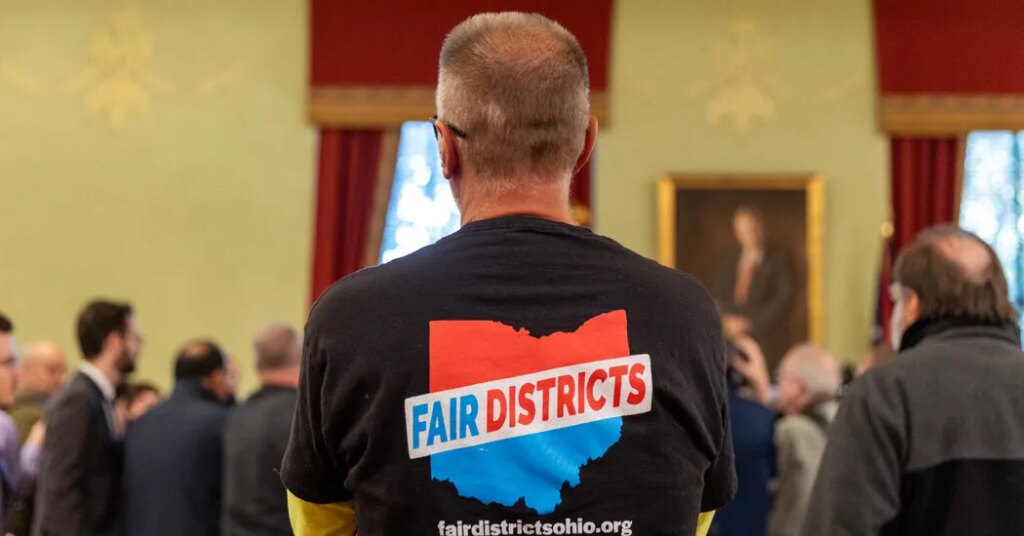
In Florida, Republicans gained zero seats in a map they believed would give them four held by Democrats. An Ohio map designed to shift two seats to Republicans may have handed two more to Democrats. And new maps drawn to squeeze out Democrats in Alabama and Tennessee also failed.
At the same time, Democrats are poised to gain several seats from new California congressional districts they drew in response to the Republican effort. There also will be a new Democratic congressman in Utah, where judges ordered new maps. And White House attempts to force new districts were foiled by legislators in Indiana and Nebraska and the courts in Missouri.
It could have been worse for Republicans. The Virginia Supreme Court invalidated a voter-approved plan that likely would have handed 10 of the state’s 11 congressional seats to Democrats. Under the existing map, Democrats are likely to win eight.
The redistricting fight is likely not over. Democrats on Tuesday won control of state governments in Wisconsin and Pennsylvania, which could redraw maps to secure seats for their party.
Maryland voters approved a referendum to allow legislators to draw the state’s one Republican House district out of existence. And Republicans may still attempt new maps in South Carolina and Mississippi.
Gov. Greg Abbott of Texas, who lost his bid for a fourth term, could call a special session before the year’s end and ask legislators for yet another new map that could help Republicans recoup their losses.
In Georgia, however, Gov. Brian Kemp said Wednesday morning that he would not call a special session to redistrict before he hands over control to Gov.-elect Keisha Lance Bottoms.
Annie Karni contributed reporting.
The post ‘They Got Mauled’: How Trump’s Audacious Redistricting Push Backfired appeared first on New York Times.