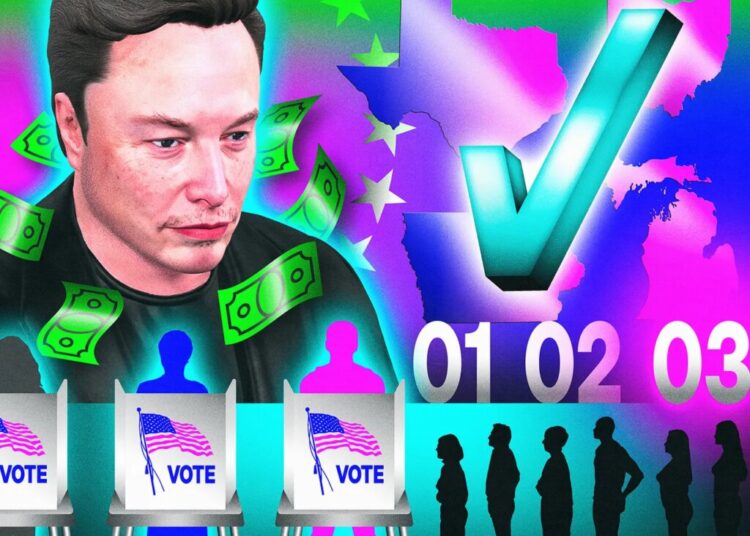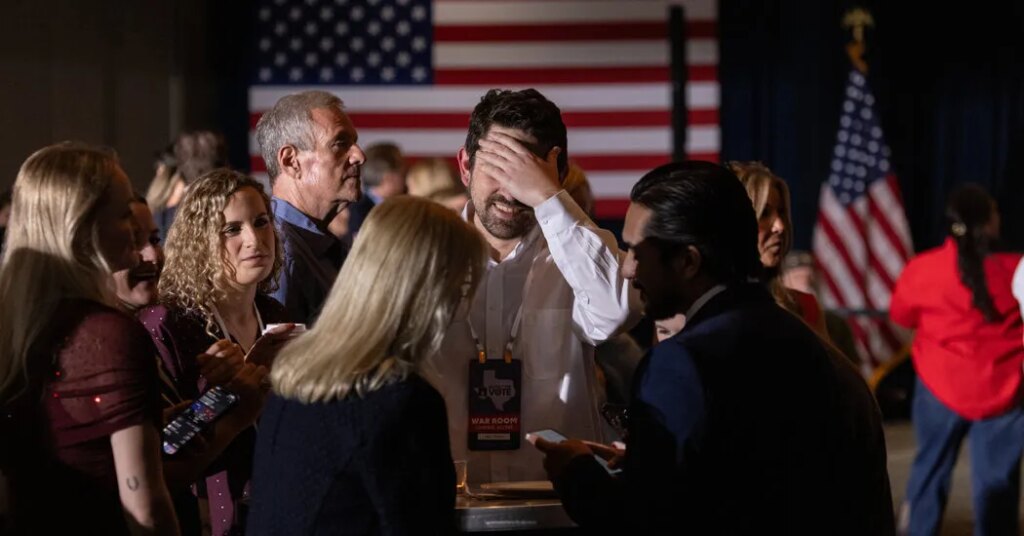
For months, Republicans salivated and Democrats cowered at a giant G.O.P. spending advantage in almost every marquee race in the midterms.
And then in an instant, on one evening, it no longer mattered.
Much is made during campaigns about fund-raising totals and spending plans. This year, it’s not clear that the money did much good.
The much-vaunted Republican war chest crashed into a tsunami of grass-roots momentum as the votes were tallied, raising serious questions — yet again — about the true power of money in national politics.
Republicans outspent Democrats on ads in almost every competitive Senate race, according to the media-tracking firm AdImpact, spending about $250 million more on Senate races than Democrats did in the general elections.
In race after race, that advantage went poof
Democrats won almost all of those races, powered by a national backlash to President Trump’s war in Iran and naggingly high prices that seemed stronger than anything ads could overcome. Paid media succumbed to public opinion.
Rick Jackson, a wealthy health care entrepreneur who self-financed his campaign for governor of Georgia, outspent his Democratic opponent, Keisha Lance Bottoms, by a nearly four-to-one margin in general-election ads, according to AdImpact data. It didn’t matter. Ms. Bottoms prevailed.
Republicans, financed by the world’s richest person, Elon Musk, doubled the spending of Democrats in the Senate race in Texas. And yet James Talarico secured a victory.
Most of the 20 biggest donors in the country were Republicans. Democrats had no answer for Mr. Trump’s super PACs, which spent $384 million on their own advertising barrage.
And yet.
For decades, the basic logic of fund-raising and advertising has gone like this: Candidates raise as much money as possible, to spend as much as possible, to run as many poll-tested ads as possible, usually as late as possible. The idea is that these messages, delivered ad nauseam, should work with enough volume.
“There are some election years where just the conditions are middling, and then you know the electioneering can make the difference,” said Lynn Vavreck, a political scientist who has written extensively about the impact of advertising.
But in a terribly difficult economic environment like this one? “You’re not going to advertise your way out of that,” she said.
Money can make a bigger difference in state or local races, buying name identification or opening up lines of attacks on unknown candidates. But candidates at the national level are often well-defined already.
This is not the first time these questions have been raised. Hillary Clinton outraised and outspent Donald Trump in 2016. Michael R. Bloomberg spent over $1 billion of his own money in the national Democratic primary and drew few votes. Joseph R. Biden Jr. and Kamala Harris outraised Mr. Trump in those final months of 2024 — and didn’t win.
“You don’t want to think that if you raise more money, you will win,” Ms. Vavreck said. “It’s not a disadvantage, but it isn’t sufficient.”
The post That Vaunted Republican Money Advantage? It Went Poof. appeared first on New York Times.