Voters in at least 29 jurisdictions across the country passed bans or restrictions on data centers Tuesday, reflecting the widespread public revulsion to the facilities and adding to the growing pushback on the ambitions of the artificial intelligence industry.
Data center construction also suffered setbacks in several states that are hot spots for the projects, as Democratic candidates promising to curb the rapid proliferation of the compute warehouses won governors’ races.
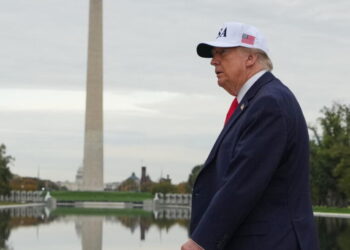
Many local ballot measures limiting data centers passed with overwhelming support. In Joliet Township, Illinois, nearly 80 percent of voters moved to restrict data centers. So did more than three-quarters of voters in Hubbard, Ohio, near where President Donald Trump touted his administration’s embrace of America’s rapid AI build-out in a rally last month.
In Janesville, Wisconsin, more than 60 percent of voters weighed in to say local officials must seek voter approval on future changes to an abandoned General Motors site after pushback earlier this year over a proposed data center.
In Texas, where industry estimates show a quarter of the tech industry’s new data centers are planned to be built, Democrat Gina Hinojosa’s victory over incumbent Gov. Greg Abbott rattled the industry and its investors. She champions a moratorium on new projects along with regulations that would impose aggressive protections for the environment and electricity ratepayers from the effects of data centers’ immense energy consumption.
Some investment analysts had warned before the election that her victory would create serious headwinds for the industry, potentially putting billions of dollars in data center projects in peril.
“Data centers in space looking pretty appealing right now,” SpaceX chief executive Elon Musk wrote in a post on X early Wednesday. He spent more than $400 million backing conservative candidates running on Tuesday.
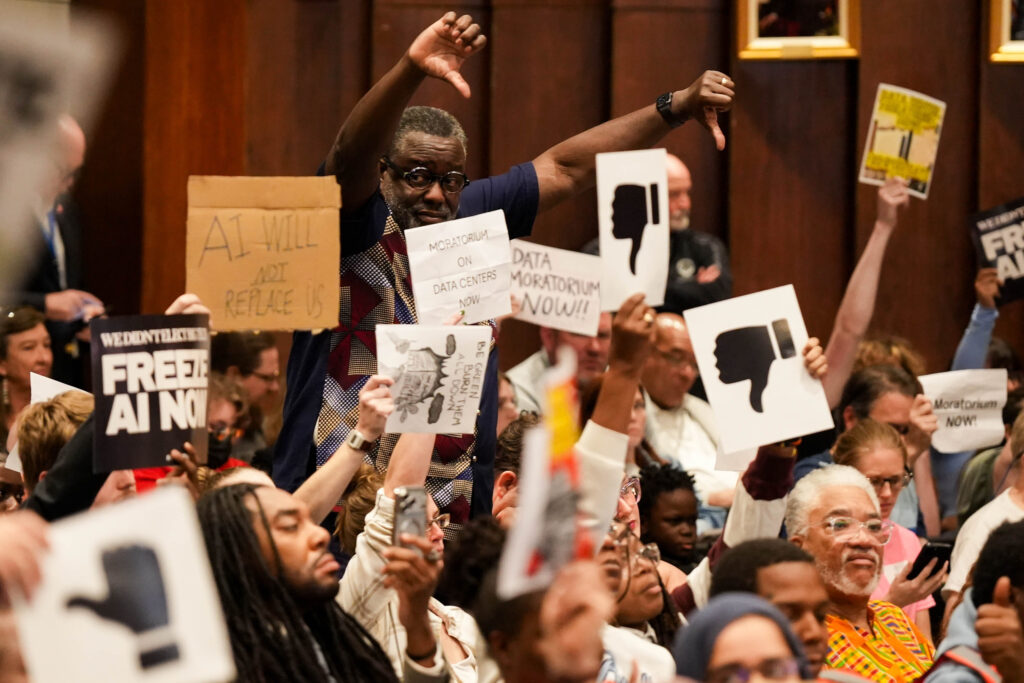
Tuesday’s results add to the evidence of Americans’ growing opposition to data centers and deepening concerns about AI. The votes set up a clash between a broadening coalition of data center haters and those promoting their construction in the technology industry and Washington, including Trump.
A Washington Post-ABC News-Ipsos poll last month found that 7 in 10 Americans, including a majority of Republicans, oppose new data center construction in their communities. Critics of the facilities complain about their noise, water use, impact on household electric bills and lack of public input, and say that data centers feed into Americans’ existing economic and political anxieties.
A voter poll conducted on behalf of major TV networks said early on Wednesday that 56 percent of midterms voters considered AI and data centers to be a major or crucial factor in their vote. That ranked them as the least influential among five issues, far behind government corruption, the war in Iran and the cost of living.
“If data center developers want to put these behind people’s backyards and put their health at risk, they’re going to have to come to the table and build them right,” said Nick Owens, an attorney and co-founder of Conserve Ohio, a group that helped residents across the state draft 10 ballot measures that would amend local charters to prohibit large-scale data centers. Owens said all 10 had passed as of late Tuesday.
Owens, who served as a Trump delegate at the 2024 Republican Convention, started Conserve Ohio after a data center developer purchased 1,000 acres of farmland and woods near his home in Mount Orab, outside Cincinnati.
He said Tuesday’s results showed that data centers were not just unwelcome in specific communities, but unwanted in Ohio as a whole. Conserve Ohio hopes to put a statewide ban of large data centers on the Ohio ballot next year.
Public discomfort with data centers and AI propelled them into a major campaign issue for the first time this year, especially for Democrats. Prominent power players, including former president Barack Obama and Chris Lehane, the lead policy executive for ChatGPT creator OpenAI, predict that AI will be a top issue in the 2028 presidential campaign. (The Washington Post has a content partnership with OpenAI.)
Voters in Ohio, a hub for data center growth, chose as their next governor Democrat Amy Acton, who favors a moratorium and tough new regulations on the industry. Her fellow Democrat Keisha Lance Bottoms, who won the governor’s race in Georgia, also a data center hot spot, made accountability for data center developers a central plank of her campaign.
The industry also lost key allies in the U.S. Senate. Political committees aligned with the AI industry had spent millions of dollars supporting South Carolina Republican Sen. Darline Graham, who lost to her Democratic opponent in a major upset. Sen. Jon Husted (R-Ohio), one of the industry’s biggest champions, lost to Sherrod Brown, a progressive Democrat who made promises to hold Big Tech accountable a central focus of his campaign.
More than 145 data center projects were delayed or canceled through early August across the United States, according to the research firm S&P Global, which said the vast majority of those resulted from public opposition. Some researchers have tallied hundreds of state or community-level data center freezes, bans or restrictions in the past couple of years.
It’s unclear whether local and state restrictions will meaningfully slow the frantic building of AI data centers around the United States. Some industry officials say that a significant portion of the roughly 600 large-scale AI data centers either planned or under construction is unlikely to become operational regardless of public reaction.
But Ed Mills, a Washington policy analyst for the investment firm Raymond James, said that data centers’ losses at the polls on Tuesday fire a starting gun for more members of Congress and 2028 presidential contenders to seize on regulating AI and data centers.
“If they consistently see there’s an issue that voters support overwhelmingly, that is going to be their position,” Mills said.
In an interview before Tuesday’s votes were counted, Mills said Democrats critical of data centers winning in Republican strongholds could spur more politicians to gravitate toward restrictions or bans on the facilities.
Some investors appeared to see the midterms results as negative for the tech industry, where stock prices have soared on expectations of huge profits from AI. Futures on the tech-heavy Nasdaq 100 index initially dropped more than 2 percent as Democratic wins emerged Tuesday night, but later recovered. The Nikkei 225 index in Japan, where U.S. election results trickled in during trading hours, fell by nearly 2 percent.
AI companies have already been forced to shake up their messaging and tactics in response to data center antipathy.
Microsoft, Google and Amazon say they’re dropping contentious contract provisions that have required local officials to keep early phases of data center projects a secret from their own residents. OpenAI is now using the term AI “compute campuses” rather than data centers in its publicity pitches to reporters. (Jeff Bezos, Amazon’s executive chairman, owns The Post.)
Technology companies are now budgeting more money to win community support and get data centers online, said Mona Dajani, a partner at the Cooley law firm who negotiates data center deals. She has sometimes represented companies building the projects and at others times worked for local communities.
Some AI executives and Trump have groused publicly and privately that the backlash against data centers has gone too far, is fueled by false beliefs about the projects’ downsides and will threaten America’s national security and economic vitality.
Lehane drew attention in Washington this week with a memo he sent to some potential 2028 Democratic presidential candidates. According to the version published by Politico, the OpenAI executive wrote that if the U.S. “loses its current lead on AI” to China because of data center restrictions, voters will vilify politicians who supported those measures, much as they did legislators who voted for the Iraq War a quarter century ago.
AI will be the number one issue in 2028. And anyone looking to OpenAI’s lobbyist for advice will lose. https://t.co/XxFhAVk4Hx
— Congressman Greg Casar (@RepCasar) November 2, 2026
Some industry executives and investors with money at stake in the AI boom believe that data center regulations or voter-imposed temporary bans are just speed bumps. They say tech companies will absorb rising costs, including from regulation and other factors. Others believe that politicians will be swayed by AI industry lobbying to backtrack on promises to crack down on AI and data centers.
Mills isn’t so sure. He says data centers and AI could now be so politically “toxic” that even Trump won’t be able to veto all the regulations he says could come from Congress in the next two years.
Prescott Balch, a retired technology and banking executive who advocates against data centers in his home state of Wisconsin, said he’s glad that Americans are flexing their power against community-altering projects that he believes cannot deliver the tax revenue, jobs and other benefits they promise.
“People across the country have been let down by local officials who think they can safely navigate such massive deals with the world’s largest corporations,” he said in an email. “There is only one way to show them your anger: at the ballot box.”
The post Voters reject data centers across the country as the AI backlash grows appeared first on Washington Post.