Next year, for the first time in U.S. history, there will be five Black governors serving simultaneously — the most ever.
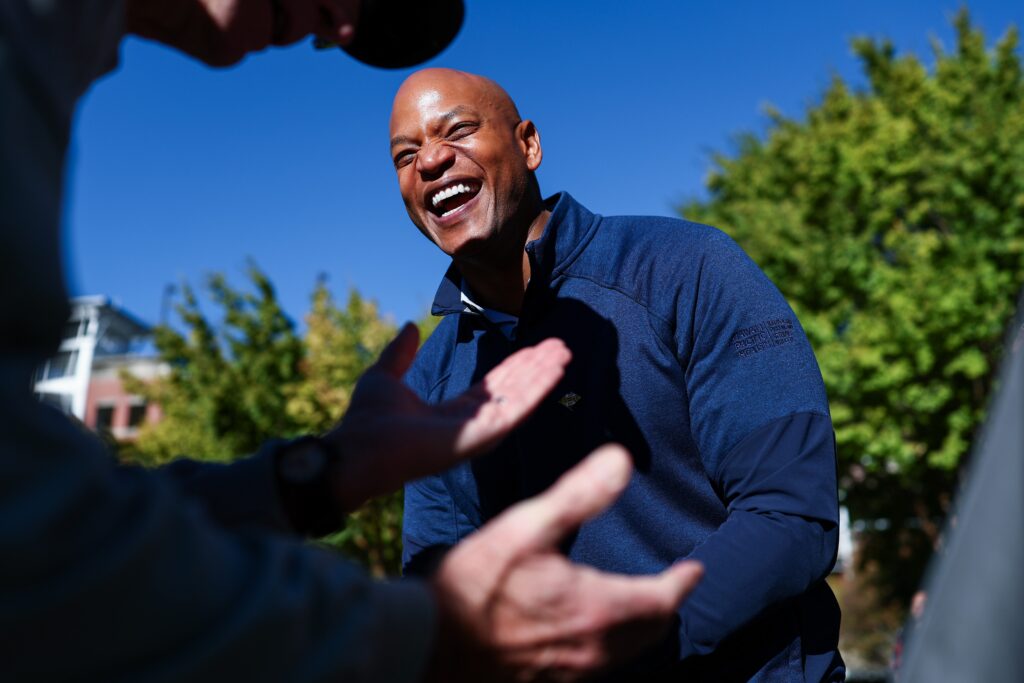
Maryland’s Democratic Gov. Wes Moore, Florida Republican Rep. Byron Donalds, former Atlanta mayor Keisha Lance Bottoms (D) and Milwaukee County Executive David Crowley (D), all won their races. And in Nevada, Democratic Attorney General Aaron Ford triumphed over the incumbent governor.
“It was never lost on me that I’m the only Black governor in this country, and that’s a title that I never wanted,” Moore said in an interview before the election.
The record number of Black governors-elect marks a significant milestone, made possible by the blue wave that swept Democrats into office nationwide. Until Tuesday’s midterm elections, only three Black politicians had ever been elected by voters to serve as governors, all in different election cycles.
However, more have served as governors because of appointments. To date, besides Moore, P.B.S. Pinchback (Louisiana), L. Douglas Wilder (Virginia), Deval Patrick (Massachusetts) and David Paterson (New York) have held office. Pinchback and Paterson were not elected but ascended from the role of lieutenant governor to complete the term of governors who resigned or were removed.
Only two of those served at the same time: Patrick and Paterson. In 2008, when New York Gov. Eliot Spitzer resigned, Paterson, who served as his lieutenant governor, stepped into the role.
While Black politicians have made strides at local legislative levels, major-party nominations for statewide and national races have historically been elusive. And general-election victories are rare.
A large part of that is due to historic biases and discrimination, Nadia Brown, a professor of government at Georgetown University, said in an interview.
“It’s really difficult for minoritized communities, people from marginalized communities, to build a national statewide coalition in order to get elected,” said Brown. “And that has to do with historic legacies of racism, sexism, homophobia, xenophobia.”
At the local level, candidates often have an easier time building trust with voters who know them, their families or their work in the community, Brown said. Statewide candidates, meanwhile, must put together broader coalitions and contend with stereotypes about what issues they are qualified to handle. For example, Black candidates may be viewed as knowledgeable about civil rights but less competent on issues such as environmental policy, she said.
But Brown said this year’s field stood out not just for the number of Black candidates who clinched major-party nominations, but for their qualifications and experience. The eight Black major-party gubernatorial nominees included Democrats and Republicans, reflecting a range of political backgrounds and policy priorities.
Derrick Johnson, president of the NAACP, also pointed to the candidates’ governing records as a reason they were successful in winning their nominations. Johnson cited Ford’s work as Nevada’s attorney general and Bottoms’s tenure as Atlanta’s mayor.
The milestone comes against a backdrop of heightened racial tensions in the nation. The friction has been fueled by pushback against diversity, equity and inclusion initiatives, alongside long-standing race-conscious policies.
Johnson said that the current climate makes the moment even more significant.
“No one should be forced to suppress their identity for political expediency or anyone else’s comfort,” Johnson said. “We are a diverse democracy. We have been for a while. And as a nation we will be doing ourselves a disservice if we try to fit ourselves into a 1950s segregated box.”
For Moore in Maryland, the prospect of a coalition of Black governors carries significance beyond the historical milestone. He said he learned that being the first Black person to occupy the role in Maryland did not necessarily make the job different, though it did shape how others perceived him sometimes.
“Anytime you’re walking into a space that no one has walked in before, there is kind of the nerve-racking nature of it all,” Moore said. “When people see you they don’t often see the governor, because there hasn’t been a governor that’s looked like you before.”
The post Record number of Black governors elected in Tuesday’s midterms appeared first on Washington Post.