Last month, in a YouGov poll of 1,501 registered U.S. voters, 66 percent said that in the conflict between Russia and Ukraine, they sympathize more with Ukraine. Twenty-four percent chose neither, and just 3 percent sided with Russia. While support for sending military aid to Ukraine had dropped from 56 percent in July to 46 percent in October, just 34 percent of Americans opposed military aid to Ukraine. Fifty-one percent said they supported sharing military intelligence with Kyiv, and just 31 percent opposed it.
In other words, there is no significant U.S. constituency for a rapprochement with Russian President Vladimir Putin.
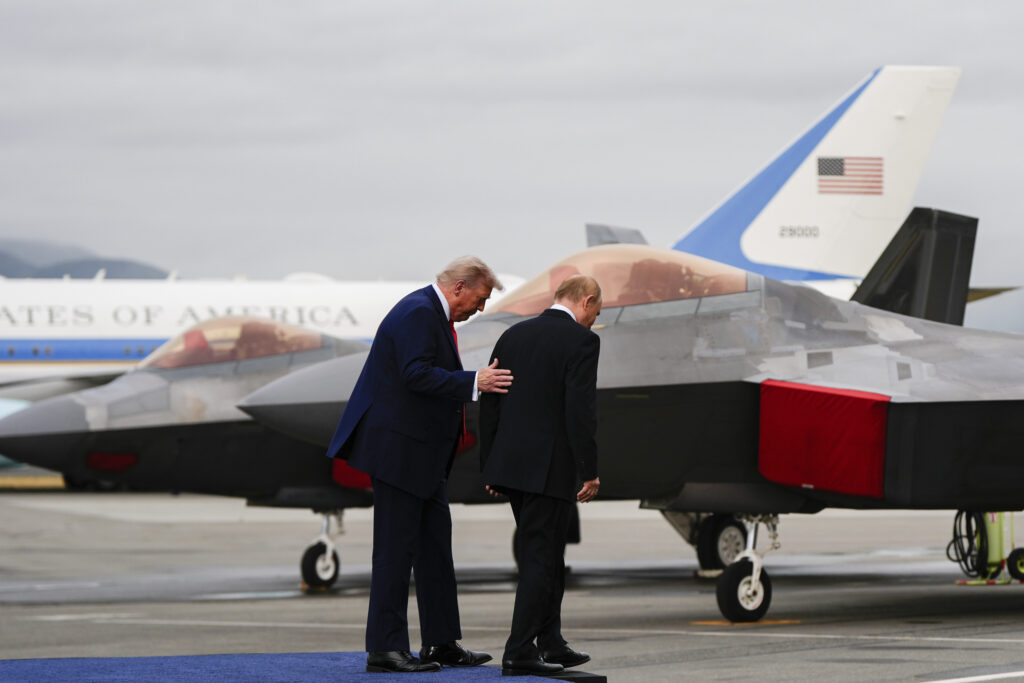
In just the past few weeks, the United States has started buying Russian diesel fuel and President Donald Trump has invited Putin to the Group of 20 summit in Miami, as well as absurdly claiming that “Russia, frankly, has been fine on Ukraine. They haven’t been doing much.” Our government seems to have become a de facto ally of Russia instead of a de facto opponent.
Sometimes a president must make a difficult and unpopular choice for the greater good of the country, but it’s impossible to see the Trump administration’s pro-Putin turn this way. It’s strengthening an anti-American dictator — who keeps providing intelligence assistance to the Iranians and allied groups, despite Trump’s persistent insistence that none of that assistance is significant — and weakening U.S. ties with traditional allies in NATO. As Putin continues his hybrid warfare against America’s European allies, Elbridge Colby, the Pentagon’s undersecretary of defense for policy, reportedly told officials from Lithuania, Latvia and Estonia to tone down their public warnings about Moscow.
Hardly anyone in the U.S. seems to want this, except for the guy sitting in the Oval Office. Trump sees Putin — and for that matter, Chinese dictator Xi Jinping — far more positively than the American electorate does. (The Palm Room is a passageway connecting the White House to the Rose Garden and the West Wing; it now features pictures of Trump with Putin and Xi.)
The fact that Trump has made all these moves with the midterms approaching suggests that fear of voter disapproval hasn’t hemmed him in. He does what feels right to him, even if — or perhaps because — he’s told that he’s making the wrong decision.
Trump’s defiant, contrarian and often self-destructive instincts are likely to intensify as he enters the final two years of his presidency.
There’s considerable evidence that the last two years of a two-term president’s run tend to be the roughest. It’s not just because big scandals like Iran-contra blow up. It’s because the staff is exhausted, or turnover has brought in lesser replacements. The lowest-hanging fruit of legislative goals has been picked, and often, Congress is controlled by the opposition party. The president is a lame duck with dwindling political capital, and a lot of the attention shifts to his likely replacement.
Now take all those traditional factors and add an octogenarian president who has always been erratic, combative, and prone to posting furious tirades on social media and insulting reporters. Americans have already seen Trump, at a campaign rally in Port Huron, Michigan, after the Nobel Peace Prize was awarded to South African jurist Navi Pillay, lash out at Norway, whose Nobel committee picks the winner, and declare that he no longer wants Norwegian immigrants to the U.S. And in August, he bragged about his “very good relationship with Kim Jong Un, of North Korea.”
To the extent that the president was ever under control, the next two years will be Trump unleashed. We can expect even more praise of and concessions to anti-American dictators, along with even more pointless confrontations with once-stalwart U.S. allies, and even more unpredictable decision-making and sudden reversals.
Buckle up, America, because we may look back on the past two years as the stable part of Trump’s second term.
The post Trump’s embrace of dictators shows defiance. It’s bound to get worse. appeared first on Washington Post.