
The hateful messages started pouring in, one after another.
âWhat the f–k is wrong with you?â
âI hope [you] are shown the same cruelty you carry in your heart for someone you donât even know.â
âBrother you gotta kill yourself.â
As students at culturally progressive Columbia University, we were well aware that the essay we published in our campus magazine questioning campus dogma on the notorious âCornell 7â would evoke strong reactions.
But we didnât foresee the scale and ferocity of the backlash â or how many of our own âalliesâ in the fight to champion freer discourse and dialogue on campus would join in.
Hereâs a taste of what we argued last month in the Columbia Sundial, an independent student magazine expressly founded to present new and even uncomfortable ideas to the general student body:
âThe sexual revolution created a hyper-liberal, pro-sex culture that insists that âwomen can do whatever they want with their bodiesâ . . . we cannot claim to stand for sexual freedom and then recoil in disgust when thereâs a possibility that a young woman simply chose to exercise it.â
That, apparently, is something youâre just not allowed to say at an Ivy League institution dedicated to âhigher learning.â
Not even if youâre a journal dedicated to âmultipartisan ideas, including those that may be controversial,â as the student-run Columbia Political Review claims to be.
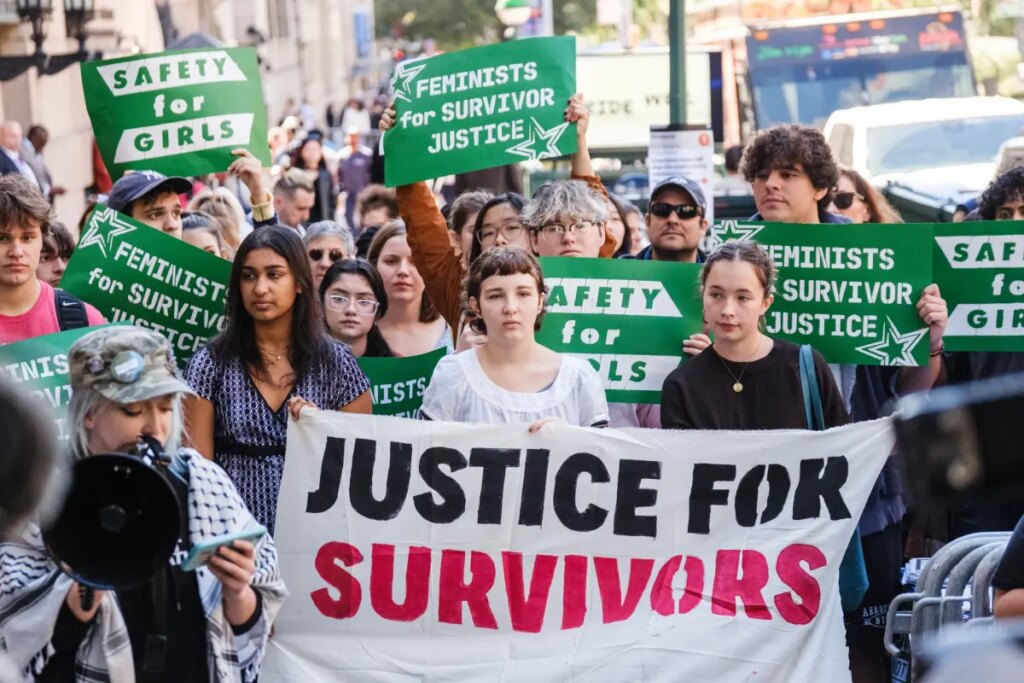
Its editorial board condemned us within hours of publication, saying our words âperpetuate a culture of campus violence, rape and assault.â
It called on the Sundial to âformally re-evaluate their publishing guidelines and their commitment to public safety.â
The Columbia Open Discourse Alliance chimed in â oh, but not to defend us.
Instead its board attacked, well, the very reason for its organizationâs existence.
âOpen discourse requires that every member of our community be able to speak,â the group declared on Instagram.
âThis article does the opposite: it promotes rape culture and works to silence survivors of sexual assault. It is therefore not a contribution to debate but a step backward.â
Of course, the allianceâs board didnât care to define ârape culture,â or explain how exactly our essay â containing ideas well within the bounds of the national discourse â was ânot a contribution to debate.â
No, in Morningside Heights, it seems that having a particular take on the Cornell 7 â one that contends women have agency, calls for exercising reasonable scrutiny, and criticizes the social-media and campus frenzy â can only âpromote rape cultureâ and âsilence survivors of sexual assault.â
Within the Sundial itself, we watched as some colleagues folded to the peer pressure.
They circulated an Instagram petition demanding that the magazine âcease . . . all organizational operationsâ until it made amends, leaked their (often less than factually accurate) fury to the campus press on two separate occasions, and finally resigned.
Perhaps they did so out of sheer conviction.
Maybe itâs just that they really, really hated our piece.
But itâs also a fact that some of these Sundial staffers had privately expressed support for the essay prior to its publication, or had been neutral on it â and only turned against it once friends and acquaintances began harassing them for their affiliation with us.
We can even understand why theyâd flip.
Columbiaâs F grade on FIREâs annual College Free Speech Rankings report is well earned â and our âalliesâ in the open-discourse space are now swimming with the tide.
The threat of losing staff, and the overwhelming extent of the vitriol leveled against us, clearly gave them strong incentive to join the campus mob.
All this because we called into question the liberal culture that encourages depraved acts for their own sake â and that turns on a dime when the culture itself produces painful results.
When that occurs, weâre told that adult women have no agency â and can retroactively hold men responsible for acts which, in hindsight, were traumatic and unwanted.
The collective âI am Jane Doeâ frenzy, we maintained, had âushered in a climate on campus in which it is difficult to disagree with the maximalist position on what happened on Oct. 19 and Oct. 20, 2024, to one âJane Doeâ at Cornellâs Chi Phi frat house.â
Our critics proved us right.
We struck a nerve, and itâs now clear where the self-proclaimed free-speech enthusiasts on our campus really stand.
The discourse at an Ivy like Columbia shouldnât be dumber than that of the rest of the country.
Weâve come to learn where the boundaries of our universityâs âintellectualismâ lie â and just how constrained they really are.
Nikos Mohammadi, a Columbia College junior, is the deputy editor of the Columbia Sundial and an academic fellow at UnHerd US. Christina Ma, a Barnard College junior, is a Sundial staff writer.
The post We challenged campus dogma on the ‘Cornell 7’ — and exposed Columbia’s free-speech hypocrisy appeared first on New York Post.