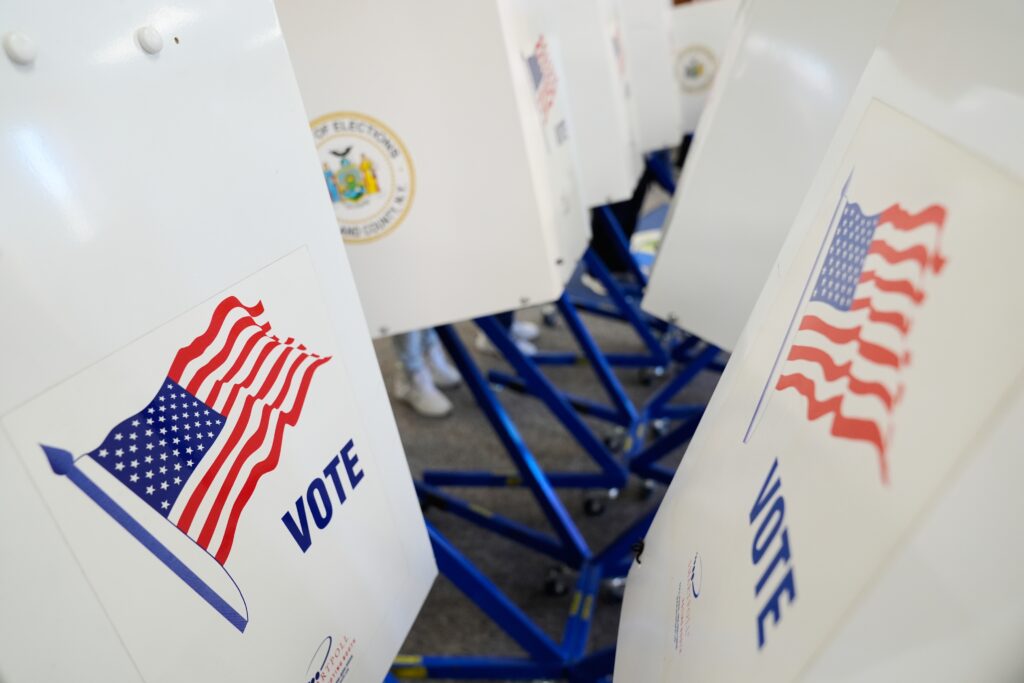
Here are the five questions that probably will determine how Tuesday’s midterm elections turn out.
Get The 5-Minute Fix in your inbox
1. What do disaffected voters do?
By all accounts, many Democratic voters across the country are excited to vote. But Democrats’ path to a successful election requires Republican-leaning and independent voters, who will be needed if Democrats are to secure the Senate majority, a significant House majority and a majority of governor’s mansions.
President Donald Trump is deeply unpopular, but it’s unclear to analysts whether former Trump voters will go out and cast votes for the Democratic candidate or just stay home. Low Republican turnout might not be enough for Democrats to win in some races where Republican voters outnumber Democrats, including Senate races in Texas and Kansas, and the governor’s race in Florida.
“There is little question that this is going to be a big night for Democrats, but it is impossible to know just how big,” nonpartisan political analyst Charlie Cook writes. “Pollsters can’t ascertain which disaffected Republicans will hold their noses and vote for their team, which will stay home, and which may take the relatively drastic step of actually casting a ballot for the opposite party.”
2. How do progressive Democrats perform?
Republicans are hoping that if voters dislike the direction of the country with their party in power, they feel that the alternative is worse. In some competitive races, that’s a liberal Democrat (or fear that liberal Democrats will regain power overall). Michigan’s Senate race is the epicenter for this: Democrats nominated liberal Abdul El-Sayed over a more moderate candidate, and polls show the race is very close, even as Democratic candidates in redder states such as Iowa and Alaska are making races competitive.
In Florida’s Senate race, Democrats nominated democratic socialist Angie Nixon, and few analysts see the race as competitive — despite the governor’s race being competitive.
3. Can Democrats finally beat Sen. Susan Collins in Maine?
A Democratic Senate majority almost certainly requires a win in Maine, where polling shows a very tight race despite 2026 being an extraordinarily unfriendly political environment for Republicans.
Sen. Susan Collins (R) is a unicorn: She is one of the last remaining Senate candidates in the country to represent a state that consistently votes for the other party. This year, she’s in one of her toughest reelection battles against former state Senate president Troy Jackson (D). Republicans say she’s a textbook example of how to find common ground and a connection with voters who normally vote for the other party while holding on to her values.
4. How much influence do billionaires have?
Billionaires have dominated political contributions in these midterm elections, and they’re giving staggering sums to Republicans in particular. Tech billionaire Elon Musk is intently focused on Texas’s Senate race, trying to boost the scandal-plagued Republican candidate, Ken Paxton. Other billionaires are funding Republicans in Ohio and Florida.
It’s an open question how much influence their money will have on voters. At some point there is an oversaturation of TV ads that voters tune out. It could even be a negative, to the extent billionaires and corruption are a campaign issue in certain races: The tech world is gobbling up money, the average worker is getting less share of the profits, and costs are outpacing wages for a majority of Americans in swing districts.
5. What, if anything, does the Trump administration do to affect voting or challenge the results after?
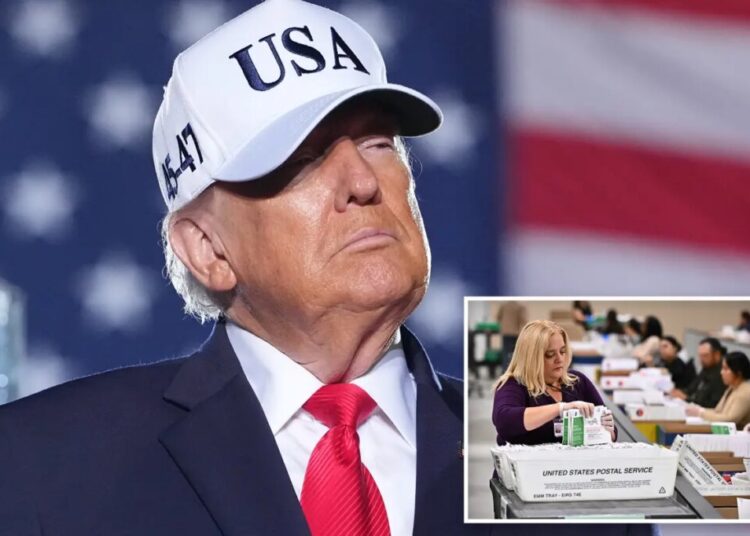
Most Americans expect Trumpto claim fraud if his party loses. In the days leading up to Election Day, his administration has tried to allege Democratic-led states are letting noncitizens vote, making allegations that so far have been received skeptically in court. The Justice Department also tried to stop the certification of the results in Alaska’s Senate race if the Republican narrowly loses.
Election officials across the country are preparing for immigration agents near polls, for Trump or his allies to create confusion about voting, or for Trump even to try to seize voting machines after the election.
Election officials and experts express confidence that the election will be free and fair.
“We’ve been working to prepare for this election since the Wednesday after the last election,” Nevada Secretary of State Cisco Aguilar (D) said in an interview. “We’ve won in court, we’ve been to the Supreme Court twice, and we’re prepared, while also maintaining confidence in the process and making sure that voters know that their votes will count.”
Amber Phillips writes The 5-Minute Fix newsletter, a quick analysis of the day’s biggest political news. Send her an email here, or ask a question that could be featured in an upcoming newsletter.
The post Five questions that will determine how the midterms shake out appeared first on Washington Post.