When you’re young, tripping and falling might leave you with little more than a bruised ego. As you get older, minor accidents like these can be devastating. Bones can weaken with age, and osteoporosis, which causes bones to become less dense, increases the risk of fractures. More than one in four people 65 and older in the United States fall each year, and a momentary loss of balance can lead to serious injuries like hip fractures.
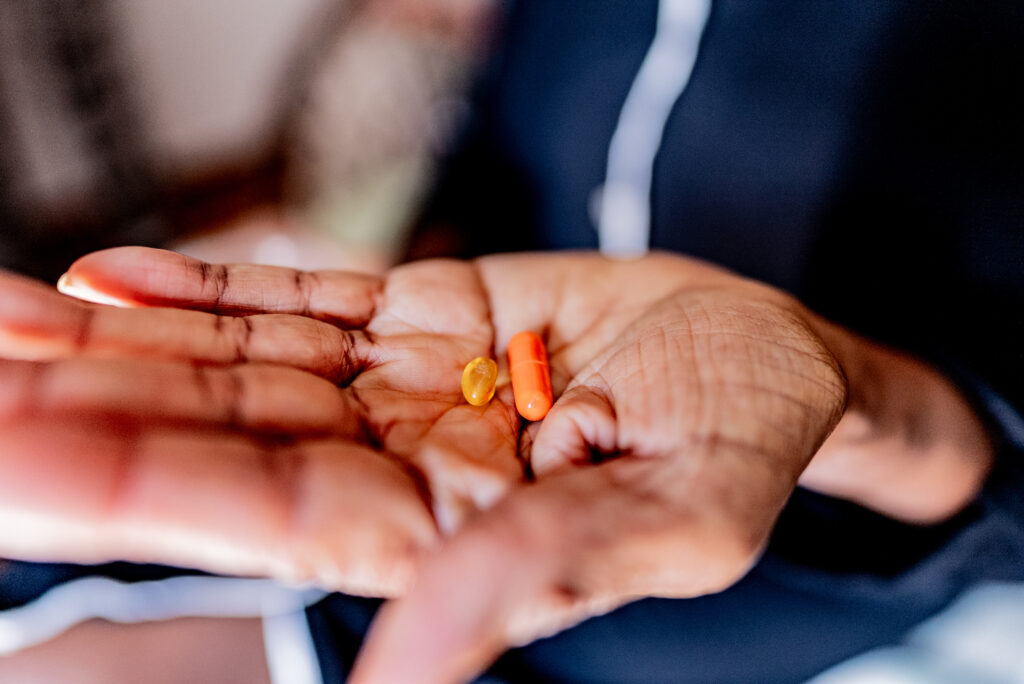
Many people take calcium and vitamin D to help keep their bones strong. “This is a really common combination of supplements that’s been recommended to people for a long time,” said Gele Moloney, an orthopedic trauma surgeon and chief of orthopedics at Pittsburgh hospital UPMC Mercy. But they may do little to reduce the risk of falls or fractures, according to a large systematic review and meta-analysis published in May in the British medical journal BMJ.
The researchers analyzed 69 trials involving more than 150,000 participants and found little to no meaningful benefit from taking either supplement alone or the two together.
That doesn’t mean they’re useless. There are still good reasons to take vitamin D and calcium, said Moloney, who was not involved in the new research. For example, people with a deficiency or bone diseases such as osteoporosis and osteomalacia may need supplementation.
If you’re concerned about your bone health, ask your doctor whether a vitamin D test could help you decide whether you need a supplement. And getting enough of these nutrients throughout your life remains important for keeping bones strong.
Here’s what experts say about the recent findings and what you can do to reduce your chances of falling and breaking a bone as you get older.
What did this new study find?
Calcium and vitamin D have long been linked to strong, healthy bones. “Our bones are always basically healing themselves,” said Moloney. “Vitamin D and calcium are really important in that process.”
Vitamin D helps your body absorb calcium and supports bone renewal. Few foods naturally contain vitamin D, though it’s often added to fortified foods like milk and breakfast cereal, and your skin produces it when exposed to sunlight.
Most of your body’s calcium is stored in your bones. When you don’t get enough from your diet, it draws on those reserves to maintain calcium levels in your blood, explained Michael Holick, a professor at Boston University Chobanian and Avedisian School of Medicine who specializes in metabolic bone diseases. Low calcium intake causes a loss of bone mass, since “the body is stealing that precious calcium out of your bones,” he said.
In the BMJ review, researchers looked at whether the supplements could prevent falls and fractures. They selected trials comparing calcium, vitamin D or both with no treatment or a placebo in adults who didn’t have, or at least weren’t being treated for, osteoporosis.
Based on their findings, doctors “may need to reconsider the routine use of these supplements for fracture and fall prevention,” Olivier Massé, a pharmacist at the Sacré-Coeur-de-Montréal hospital and lead study author, said in an email.
That said, this review mostly included studies where participants were not at high risk of fractures, noted Moloney. Vitamin D and calcium supplements can be important for people with osteoporosis. And for people with osteomalacia — a bone disease caused by vitamin D deficiency — vitamin D and calcium supplements are a key part of treatment.
The findings also don’t tell us what happens over a longer period because the trials only followed participants for a median of two years, Maloney said. And they don’t negate the importance of getting enough calcium and vitamin D throughout your life, stressed Holick.
“If you’ve been calcium and vitamin D deficient most of your life, and now you have lost a lot of your bone mass, all of a sudden taking calcium and vitamin D is not going to reverse it,” he said.
What else can you do to prevent fractures?
Regardless of whether your doctor recommends supplements, regular physical activity is one of the best ways to protect against fractures. Exercise has “the highest evidence to decrease falls,” said Jennifer Vincenzo, a clinical specialist in geriatric physical therapy and professor at the University of Arkansas for Medical Sciences College of Health Professions. In a 2019 Cochrane review, exercise in general reduced the rate of falls among older adults living independently by 23 percent.
Different types of exercise offer varying benefits. Resistance and weight-bearing movements strengthen muscles and put stress on bones, which can help maintain or increase bone density. Astronauts, for example, tend to lose bone mass in space because “there’s no gravity out there,” said Evan Papa, program director in the Tufts University School of Medicine’s doctor of physical therapy program.
Balance and functional exercises, such as tai chi or standing on one leg, were found to be particularly helpful in the Cochrane review. These movements “tend to have the greatest direct impact on fall risk,” said Papa.
Weight-bearing aerobic activities like jogging and dancing can also support bones in the lower body, said Holick. The impact of each step helps maintain bone density in the hips and spine, he explained.
You can also keep bones healthy by eating a balanced diet, limiting alcohol, avoiding smoking and getting screened for osteoporosis. Screening is recommended for women 65 and older, as well as for women ages 50 to 64 with certain risk factors, such as having a parent who has broken a hip. Men can talk to their doctors about whether they should be screened, too.
If you fall, even if you aren’t injured, talk to your doctor about what might have caused it and how to prevent it from happening again. That might include working with a physical therapist to improve your balance or making your home safer by reducing clutter, securing rugs and adding bathroom grab bars.
Exercises for strength and balance
Anyone with a history of falls or difficulty with balance should consult a doctor or physical therapist before exercising at home. If there are no safety concerns, here are a few moves that can help strengthen your muscles and improve your balance:
Sit-to-stands
Sitting down then standing back up from a chair repeatedly is “a really good exercise for your lower body, but also your balance,” said Vincenzo. Start with a hard kitchen chair, then make the exercise more difficult by moving to a softer, lower couch and using your hands for support less often. Keep sitting and standing until you feel a bit tired, she said — that might mean one or two repetitions for some people and 20 for others.
Dual-task exercises
Doing two things at once challenges your balance, said Papa. This might be as simple as walking and talking: Papa asks patients to walk on a treadmill while answering math questions, listing U.S. states or naming different fruits. “Anything you can do to cognitively stress the brain while the brain is trying to functionally move” helps, he said.
Clock stepping
Imagine you’ve lost your balance — the first thing you’re probably going to do is catch yourself by stepping to the side. As you get older, “sometimes that reaction time isn’t as good as it needs to be,” said Vincenzo. To practice, pretend you’re standing in the middle of a clock. Hold onto a sturdy surface if you need, and tap one foot on each number around half of the “clock,” then repeat with the other foot on the opposite side. Challenge yourself by changing speeds or shifting your weight back and forth.
Bicep curls
In the Cochrane review, combining balance and functional exercise with resistance reduced the rate of falls by 34 percent. To work on strength and balance at once, perform bicep curls while changing the position of your feet. Start out with one foot in front of the other, then alternate feet, or switch to a staggered stance, continuing to lift weights as your feet move. This “challenges your body to balance in different ways while also improving strength,” Papa said.
If fitting in these movements feels overwhelming, start slow and do a few every other day, Vincenzo recommended. You might find it easiest to work them into your everyday life, like sidestepping while brushing your teeth or doing a few chair stands between commercials.
“Work up to doing it more and making it more challenging as you improve,” she said. “A little is better than none at all.”
The post Taking calcium and vitamin D may not prevent broken bones appeared first on Washington Post.