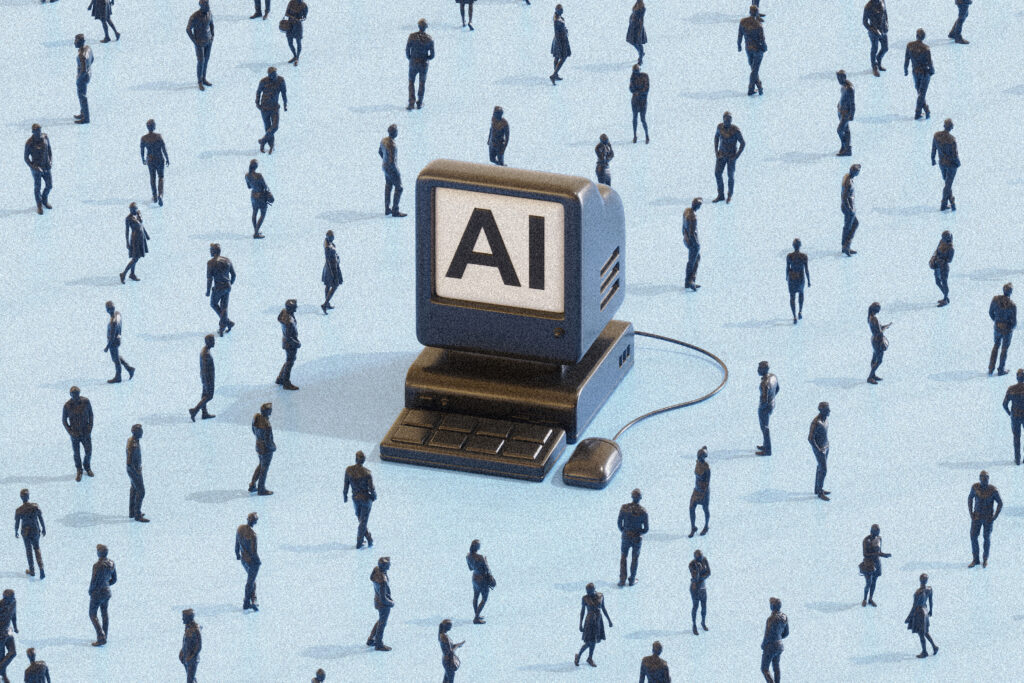
AI literacy is quickly becoming a required skill for many types of jobs.
Some workplaces are holding mandatory training sessions in artificial intelligence. Others are requiring employees to use a specific number of tokens or log a certain amount of time on AI platforms.
Major tech companies including Meta and Google are tracking employees’ use of AI. And Accenture requires managers to show use of new tech tools to get promoted.
But as companies try to get their workers up to speed and integrate AI into their work, a lot of employers are going about it the wrong way, said Arvind Karunakaran, an assistant professor of management science and engineering at Stanford University.
“You can consume a lot of tokens without creating a lot of value,” Karunakaran said. “People generate cat meme videos because it uses a lot of tokens, but that’s not creating the kind of impact companies want.”
The adoption of AI is happening faster than the adoption of the internet did, according to a new report from Stanford’s Institute for Human-Centered Artificial Intelligence. And many users report that AI tools have really helped — whether saving time and costs or increasing innovation.
The same report, though, found that one-third of organizations surveyed expected AI-related staff reductions in the coming year.
Especially in that context, simply mandating usage won’t spark excitement about the technology, Karunakaran said, and neither will insisting that employees use AI to cut turnaround times and ramp up productivity.
“People start asking questions like ‘What am I as an employee getting out of it?’” he said.
The report he co-authored found that in the short-term, mandating AI tools may ramp up productivity. But in the long-to-medium term, employees tend to feel devalued and disengaged. From there, people find ways to mindlessly check the box.
When employers present these tools and their use as an opportunity for employees to expand their skills and grow their careers, people are much likelier to use them, Karunakaran said.
He suggests that rather than requiring employees use a specific number of tokens, companies should encourage workers to experiment and share their own use cases and success stories.
Most workplaces are still shutting employees out of the conversation. More than half of employees said they have less of a say than they’d want on adopting new tech at work, according to a report from Gallup and Jobs for the Future, a work and education nonprofit.
“It’s reasonable for employers to expect people to learn and use new technologies,” said Molly Blankenship, associate vice president of strategy and impact at Jobs for the Future. “The bigger question is how they’re implementing those expectations, whether workers are involved in the conversation and what support and training they’re providing.”
The post Why mandating AI use in the workplace can backfire appeared first on Washington Post.