ANNIE PROULX STORIES: New and Selected, by Annie Proulx
Annie Proulx is an American eccentric, a writer whose dense, cluttered style is wall-to-wall overload. She’s a putter-inner, not a taker-outer. Like an outsider artist, she fills even the far margins of her canvases with bizarre stick figures and grim tableaux. There is no one like her.
She has a new, career-spanning collection of stories out now. Reading it is like opening the hall closet and having the contents of an antique junk shop, laced with spiky and rusted farm implements, spill out and maim your dog. I mean this as praise.
Proulx came late to fiction writing. She didn’t begin publishing her work until the late 1980s, when she was in her 50s. She’s best-known for a) her barnacle-spackled novel “The Shipping News,” about a misfit journalist and a Newfoundland fishing community in sad decline, which won the Pulitzer Prize in 1994.
And for b) her heavily anthologized short story “Brokeback Mountain,” about cowboys who are, to borrow words from the Ned Sublette song, frequently and secretly fond of each other. It appeared in The New Yorker in 1997 and was made by Ang Lee into a stately tear-jerker (“I wish I knew how to quit you”) starring Heath Ledger and Jake Gyllenhaal.
Anyone who’s kept pace with Proulx over the decades knows her short stories are her thorniest and most essential work. It’s good to have the crude best in one rude pile. If you haven’t read one in a while, let me refresh your memory.
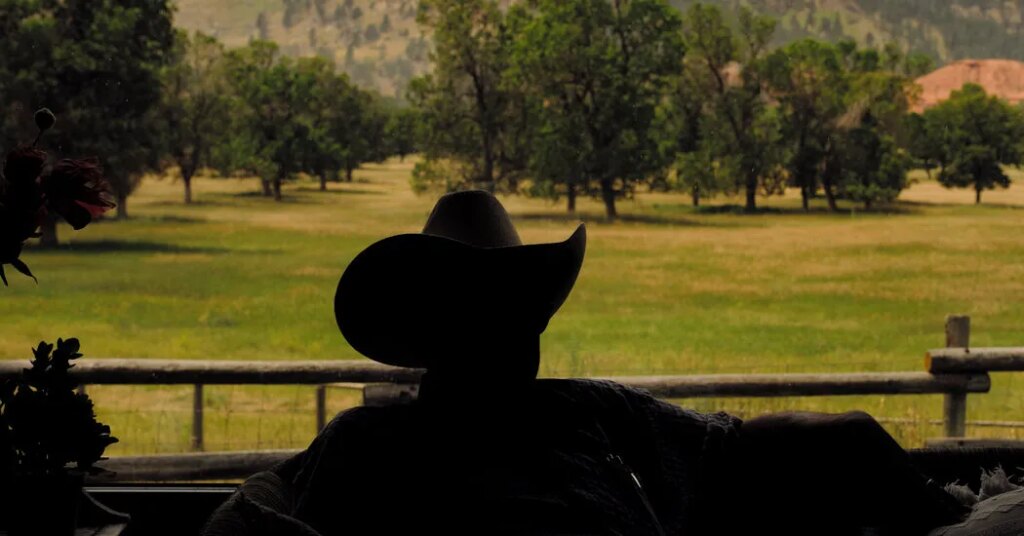
Men and women with names like horn blats — Rufus Clatter, Orion Horncrackle, Chay Sump, Forrie Wintka, Bobhot Mackie, Queeda Dorgan — sidle into view, often outside grubby, festering ranches in Wyoming.
Proulx sums them up in pungent strokes. One man has “oyster eyes sliding around”; another is “all suet and mouth”; another is “a pimpled, mustachioed specimen with mismatched eyes”; another (here she seems to be describing the vice principal of my high school) is a “humorless fascist who picked his nose and left pliant knobs of snot on the steering wheel.”
Sometimes Proulx bangs like early Tom Waits, croaking out imprecations from behind a sweat-warped piano: “He was nine-times-nine drunk, his gangstery face loosening, the crushed rodeo nose and scar-crossed eyebrows, the stub ear, dissolving as he drank.”
The flora that surrounds these characters (miterwort, bladder campion, panic grass, rabbitbrush) will not be found in the Burpee seed catalog. The critic Cyril Connolly wanted to have a “poison corner” in his garden. I can imagine Proulx keeping one of those. Her mind swims with esoteric knowledge. The fauna is no less remarkable, like the half-skinned steer that stalks a man in one of the most famous of these stories, or all the cows with prolapses, hoof rot and hernias.
The sex acts etch themselves into your skull (“put your ass up like a whippoorwill”), and so does the food: A charred steak displays “the reticulate grain of an osprey’s leg.” The sky is always puking down Old Testament storms, snow devils or “blunt crumps of thunder.” If there’s a blue sky, it will be a venomous blue sky.
I could keep going in this vein. What’s most essential, and most primal, about Proulx’s stories is the freight of doom she loads into them: chain-saw accidents, deaths by emu claws, babies run over by trucks, amputated limbs, terrible car crashes, brain damage, deformation, fires that kill, freelance castration, murders, kids trapped in mine shafts, heads squashed by rodeo cattle.
It’s as if the characters have fallen out of, or into, Michael Lesy’s “Wisconsin Death Trip,” that catalog of woe.
Proulx’s strangled wit provides occasional shelter from this rock fall. This book contains one of the best euphemisms for death I’ve ever read: “Mrs. Peck went to the land of no breakfast forever.” And here she is on a young woman forced to work in a burger joint, uttering words that a more sinister Barbara Ehrenreich, in her book “Nickel and Dimed,” might envy: “She disliked having to repeat ‘have a nice day’ to people who deserved to be ridden bareback by the devil wearing can openers for spurs.”
Her stories occasionally break into sunlight and stretches of deep feeling. Here, for example, from a story called “The Mud Below,” are a young man’s tangled and borderline erotic impressions of bull riding:
He’d been shot out of the cannon. The shock of the violent motion, the lightning shifts of balance, the feeling of power as though he were the bull and not the rider, even the fright, fulfilled some greedy physical hunger in him he hadn’t known was there. The experience had been exhilarating and unbearably personal.
Proulx’s style smooths out to beautiful effect in a few of the later stories, especially “Brokeback Mountain.”
I’m aware I’ve made the bulk of Proulx’s stories sound insane. And they are. But the inundation is purposeful and artful. From her chaotic style she coaxes out wild, wind-chapped poetries, as if she were the caller of a cosmic hoedown.
Her crowded verbiage contains nested critiques of modernity, of every sort of streamlined ease. A lot of her stories contain sideways glances at the new money coming into town, doctors buying up the old ranches and turning them into weekend homes with American-eagle door knockers. Nothing in Proulxland is pasteurized for your protection.
Her densities put you in mind of all the great, clanking accumulators: James Joyce’s associations, stacked like pancakes; Gustav Klimt’s encrustations of paint; Charles Ives’s garage-sale polytonalities. Stephen King once said that his stuff was the literary equivalent of a Big Mac and fries. If that’s true, then Proulx’s writing is the equivalent of a platter of gizzards, chicken feet and deviled kidneys.
This is another way of saying that a little of Proulx can be a lot. Claustrophobia can sneak in, and a sense of rusty joints that could use grease. Her stories should be read slowly and individually, no more than one a day — or, better, one a week.
Many of these new and selected stories first appeared in The New Yorker. Set against the nubbly yet neutral background that magazine provides, they popped. As a yin-yang duo, Proulx and The New Yorker were made for each other.
Reading her there is a bit like watching John Steinbeck’s Joad family, piled into their improvised 1926 flatbed truck, or the dudes in “Duck Dynasty” wheel into a parking lot filled with Volvos and Subaru Outbacks. But you wouldn’t want to read an entire issue filled with Proulx.
Her characters are noise-making American misfits, outsiders and flatulent malcontents. It makes sense that one of the biggest put-downs in these stories is: “They were only ordinary people to whom nothing happened.”
ANNIE PROULX STORIES: New and Selected | By Annie Proulx | Scribner | 404 pp. | $30
The post Wild, Wind-Chapped Stories From Old, Weird America appeared first on New York Times.