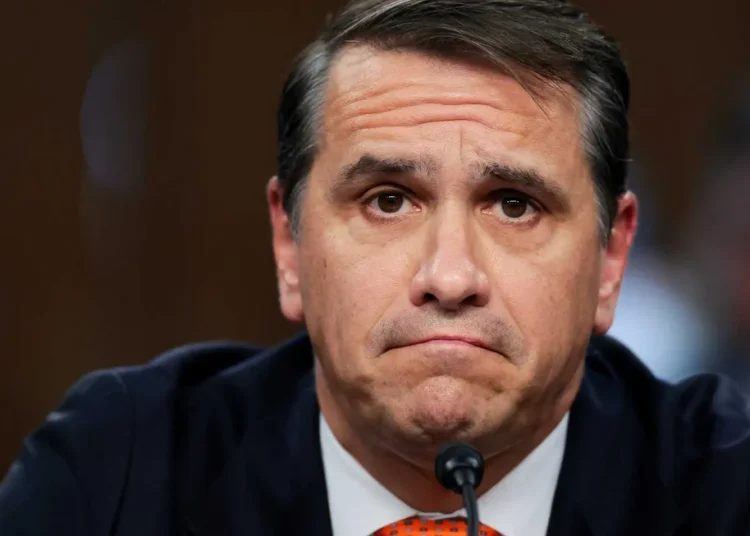
In response to reports in The Wall Street Journal that Elon Musk personally ordered the deadly slowdown of internet access to Ukraine and that Trump then called and begged him to get it restored, Nobel Prize-winning economist and all-around genius Paul Krugman called yesterday for the United States to nationalize Musk’s Starlink/Starshield array of thousands of satellites providing internet service around the world.
On MS NOW, former Bush speechwriter and columnist (and guest on my show) David Frum echoed the sentiment in an interview with former Bush White House Communications Director Nicolle Wallace. And Matt Stoller — often brilliantly on the monopoly beat — is also writing thoughtfully about what to do about this terrible situation.
Senator Adam Schiff framed the issue when he wrote on Musk’s Nazi-infested social media site:
“Either the President was lying or Musk was lying, but the decision to slow down satellite speed and access has life or death consequences for Ukraine. This deserves a full investigation by the Senate. Elon Musk should be compelled to testify before Congress and under oath. National security decisions should be made in our national security interests, and not based on the personal whim of an unstable executive.”
Politico then followed up with an article titled “Dem gavels are coming for Elon Musk,” citing both Republican and Democratic members of Congress calling for Musk to be called before Congress under oath. That simple call for a normal political process provoked an imperious and apparently furious Musk to reply with an implied threat:
“Live by the sword, die by the sword. Those who pick fights with me should understand that I will find out who is really pulling the strings and come for them, not just their puppets.”
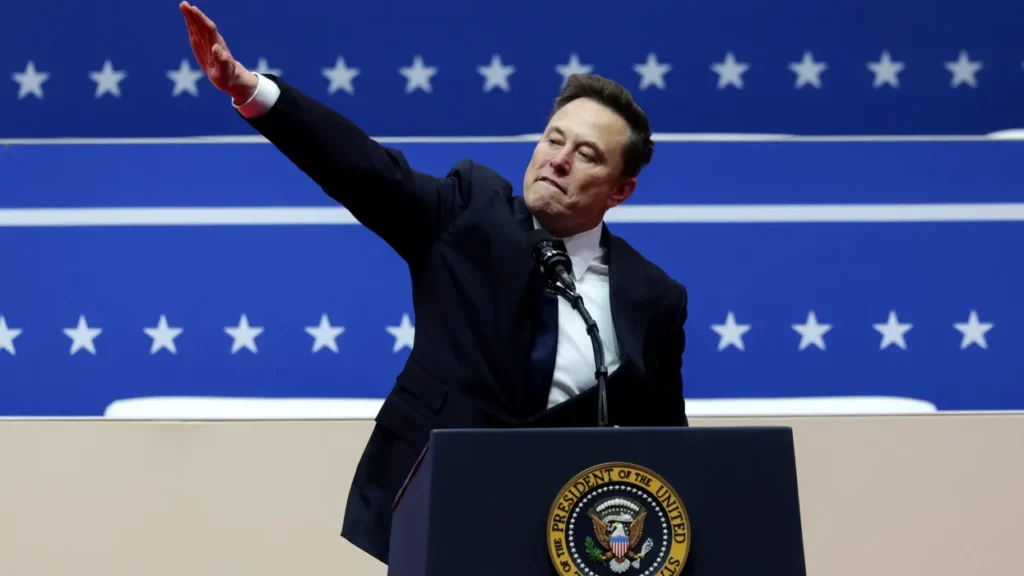
If ever there was a business that merited nationalization, Starlink is it. It only exists because it’s been heavily subsidized by U.S. government contracts and facilities, uses the internet that the US government invented, and — those in favor of nationalization argue — shouldn’t be subject to the whims of an eccentric, ketamine-addled, Nazi-saluting, election-buying CEO whose apparent decision just cost Ukrainian lives.
There’s even an argument to be made for nationalizing the rocket ship part of SpaceX (which owns Starlink/Starshield) and, like during the years when we first put men on the moon, handing it over to be owned and run by NASA.
But is it even possible? Turns out that American history says an emphatic, “Yes!”
During the crisis of World War I, President Woodrow Wilson nationalized the country’s railroads, phone companies, and telegraph operators. He did the same with the nation’s radio networks and radio stations. All were returned to private ownership after the war, but that temporary nationalization helped get America through the crisis.
President Franklin D. Roosevelt did the same during World War II, nationalizing airplane manufacturers, gun manufacturers, over 3,300 mines, the nation’s railroads, dozens of oil companies, Western Electric Co., Hughes Tool Co., Goodyear Tire and Rubber, and even one of the nation’s largest retail outlets, Montgomery Ward (as Krugman brilliantly details). He also nationalized 17 foreign companies doing business in the US.
After FDR died, President Harry Truman continued seizing companies that were using the war as an excuse to jack up profits to the detriment of our nation. He nationalized meatpacking facilities across the country, the Monongahela Railroad Company, the nation’s steel mills, and hundreds of railroad companies.
Like with Wilson’s nationalizations, nearly all were returned to the private sector after the war was over, although it took until 1965 before all were privatized. Many had had their boards of directors and senior management replaced with people who’d put the interests of the nation ahead of their greed for profits.
In the 1970s, in the wake of the collapse of the Penn Central Railroad, President Richard Nixon oversaw the voluntary nationalization and transfer of 20 railroads into the newly created National Rail Passenger Corporation, now known as Amtrak.
In 1974 Congress created another nationalized entity to deal with freight rail, the Consolidated Rail Corporation (Conrail), which absorbed dozens of failing rail companies. Conrail was government held until 1987, when it was privatized in the then-largest IPO in American history.
In 1984, when the Continental Illinois National Bank and Trust Company was in a crisis, President Ronald Reagan’s administration oversaw the FDIC nationalizing it by acquiring an 80 percent ownership share in the company; it wasn’t re-privatized until 1991, and was bought by Bank of America in 1994.
Also in the 1980s, after Reagan recklessly deregulated the Savings & Loan industry, bankers made off with billions leaving the wreckage of crushed S&Ls all across the nation. Reagan investigated over 1000 CEOs, dragged some before Congress, and threw many of those bankers into prison.
When the government agency that insured them, FSLIC, went bankrupt itself in 1987, Reagan and Congress created an umbrella agency — the Resolution Trust Corporation (RTC) — to nationalize all 747 of America’s S&Ls with assets of over $400 billion. Their assets were sold back into the private market in 1995 as the RTC shut itself down, having averted a 1929-style banking crisis through temporary nationalization.
When George W. Bush was handed the White House by 5 corrupt Republicans on the Supreme Court, the nation’s airline’s security system was entirely in private hands.
They failed miserably on 9/11, so Bush didn’t even bother with the normal acquisition process that would protect the hundreds of small contractors running security at airports across the nation: he simply nationalized the entire system and created a government agency, the Transportation Security Administration (TSA) to take over airport and airline security.
President Bush also partially nationalized the nations’ airlines, creating the Air Transportation Stabilization Board that traded around $10 billion in loans to airlines in crisis (air traffic collapsed after 9/11) in exchange for company stock. We (through our government) ended up holding 7.64 million shares in US Airways, 18.7 million shares of America West Airlines, 3.45 million shares in Frontier Airlines, 1.47 million shares in American TransAir, and 2.38 million shares in World Airways.
Congress had deregulated the nation’s banks in 1999 when Republicans pushed through an end to the Glass-Steagall Act and Bill Clinton signed it into law. The resulting banking system crash in 2008 forced the Bush administration to nationalize the country’s two largest mortgage lenders (they held about 40% of all US mortgages), Freddie Mac and Fannie Mae.
The Bush administration then additionally nationalized a 77.9% share in AIG, a 36% share of Citigroup, and a 73.5% share of GMAC, forcing out GM’s CEO Rick Wagoner, who’d been a particularly terrible manager of that company and was actively lobbying against what Bush thought were America’s interests.
As President Barack Obama came into office in 2009, GM and Chrysler were on the brink of collapse. His administration created a new company, NGMCO, Inc., that nationalized the assets of GM and was 60.8% owned by the federal government.
GM was finally fully re-privatized by the Obama administration in 2013. Chrysler went through a similar process, although both the UAW and the Canadian government were part owners when it was temporarily nationalized.
Thomas M. Hanna, Director of Research at The Democracy Collaborative and author of Our Common Wealth: The Return of Public Ownership in the United States, compiled most of the data above in a brilliant paper titled “A History of Nationalization in the United States 1917-2009.”
Toward its end, he summarizes the case for nationalizing — perhaps only temporarily — what could reasonably include America’s space-based infrastructure:
“In such times of political and economic crisis, policymakers of all ideological persuasions in the United States have never been hesitant to use one of the most powerful tools at their disposal: nationalization of private enterprises and assets.
“This included the Democrat Woodrow Wilson, who nationalized railroads, and the telephone, telegraph, and radio industries (among others), and the Republican Ronald Reagan, who nationalized a major national bank; the Democrat Franklin D. Roosevelt, who nationalized dozens of mining and manufacturing facilities, and the Republican George W. Bush, who nationalized airport security and various major financial institutions; the Democrat Barack Obama, who nationalized auto manufacturers, and the Republican Richard Nixon, who nationalized all passenger rail service.”
So, if America were to decide that Musk’s satellite and/or rocket business really should be the property of the taxpayers instead of the world’s richest man and his investors, how would that be done?
Instead of trying to regulate or engage in a protracted and expensive PR battle with him, why don’t we just buy them now?
The entire market capitalization of SpaceX is a mere $2.16 trillion if we were to simply force a purchase of all its stock, and that includes things that we don’t need to buy like his AI and social media company that have all been rolled in together. Just the satellite business could cost about half of that, depending on whose valuations you’re using.
While that sounds like a lot of money, it’s less than the budget deficit Trump has run up so far just this year alone. And remember, we poured fully $6 trillion into keeping our economy afloat during the Covid pandemic year of 2020.
Today’s crisis — with Trump sucking up to Putin and Starlink/Starshield being used to kneecap Ukraine — could easily lead to World War III, something that could dwarf the threat of Covid, Nazism in the 1940s, Bin Laden’s 9/11 attack, or the massive bank robberies that took place during the Reagan and Bush administrations. A nuclear war between major powers literally threatens all life on Earth.
Squeals of “socialism!” and “Venezuela!” aside, we know how to nationalize industries that are working against our nation’s interests and have done it before, repeatedly.
This time it’s not just about saving our banks or fighting a war. This time, it’s about saving both America and the world.
Congress needs to have a serious discussion about the merits and dangers of nationalizing Starlink/Starshield and SpaceX the way we have so many other renegade but vital companies in the past.
Pass it along.
The post This Nobel Prize winner has a genius plan to take down Elon Musk appeared first on Raw Story.