For some, the word “writer” conjures a specific look: bespectacled, tousle-haired and hopeless when it comes to fashion.
Now, as reading is increasingly presented as a lifestyle statement on social media and books are positioned as status symbols, popular American brands are playing up the idea that writing is sexy — and soliciting authors as models to prove it.
“‘Writer’ has become an aesthetic shorthand,” wrote Anika Jade Levy, a mainstay of the downtown Manhattan literary scene, in an email.
With her fellow Forever Magazine co-founders, Nat Ruiz and Madeline Cash — who has modeled for Gap, like a notable Céline model named Joan Didion once did — Levy has thrown stylish parties and posed for photo shoots with Los Angeles Apparel.
“The right novel is the ultimate accessory,” she added. “A beautiful girl holding a book on the beach is a billboard.”
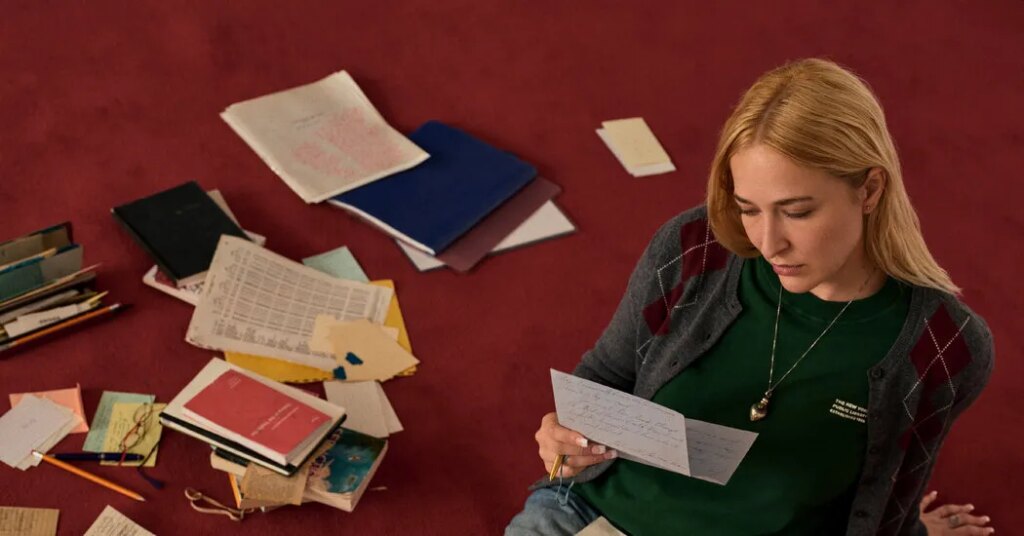
Last month, the fashion brand Madewell released a campaign featuring Levy and three other authors: Michael Bible, Danielle Prescod — who writes about style for Marie Claire — and Kayla Maiuri.
Madewell’s campaign arose from a collaboration with the New York Public Library and features the writers holding books and other literary ephemera. One T-shirt in the collection sports the phrase “party girl,” with “party” crossed out and replaced with “book.” The shirt sold out shortly after the collection dropped, and is being restocked.
The Madewell creative director Steven Cateron told The Times he was inspired by the style of librarians and the visual language of the library, and that he views writers as able to “create stories, images and feelings in ways we can’t through design.”
Such glamorous opportunities exist at odds with a grimmer financial reality for writers. An Authors Guild survey from 2023 found that half of all full-time authors earned “below minimum wage in many states from all their writing related work.”
With more traditional income streams drying up, modeling and brand deals offer authors a way to make up for disappearing pay.
“When fashion brands reach out for a campaign, it’s not too dissimilar from when a magazine might reach out for a story,” according to Michael Mungiello, a literary agent at InkWell Management who represents Bible and Levy.
Krithika Varagur, an editor for two literary magazines, The Drift and Equator, has also modeled for J. Crew. She noted the discrepancy between romanticizing a writerly image and funding the work that allows writers to thrive.
“There may be more writers today than ever before in human history, but the infrastructure to support them (jobs, word rates, institutions) has not scaled to match,” she wrote in an email. “I would love to see brands interested in the image of the writer make more of an effort to support the small magazines and presses that actually sustain literary culture today.”
Even writers with significant institutional backing have gotten in on the action. Patrick Radden Keefe, a staff writer at The New Yorker and the author of “London Falling,” wore blazers, collared shirts and a trench coat for a J. Crew ad that he described in an email as a “fun little larky thing to do.” However, he acknowledged that the correlation between modeling and book sales is “zero!”
“If this counts as ‘patronage,’” he added, “writers are in trouble.”
To the eyewear brand Warby Parker, “writers are rock stars,” according to Chrissie Miller, its director of special projects. The company holds an event series called Book Report, which has featured high-profile literary figures like Gloria Steinem, Jennifer Egan and Lena Dunham. Steinem even hosted a Book Report gathering in her home and helped to design a frame for the brand.
“Writers have bigger audiences now because of social media, Substack, BookTok and so many books being turned into TV shows and films,” Miller added. “Their audiences are growing beyond traditional readers.”
This crossover appeal “can recontextualize a literary novelist,” Mungiello explained. “The person swiping through reels is, in a way, similar to the person scanning the shelves of a bookstore.”
As writers increasingly rely on their platforms to attain book deals and attract readers, celebrities and fashion companies are adopting the trappings of literary life.
Fashion houses like Dior and Valentino have recently styled books as accessories and objets d’art. While A-listers like Oprah and Reese Witherspoon have long run popular book clubs, a new generation of celebrities — including Dua Lipa, Dakota Johnson and the model Kaia Gerber — have joined them. These newer clubs often share edgier, less commercial titles more likely to be seen at a trendy Manhattan literary event than on long library hold lists.
The irony isn’t lost on the writers themselves.
“I do think it’s interesting that more models and actresses are forming book clubs and penning memoirs,” Levy wrote. “But the grass is always greener. Actresses want to be authors and authors — at least according to Rachel Cusk — want to be bus drivers.”
The post You Must Be a Model! Yes, and an Author, Too. appeared first on New York Times.