How did a potential Republican spoiler end up on the Alaska ballot for one of the most important Senate races in the country?
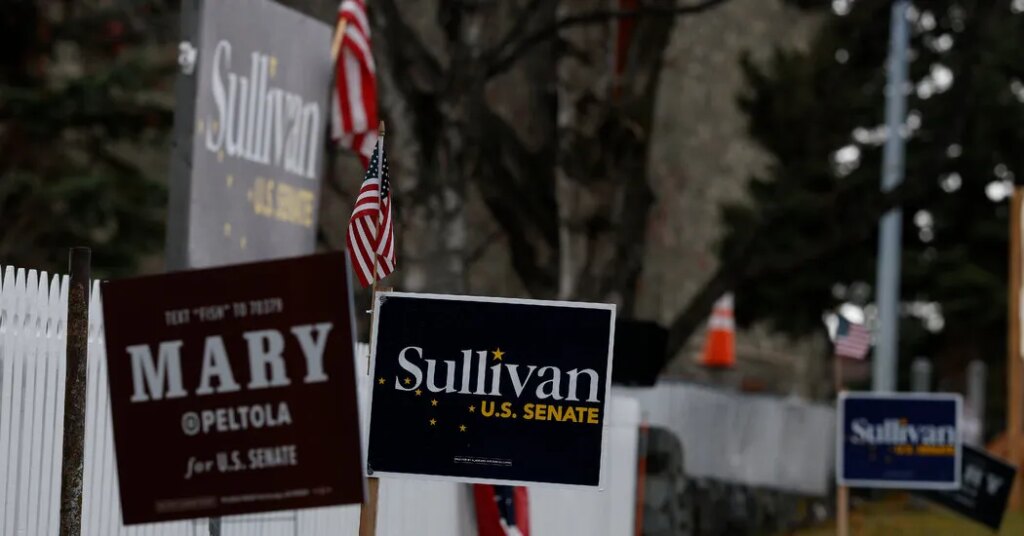
The New York Times reporter Kellen Browning nailed down the facts to answer that question this week. Through interviews, documents and text messages, Kellen confirmed that political operatives aligned with the Democratic Senate campaign of Mary Peltola recruited another candidate, Dan J. Sullivan, to run as a Republican in the Senate race and try to pull votes away from the incumbent Republican, Dan S. Sullivan.
Since our article was published on Wednesday, readers have asked why we devoted a long investigation to this instance of “ballot-stacking” — a strategy considered legal that has been used by Democrats and Republicans alike. Some have wondered about the timing of our article, published less than a week before Election Day, and our interviews with a source who might have had a grievance with the Peltola campaign and who later tried to retract her statements.
We spoke about these questions with Kellen, who has been covering the midterm campaigns, and Amy Gardner, a deputy editor on the Politics desk. They also detailed some of the rules guiding The Times’s dealings with sources, and why it’s important to allow readers to be the judge. This conversation has been edited.
Kellen, you’ve been busy reporting on the Alaska Senate election, which is critical for control of the chamber. Catch us up on the race.
KELLEN BROWNING: I’ve been covering this race since Mary Peltola announced in January that she would challenge Senator Dan Sullivan, but my reporting really ramped up this summer when another Dan Sullivan — Dan J. Sullivan — turned this into a pretty fascinating story. I wrote about the legal fight over whether he could stay on the ballot, and in August, I flew to Alaska to interview him about his motivations for running and whether anyone had coaxed him into the race. (He said no one had.)
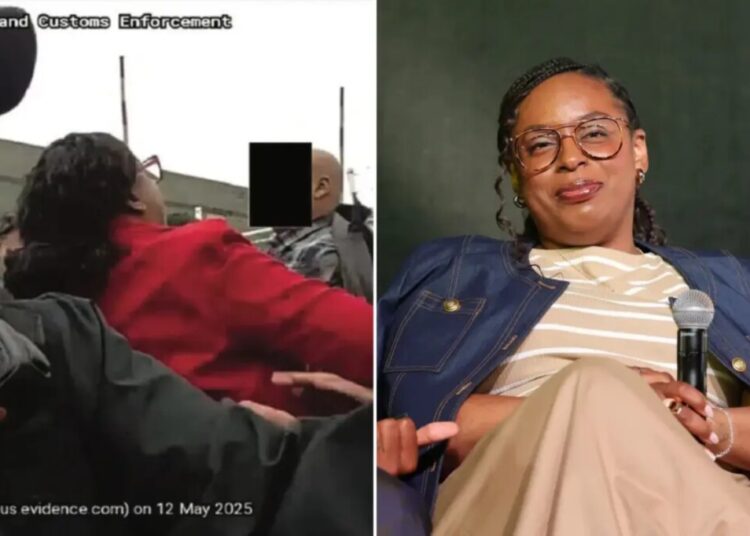
In September, after weeks of digging into the surprise firing of a handful of senior aides, I published an article about allegations that Peltola had mistreated and verbally abused her staff over many years. One of the fired aides had been Peltola’s campaign manager. She ultimately shared key details with me about the Democratic effort to recruit candidates onto the Senate ballot, which leads us to where we are today.
Readers have asked us about the timing of our investigation into the Democrats’ plan to stack the Alaska ballot — specifically, why we published it so close to Election Day. Some readers have accused The Times of manufacturing an “October Surprise” to influence the race. Why did we publish this article when we did?
AMY GARDNER: I’d say a couple of things here. First, we published the story as soon as we had it nailed down. It was a complicated story. Our reporting began in earnest in September, after Kellen’s piece published on Peltola’s management style. It took Kellen and other New York Times journalists weeks to run down every new lead and confirm the important facts with multiple sources.
And second, once the story was nailed down, not publishing would have been a more overt act of putting our finger on the scale of this election. Publishing what we knew, and letting readers decide how they felt about it all, was the only ethical option.
Kellen: I was hustling to report out this story. We wanted to publish as soon as possible, but more important was making sure we verified every fact we were including. That takes time. My view is we should put the facts out there and let readers decide whether they are significant to them. Some voters in Alaska may decide this should impact their vote, and others may say it doesn’t matter to them. As a reporter, I don’t have a side in this race — I just want people to be informed about what’s happening in it.
Ballot-stacking is generally considered legal. Republicans have used the tactic in Alaska. What was newsworthy about the effort that led us to write an article?
Amy: It’s not unprecedented for campaigns or major parties to find decoy candidates with the same name as a major-party contender. But it is rare, and that’s what made the candidacy of Dan J. Sullivan unusual. We’ve also written extensively about other ballot-stacking efforts, by both parties — including in Alaska this year. Dan J. Sullivan’s candidacy also became a subject of interest in the Alaska political world and beyond, and questions were being raised when he barely campaigned. There is also the fact that the Peltola campaign so vigorously denied it, for so long. That made it a bigger story, in the end.
I’d add: Dan J. Sullivan is a retired schoolteacher who lives in a remote village accessible only by plane or boat. He has a Che Guevara magnet on his fridge. He gave money to a past campaign of Mary Peltola. It’s just a great, fascinating story all the way around.
Kellen: Yes, Democrats have made the point that Republicans have done this, which is true. That doesn’t mean we can’t or shouldn’t write about particularly glaring or interesting examples of it. And in this case, we were able to pull back the curtain and take readers inside the plan in an unusually detailed way.
Republicans say this is an example of election-rigging fraud. Democrats say there is plenty of precedent and legal basis for ballot-stacking. What do the facts show?
Kellen: We did not find any clear evidence of illegal behavior. Past examples of ballot-stacking show practices that people may find shady or unethical, but generally legal.
Republicans are suggesting that there were laws violated here, and the National Republican Senatorial Committee filed a complaint with the Federal Election Commission arguing that the Peltola campaign violated campaign finance law by coordinating with outside political committees. (Our story did not find a definitive violation.) The Justice Department has also seized on the evidence in our story to add to their ongoing lawsuit seeking to block the certification of the Senate race if votes for Dan J. Sullivan are found to be enough to have stopped Senator Dan S. Sullivan from winning. Legal experts have said the suit has a slim chance of succeeding. Also, over the summer, the Alaska Supreme Court ruled that it was OK to have both Dan Sullivans on the ballot.
Amy: Also, the state of Alaska — run by Republicans — is seeking to have the D.O.J.’s lawsuit tossed out.
A key source in the story is Elisa Rios, Peltola’s former campaign manager. She told you details about the ballot-stacking operation. What were your initial conversations like?
Kellen: I made it clear to her that it was important for readers — and Alaskans — to know what was going on in this race. And she agreed. I also made it clear that The Times handles these kinds of articles sensitively, making sure to investigate all claims and seek evidence to back them up.
Rios had been fired from the Peltola campaign. Since she might have an ax to grind, how did you judge her to be a reputable source, and how did you verify her information to ensure its accuracy?
Kellen: We keep in mind the potential motivations of sources. Rios was also preparing to potentially file a wrongful termination lawsuit against the Peltola campaign, as we noted in the article. So it’s clear she was not happy with them. But we spoke at length, and she was clear about the fact that she didn’t have all the answers and could tell me only what she knew and had observed, rather than conjecturing. And we had a lot of evidence to back up what she told us. We presented a detailed list of our reporting to the Peltola campaign and the Democratic Senatorial Campaign Committee, and they did not provide any explanation for any of it.
Amy: We corroborated the central facts that Rios told us about the ballot-stacking effort. As the story documents, we obtained dozens of text messages showing senior campaign aides and national Democratic operatives conversing about the plan. We spoke to other prospective candidates whom the Democrats tried to recruit in similar ways as they used with Dan J. Sullivan.
Rios tried to retract the on-the-record interviews she did with us, but we used them. How do we handle a request like that?
Amy: Kellen had conducted multiple interviews with Rios over the course of weeks. As is typically the case in Times interactions with sources, there had never been an agreement between them that she had the option of retracting. She was speaking with us in those interviews with the understanding that we would use the material. One other point: Terms of engagement are important here, but so is who the source is. Like, if we’ve talked to a retiree who’s never been in politics, and the person didn’t understand they were on the record and wanted to reverse that, that’s a different scenario than speaking to a political professional who is a campaign manager for a U.S. Senate race, as Rios was.
When Kellen received the notification from Rios that she was retracting her interviews, we had multiple discussions with Standards editors, senior editors and The New York Times’s deputy general counsel, and concluded that we would not agree to changing the terms. Kellen relayed that to Rios before we published.
Why were we so confident in a source’s information after that source tried to walk back her statements?
Kellen: Because we had the information from other avenues too. As Amy mentioned, we spoke with other candidates they tried to recruit, and I viewed text messages and documents that supported Rios’s account. I’ve seen texts in which Peltola aides and other Democrats discuss the “ballot composition project” and ask one another for updates on the effort. The Peltola campaign and the Democratic Senatorial Campaign Committee did not respond about the reporting that we presented them or offer an explanation for those texts.
Amy: Kellen not only corroborated information that he got from Rios, but also never found anything she told him not to be true. That’s an important vote for her credibility.
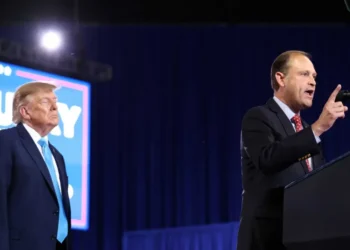
President Trump and Republicans have cited The Times’s reporting in their calls for any Peltola victory to be nullified. Does the potential post-publication impact of our reporting ever influence decisions we make about publishing?
Amy: It doesn’t, at least as far as politics. The calculation may be different when editors are talking with, say, intelligence officials over whether reporting would threaten national security, or endanger the lives of Americans. But on a story that provides more information to voters about a candidate for Senate? I’m much more comfortable letting readers assess and judge for themselves rather than deciding for them that they shouldn’t see it.
The post Inside the Times’s Decisions on the Alaska Senate Race Story appeared first on New York Times.