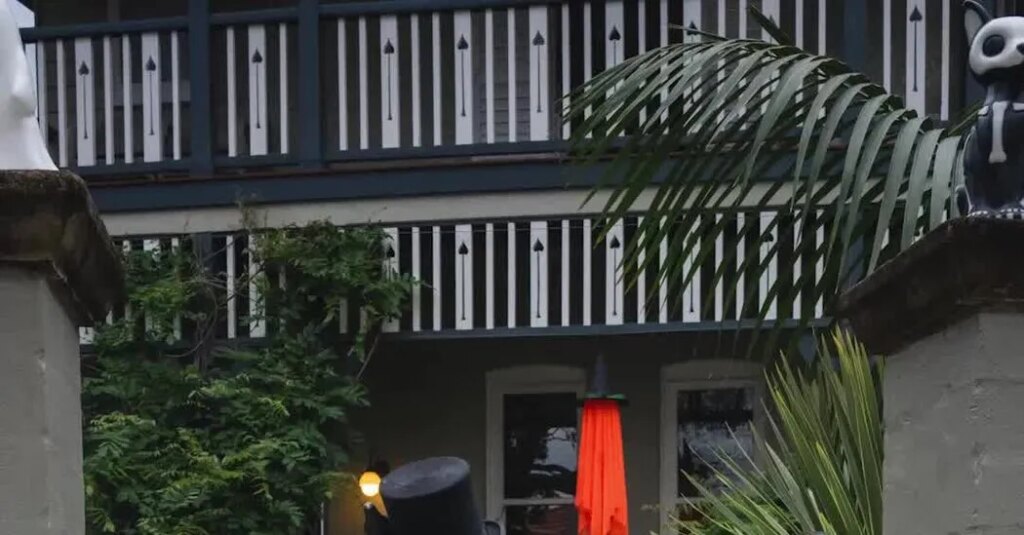
The days are getting longer, spring is coming into bloom — and hordes of trick-or-treaters are making their rounds well before dark. This is Halloween in Australia, and it can look a lot different from the American version.
Though some Australians still feel that Halloween is an unwelcome American import, it has become increasingly popular, particularly for children (and their occasionally begrudging parents.)
To Geri Wee, who lives in the eastern suburbs of Melbourne, a good barometer of the holiday’s growing appeal is the sheer volume of candy her two children receive — so much that they’re still working through their stash from two years ago.
“It’s good for the kids,” Ms. Wee said. “And it’s great for the dentist.”
In a hemisphere where October heralds the approach of summer, there are no fall colors and temperatures are mostly warm. Australian children typically go trick-or-treating right after school, in broad daylight.
“It’s not a spooky thing. You can’t hide anywhere because it’s so light,” said Simon Thomas, a recovery specialist at a life insurance company who lives in Parkdale, a suburb in Melbourne’s southeast. “Sometimes we’ve been caught out where the kids are boiling because it’s too hot in their costumes.”
Jack-o’-lanterns are also less common, though they’re coming into fashion. Many Australian pumpkin varieties are dense, hard-skinned and harvested earlier in the year, so supermarket chains have taken to importing decorative pumpkins that are better suited for carving, or sourcing them from local growers.
And while the holiday is being embraced at an official level — local councils organize events and designate areas where costumed children are welcome — trick-or-treaters cannot assume a welcome at every door.
“The practice of trick-or-treating is uneven across suburbs, with decorations on houses signaling that it’s OK to come ask for treats,” said Rodney Taveira, a senior lecturer in American studies at the University of Sydney. “There might be whole streets that are unadorned.”
That patchy embrace reflects a longstanding debate over whether Australia should adopt a tradition that critics regard as American cultural encroachment — a debate rigorous enough to merit serious market research.
Polling from YouGov published this week showed just over half of the 1,000 Australians surveyed intended to celebrate Halloween, even as 69 percent called it an “unnecessary import from the United States” and 63 percent said they would rather not have trick-or-treaters come to their door.
Mr. Taveira traced Halloween’s growing popularity in Australia to the 2000s, when American movies like “Mean Girls,” which features a Halloween party, became cultural touchstones. A combination of social media and advertising campaigns by retailers have since helped promote the holiday, he said, and resistance to it has eased over the past decade.
Kelsey Smith, who lives in Sydney, said she has seen Australia embrace Halloween since she relocated from Oregon 16 years ago.
“When I moved here, there was no one who did Halloween,” said Ms. Smith, whose home is in the northern suburb of Manly. Now, she said, Australians go one of two ways: “Either people are all in or totally out.”
But Halloween is unlikely to reach the commercial scale it has in the United States, where it is part of a shopping season that leads into Thanksgiving and the year-end holidays, said Lauren Rosewarne, an associate professor at the University of Melbourne who studies media and pop culture.
In Australia it remains a largely stand-alone event, she said, with retailers focusing mainly on candy, known locally as lollies — though the hardware chain Bunnings, a national staple, now stocks an extensive range of Halloween products.
Americans were expected to spend over $13.5 billion on Halloween this year, according to the National Retail Federation. Candy, decorations and costumes are the main spending categories.
To Ms. Rosewarne, it was unclear why Halloween had become a flashpoint over American influence, given how much other American culture Australia embraces — and the fact that the holiday is celebrated beyond the United States.
“It feels rather arbitrary that this is the one thing we don’t want from America,” she said.
The conversation has quieted in recent years, Ms. Rosewarne said, as Australians have confronted more pressing concerns about their country’s relationship with the United States under President Trump.
And for parents with children, it can be hard to resist the holiday’s charms.
“It’s part of the calendar that people look forward to now, just like Christmas,” said Ms. Wee, adding that in recent years she had noticed more houses decorated for Halloween in her area.
Mr. Thomas and his wife, Kim — whose three children planned to dress up as characters from the Quentin Tarantino film “Kill Bill” on Saturday — said the debate about whether to embrace Halloween had tailed off over the years.
When Halloween was first becoming popular, there was backlash along the lines of “‘it’s very American, we don’t do this,’” Mr. Thomas said. “But the people that probably say that then have kids and start to think that’s it’s actually quite cute and fun.”
Matthew Abbott contributed reporting.
The post Australia’s Version of Halloween: Spring, Sunshine and Skepticism appeared first on New York Times.