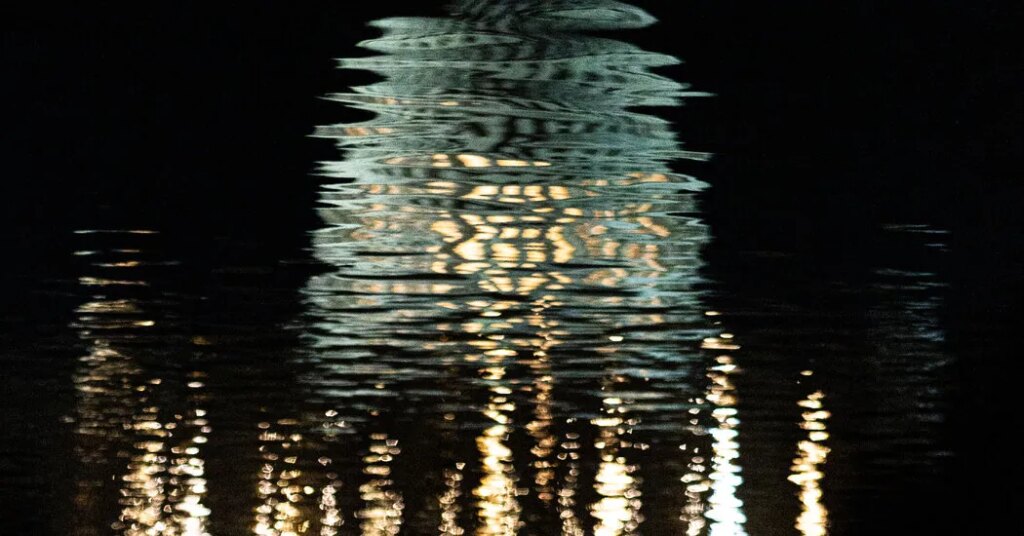
In the dark of night in 1862, a watchman stationed at the United States Capitol saw two glowing eyes.
The orbs came closer, and grew bigger. The watchman stopped cold. He thought the creature was a cat, but as the animal galloped closer, it ballooned to the size of an elephant. The feline pounced, and the guard fired at the figure before it disappeared.
“The eyes of this elephantined alley trouper are supposed to glow with all the hue and ferocity of the headlights of a fire engine entering one of Washington’s notoriously dark alleys,” The Washington Post wrote of the tale some 73 years later.
So began the legend of the demon cat.
For more than a century, myths of a ghoulish feline and other poltergeists haunting the halls of Congress have made ghosts a fixture of Washington folklore, and given the Capitol a little-known distinction as America’s marquee haunted house.
There is the tale of the slain former congressman who still trips reporters on the marble steps inside the Capitol to avenge his murder by a journalist. A construction superintendent is said to have cursed the Capitol in his final breath as he was being crushed by the ceiling of the Old Supreme Court Chamber. Even John Quincy Adams, who in 1848 suffered a stroke and died at the Capitol, is said to have been spotted on many a late night passing through the building to give a speech he never got to deliver.
The ghost stories, chock-full of embellishment, are likely more fiction than fact. But they have staying power, serving as a bridge between today’s Capitol and those who once walked its halls. Perhaps that is why the spirited fables resurface every year around this time, almost as sure as the leaves will fall.
After all, it is Halloween on the eve of a midterm election.
Many of the stories date to the Civil War period, when the bloody conflict lured many people to spiritualism, a practice of communicating with other realms, said A.J. Orlikoff, the director of programming at Congressional Cemetery, which lies about two miles southeast of the Capitol and is filled with the graves of 19th-century lawmakers.
Back then, prominent political figures engaged with the spiritualist movement, including President Abraham Lincoln and the first lady, Mary Todd Lincoln, who participated in a séance with the Witches of Georgetown, a mother and daughter now buried at the cemetery.
“Everybody knew somebody that had been killed or was horribly wounded for the rest of their life,” Mr. Orlikoff said of the period, adding, “So, the United States was just ripe to believe in spirits.”
It was during that time that the demon cat, known as an agent of death, was first spotted at the Capitol. During a recent interview there, Samuel Holliday, the executive vice president of the U.S. Capitol Historical Society, pointed to little paw prints left in the concrete of a small rotunda near the Senate chamber.
Mr. Holliday said people had reported demon-cat sightings before the assassinations of Mr. Lincoln and President John F. Kennedy. The grimalkin also appeared before the stock market crash of 1929, according to legend. The Post’s 1935 report went further, saying that “this furry fury invariably shows up just before a national disaster and, occasionally, before a political change in administrations.”
On a crisp night this month, a New York Times photojournalist visited the Capitol to capture the feline prints for this article. As he left, a cat walked by. It wasn’t a ghost, as far as he knew.
Mr. Holliday had his doubts about the lore. To start with, watchmen had a reputation for drinking on the job back then, he said. Ordinary cats were also a familiar presence in the Capitol; they were a cheap, effective way to kill vermin, as reflected in a 1927 Times article chronicling the lives of Mary and Dirty, two felines assigned to mice watch. An 1892 article in The Evening Star described the Capitol cats as “wild as hawks,” with yowls akin to “that of a damned soul.”
“It’s perhaps more likely that instead of some demonic presence, the paw prints were left by just a regular cat wandering through as the concrete was setting,” Mr. Holliday said.
Demonic or not, the cat is not the only spirit said to haunt the halls of Congress.
On a staircase outside the House dining room, dark splotches mark the steps. Some say they are flaws in marble, while others deem them 136-year-old blood stains from when Charles Kincaid, a journalist with The Louisville Times, fatally shot William Taulbee, a lobbyist and former Kentucky representative.
Three years before the 1890 shooting, Mr. Kincaid had written an article revealing Mr. Taulbee’s extramarital affair with a woman “who worked in the model department of the patent office,” James C. Klotter, a historian, wrote in a 1980 journal article. The journalist’s exposé ended the congressman’s political career and created a bitter feud between the two that culminated in a brawl at the Capitol that had to be broken up by Capitol doorkeepers.
Hours later, Mr. Kincaid shot Mr. Taulbee. He went on to be acquitted of murder and later resumed his newspaper career. Mr. Taulbee’s ghost, in vengeance, is fabled to have tripped reporters running up and down the building’s marble stairs ever since.
Chad Pergram, the chief congressional correspondent at Fox News, wondered if he was one such victim after he fell in 2019 while tailing Justin Trudeau, then the prime minister of Canada, through the Capitol.
“Could this be part of the mythos surrounding the ghost of William Taulbee, tripping other people and maybe even tripping me — especially on camera and especially in front of the Canadian prime minister,” Mr. Pergram said in an interview. “I don’t know. But it certainly happened, and it makes me wonder.”
Libby Tucker, a Binghamton University English professor who researches supernatural folklore, said ghost stories often reckon with the sins of history, intertwining a place’s past into the legends people share about it. The Capitol had a central place in some of the nation’s most painful chapters, she said, whether it be in war, slavery or other violence.
“Ghosts are all about unfinished business, and particularly, injustice that needs to be recognized,” Ms. Tucker said.
One such aggrieved party was John Lenthall, a construction superintendent who was feuding with an architect over how to build the ceiling of what is now the Old Supreme Court Chamber when it collapsed and killed him. So is a librarian, rumored to be Charles W. Hoffman, who is said to have left behind his ghost after hiding $6,000 in U.S. bonds behind stacks of books, according to an 1898 article in The Chicago Daily Tribune.
Mr. Hoffman haunted “the vault in the subbasement which he used to inhabit, looking vainly for the missing securities,” the story said.
Mr. Adams, who was elected to represent Massachusetts in the House after his presidency, is also believed to have unfinished business at the Capitol. Having spent his final years speaking out against enslavement, Mr. Adams in 1848 rose on the House floor — now Statuary Hall — to speak about the Mexican War, a conflict he opposed as an expansion of slavery. He suffered a stroke on the spot and died in the speaker’s office two days later, on a couch that remains in the Capitol. (It has since been reupholstered, according to the Capitol Historical Society, and remains in the suite where Mr. Adams passed away, which is now a women’s lounge area.)
According to lore, Mr. Adams’s ghost lingers in the Capitol to give the undelivered speech. Steve Livengood, the chief guide and public historian at the historical society, claimed in an interview to have seen the former president on more than one occasion.
“The fact is almost everybody who works in the Capitol feels the spirit of the people who have worked there in the past, and this is just an extension of that,” he said of their encounters.
He offered minimal detail; Mr. Livengood said Mr. Adams looked fuzzy and usually turned up while he was passing through the Capitol after having a glass or two of wine at a reception.
The Times could not find any other eyewitnesses, but that may be because, according to Mr. Livengood, the best time to see Mr. Adams is late at night, when the historian prowls the otherwise empty Capitol, free of crowds, to catch a glimpse of the dead president’s ghost.
The post A Spirited History Lingers in the Capitol’s Haunted Halls appeared first on New York Times.