INDIANAPOLIS — Other than when they are claiming credit for Abraham Lincoln because he spent his “formative years” in Indiana (between ages 7 and 21), Hoosiers are sensible. This year, some have achieved a political success that might be mistaken for a failure.
Greg Ballard’s quest to become Indiana’s secretary of state will fall short on Tuesday. But the state’s two-party duopoly has been put on notice: A permanent challenge has been born.
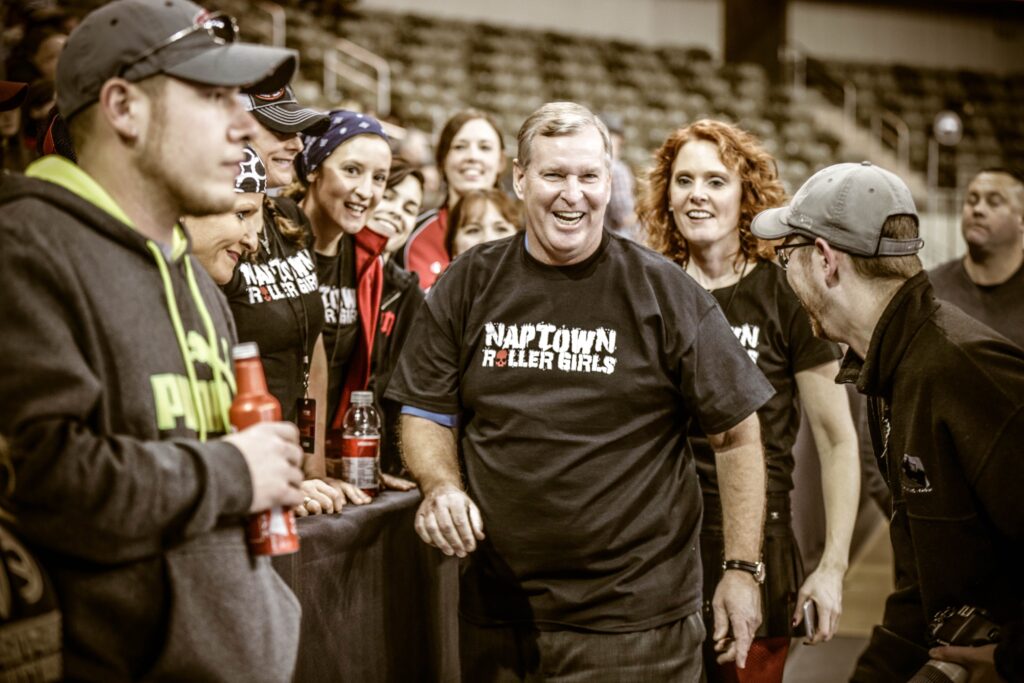
When he left the Marine Corps after 23 years, Ballard was enticed into running for mayor of Indianapolis in 2007. After two four-year terms as a rarity — a Republican mayor of a deep-blue city — he left office with a high approval rating and low interest in more electoral politics.
But some Hoosiers eager to intensify meaningful political competition in their state convinced him that Indiana’s secretary of state’s office is a Mount Suribachi on which this Marine should plant the flag of a fledgling political participant: Indiana’s new Lincoln Party.
Although the combined spending by his two opponents had dwarfed his, in September a respected election predictor rated the race a three-way toss-up. But a public poll taken nearly a month before Nov. 3 (Ballard’s statewide TV advertising buy would begin soon after) showed him below 10 percent, hence ineligible for the final candidates’ debate, televised statewide.
One of Ballard’s opponents, a former Republican congressional staffer, is a Donald Trump enthusiast. The other is a scion of a Democratic dynasty. (Beau Bayh’s grandfather was a U.S. senator, his father a governor and U.S. senator.) Ballard’s supporters had to raise $840,000 to gather sufficient signatures to get him on the ballot. But for the future, his important number is smaller: 2.
Third parties are said to be like wasps: They sting, then die. They usually are not really parties, merely conveniences for exotic candidates (e.g., Strom Thurmond in 1948, George Wallace in 1968, Ross Perot in 1992). Ballard is unexotic, but he will get more than 2 percent of the vote, which means the Lincoln Party can place candidates on ballots for all Indiana offices over the next four years without the expense each cycle of gathering signatures for each.
In favorable-unfavorable polling a year ago, Indiana’s Republican and Democratic parties were negative 12 and negative 18, respectively. A poll of Indiana voters shows 54 percent of Republicans, 75 percent of Democrats and 78 percent of independents think Indiana’s two-party system excludes the views of too many. Seventy-three percent of all Hoosiers (83 percent of independents, 79 percent of Democrats, even 56 percent of Republicans) favor creation of a new state party.
In Indiana’s last two election cycles, 244 candidates ran as independents for various offices. Fifty-two percent won. A wholesome habit — of regarding the duopoly as challengeable — is forming, and now has a new party as its instrument.
Coke versus Pepsi once seemed permanent. Today, Dr Pepper is second. In 1965, General Motors, Ford and Chrysler together had 92 percent of domestic auto sales. Then Toyota, Volkswagen and others arrived. By 2024, the “big three” had 38 percent. But foreign competition had improved their products.
U.S. governance will be improved if the legacy parties’ domination becomes as mortal as commercial supremacies are. Inertia is not to be despised in social arrangements, which should not be blown about by gusts of transient passions. But inertia should not guarantee permanence.
Twenty years ago, twice as many American adults identified with one or the other of the two major parties as called themselves independents. Today, according to two polls (CNN and Gallup): Republicans 26-27 percent, Democrats 27 percent, independents 45-47 percent.
A two-party system is best for producing broad, temperate coalitions. And when one of the parties fragments over an issue, or becomes strange by internal dynamics, it can be replaced in the duopoly. The Republican Party was born as a third party in 1854, as the slavery issue shattered the Whig Party, and six years later a Republican was elected president.
Today’s Republican Party has become weird, and most of its congressional members are embarrassingly incapable of embarrassment. A small Indiana event, unnoticed elsewhere, might someday be remembered as portentous.
There are about 500,000 earthquakes a year, most of them detectable only by sensitive seismographs. Tuesday could bring a political upheaval akin to San Francisco’s 1906 earthquake. This would be an educational experience for half of the national duopoly. If, however, the Republican Party has become ineducable, Indiana will have shown how to begin enriching the menu of political choices.
The post The two-party system needs a shake-up. It might start in Indiana. appeared first on Washington Post.