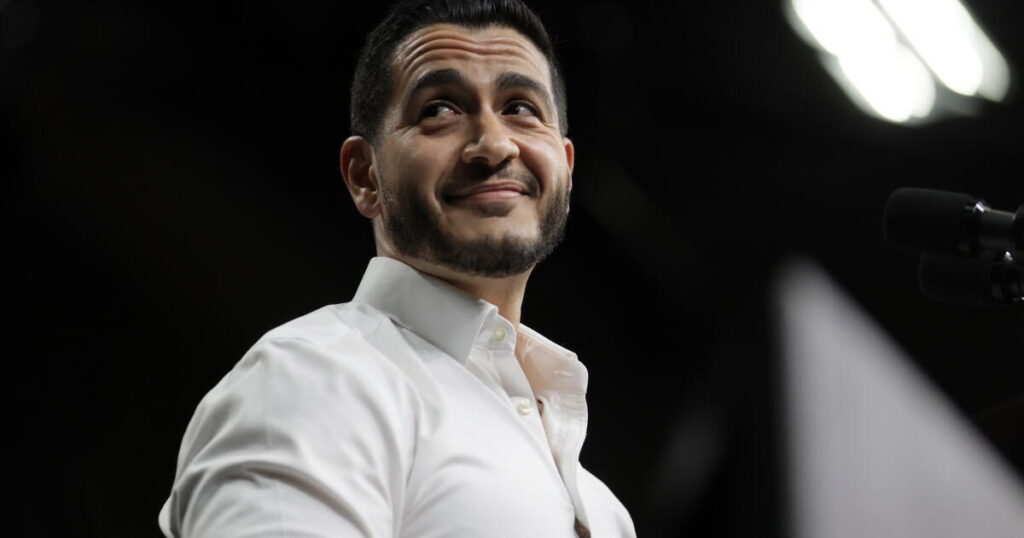
Driving around Michigan to report on the rallies of Senate candidate Abdul El-Sayed, you notice just how much road construction there is here. An inconvenience yes, but also a campaign promise fulfilled. “Fix the damn roads” is what then-gubernatorial candidate Gretchen Whitmer started pitching to her constituents as far back as 2018. And 26,000 lane miles and 2,000 bridges later, the termed-out governor can say it was more than a catchphrase.
Similarly, El-Sayed has a catchy slogan — money out of politics, money in your pocket, Medicare for all. It has an echo of Sen. Bernie Sanders (I-Vt.), but given El-Sayed’s role as a former health official in the state, there’s more weight to his healthcare critique. In addition, one aspect of the slogan “money out of politics” is already reflected on a state ballot initiative — Proposal 2. If it passes, utility companies will be prohibited from making campaign donations in state elections. It is literally sponsored by a group called Michiganders for Money Out of Politics.
In other words, El-Sayed’s platform isn’t out of touch.
It’s homegrown.
Just like him.
And yet othering is the weapon of choice. Such as it is when one is trying to make history on the way to making a difference.
Vice President Kamala Harris, when reflecting on being the proverbial “first” back in 2019, said it was important to remember that breaking barriers involves breaking, “and when you break things, it’s painful. You get hurt. You may get cut and you may bleed. It will be worth it, but it’s not without pain.”
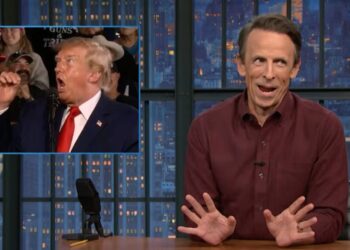
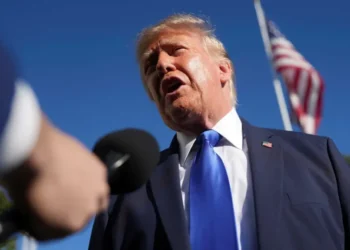
If elected, El-Sayed would be the first Muslim member of the U.S. Senate. And trying to break that barrier has been painful. The president of the United States, the vice president of the United States and El-Sayed’s opponent, a former member of Congress, have all suggested his faith should be disqualifying. And there are members in his own party who question whether a Muslim, particularly one who is a vocal critic of the Israeli government, is reflective of the party’s direction.
The attacks weren’t unpredicted, of course.
Just as people questioned whether having a Black woman on the ticket would hurt Democrats in 2020; just as Republicans questioned if being a Mormon would hurt Mitt Romney in 2012; just as John F. Kennedy, a Catholic, had to assure America that his allegiance was to the Constitution and not the pope; just as the 1916 Supreme Court nomination of Louis Brandeis was so contested that the Jewish lawyer became the reason why we have public confirmation hearings today — what El-Sayed has faced this campaign season isn’t new.
Just exhausting.
“We pray for the same things,” El-Sayed told me recently. “A lot of times people use edicts and religion to divide us but I don’t think the idea of religion is supposed to be about dividing.
“There’s choices that people make about religion. Do you use this thing to exclude or include? And for me I try to use my faith as a moment of inclusion. The small differences in the things we say in our prayers, they are opportunities to reflect on the broader goal of prayer or a faith itself across communities. What an interesting thing to see a little difference in the way you pray for a thing versus the way I was taught to pray for a thing. And can I incorporate some of the ways you pray into the way I pray, because in the end we’re praying for the same things and for the same reasons. The recognition that you are small in the eyes of a creator and that we need each other in this world.”
After the election, everything will be different.
Particularly in Michigan.
Campaign finance may be redefined. After eight years, the state will have a new governor. And for the first time since 2014, someone other than Gary Peters will be one of its senators. Who knows which, if any, of the campaign slogans heard over the months from any of the candidates will get fulfilled. Whose version of “fix the damn roads” will actually gain traction in Washington, and what will get stuck in committee. All we have to go on are the intentions of the people we send, both as an individual and as a platform.
And yet given the money spent and the attention paid to the results in Michigan, it feels as if something bigger is being decided as well. Not just the direction of a state, but this country’s 250-year-old soul.
YouTube: @LZGrandersonShow
The post Win or lose, Abdul El-Sayed’s campaign could change everything appeared first on Los Angeles Times.