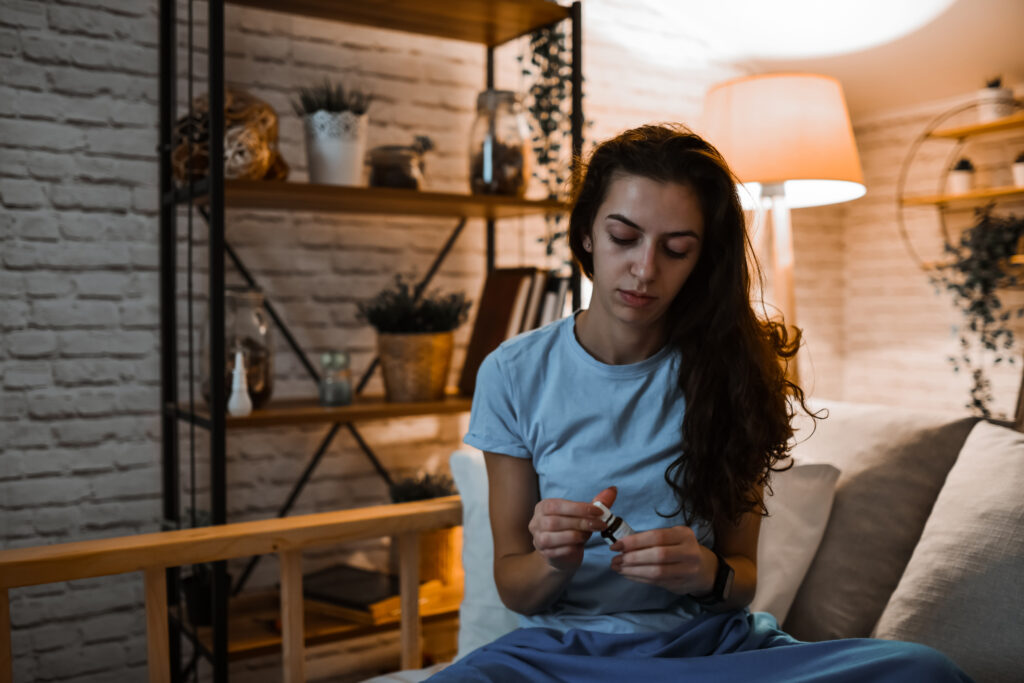
Millions of people use cannabis as a sleep aid.
But new research suggests it may not actually improve sleep quality. In fact, in some cases, using cannabis may actually worsen your sleep.
Scientists at Northwestern University analyzed the lifestyle habits of nearly 1,300 people across more than three decades, including their marijuana use. The researchers found that people who used cannabis did not generally report sleeping poorly. Yet, strikingly, the data collected by their sleep tracking devices showed that they were more likely to experience nighttime awakenings, disruptions and other symptoms of poor sleep, compared to people who did not use cannabis.
“Many people believe it helps them sleep better,” said Thanh-Huyen T. Vu, an author of the study and a research associate professor of preventive medicine at the Northwestern University Feinberg School of Medicine. “But our findings suggest that you shouldn’t assume it’s going to improve your sleep because cannabis-related sleep disturbances can go unnoticed.”
How cannabis affects your sleep
Cannabis’s reputation as a sleep aid stems in part from its ability to make people feel calm and relaxed. Edibles, gummies, tinctures and other products that contain THC, CBN and CBD — three of the best-known active compounds in cannabis — are widely promoted and marketed as sleep aids. Studies have found that nearly 10 percent of adults in the United States report using some form of cannabis to help them sleep.
But the research on its effectiveness has been mixed. Some small studies funded by cannabis companies have found that gummies containing CBN, for example, might help improve sleep quality in people who routinely sleep poorly. Scientists have also found that cannabis can produce small improvements in nightly sleep among people who have chronic pain and other medical conditions, likely because it provides pain relief.
But one small study in 2021 compared regular cannabis users to people who did not use cannabis, looking at differences in their nightly sleep. It found that people who used cannabis typically had shorter sleep durations and spent more time awake in the middle of the night. It also took them longer to fall asleep if they had used cannabis within two hours of their bedtime.
Then, earlier this month, a group of researchers published a review paper in the Cochrane Database of Systematic Reviews, which analyzed nine clinical trials that tested the effectiveness of medical cannabis for insomnia.
The researchers found that cannabis showed “little to no clinically meaningful effect” on sleep quality, sleep duration or daytime functioning compared to placebo. It was also linked to side effects such as dry mouth and dizziness. But the researchers concluded that the overall evidence was too “uncertain” to draw firm conclusions about the effectiveness of cannabis for alleviating insomnia.
Cannabis users had worse sleep
In the latest study, which was recently published in JAMA Network Open, Vu and her colleagues analyzed data on 1,266 people who took part in the Coronary Artery Risk Development in Young Adults Study, a long-running study that examines how a person’s environment, genetics and lifestyle behaviors impact their likelihood of developing cardiovascular disease.
From the mid-1980s to about 2022, the participants in the study routinely provided details about whether they used cannabis and how frequently. They also wore special devices on their wrists that tracked their nightly sleep for at least one week.
The findings were clear. People who had greater cumulative levels of lifetime cannabis usage tended to have more fragmented sleep and spent more time awake in the middle of the night. Overall, they tended to get less nightly sleep than people who had never used cannabis.
The researchers also looked specifically at people who were recent cannabis users, meaning they had used it at some point in the last 30 days. They found that recent cannabis users were also more likely to sleep poorly compared to people who did not use cannabis. They were awake for longer periods during the night. And the percentage of time that they were actually asleep while in bed was lower — meaning that they were less efficient sleepers compared to people who didn’t use cannabis.
But when the participants were asked to rate their own sleep, the people who used cannabis were no more likely than the nonusers to say that they slept poorly — suggesting that they were unaware of their sleep issues.
‘Micro-awakenings’ may be the cause
Mercedes R. Carnethon, an author of the study and chair of the department of preventive medicine at the Northwestern University Feinberg School of Medicine, said she was “totally surprised” by the findings.
“I do a lot of sleep research, and I think I just took at face value the reports from people that they sleep better when they use cannabis,” she said. “When I read about how cannabis acts on the body, it sounded plausible that people would sleep better. So I was actually surprised. But that’s the joy of doing research.”
Deirdre Conroy, a sleep psychologist who has co-authored several studies on cannabis and sleep but was not involved in the recent study, said in an email that the new findings fit with earlier evidence that frequent, long-term cannabis use can worsen sleep over time, likely because people develop tolerance to its initial sedating effects.
“Regular use can lead to tolerance, so people need more over time to get the same effect,” she said.
Sleep can also be disrupted when the cannabis wears off, she said, and people can develop withdrawal-related symptoms when they stop using it. “Both can fragment sleep and increase nighttime awakenings,” she added.
Conroy said that the findings come with several caveats. The study was observational, so it can’t show cause and effect. It can’t prove that cannabis caused the sleep problems. It’s possible, for example, that people with poor sleep may simply be more likely to use cannabis in the first place. And it’s also possible that the devices that the participants wore may have overestimated their sleep disturbances.
Carnethon at Northwestern also noted several limitations in the study. The researchers did not look at the specific strains of cannabis that people used. Nor did they look at whether they smoked their cannabis or used edibles, gummies or other products. She said it’s possible that some strains or certain products might be better for sleep than others, and that more research was needed.
“There certainly still is work to be done,” she said. “I don’t mean to discredit the entire industry’s claims. We’ve gotten a lot of angry emails from people saying that we are wrong because they use cannabis and they sleep great. There’s a lot of passion around this.”
Carnethon said it’s possible that people who use cannabis do actually fall asleep faster because of its sedative effects. But if they experience many “micro-awakenings” throughout the night, they could have no idea. “You would know if you woke up in the middle of the night and stayed awake for an hour,” she added. “But what people don’t remember are the micro-awakenings.”
If you use cannabis and have a wearable device that tracks your sleep, like an Apple Watch or an Oura ring, then it might be worth looking at your data to see if you’re experiencing poor or fragmented sleep, she said. But she also said that people should be skeptical about the widespread marketing of cannabis as a sleep aid.
“My advice would be don’t believe everything you read on the internet,” she added. “Rather than starting something for health benefits because of what you saw on the internet or on social media, dig a little deeper and look at what the unbiased science has to say.”
Do you have a question about healthy eating? Email [email protected] and we may answer your question in a future column.
The post A 35-year study challenges the belief that marijuana is good for sleep appeared first on Washington Post.