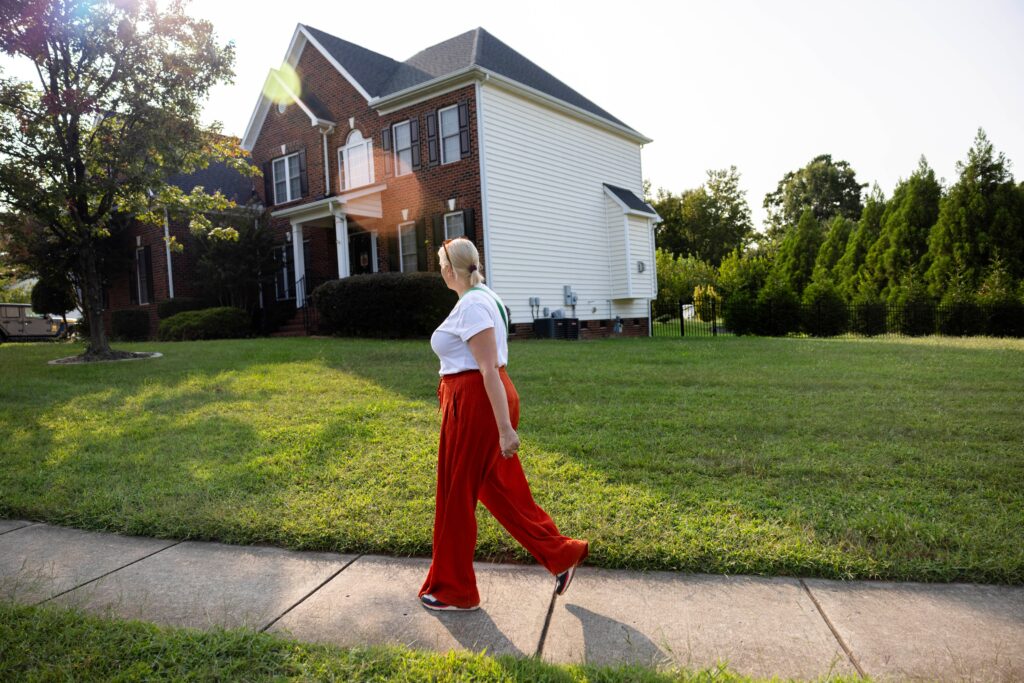
Following the Nov. 23 letters package “What city dwellers don’t understand about rural life” — and the Nov. 30 letters package “What rural folks don’t understand about city life” — Post Opinions asked, “What do both groups not understand about life in the suburbs?” Here are some of the responses.
Suburbs are often seen as a commuters home full of strip malls, gas stations and empty houses during the day. People think of a cultural desert full of NIMBYs. The spread of suburbs is blamed for many problems: global warming, inner-city crime and the breakdown of social structures.
But having lived in a suburban setting for 30-plus years, I don’t recognize any of those assumptions. My neighborhood, on the fringe of a city of 560,000, is multicultural, interconnected and solar-friendly. Everyone knows each other and finds ways to help with any need. We can walk to grocers, restaurants and other basic services. Many neighborhood groups meet regularly to play poker, discuss books or just go to lunch.
Ours is a planned community, but houses were built by different builders at different times. Thus no “little boxes made of ticky-tacky” all in a row. Just opening up areas to be developed without good planning produces the negative view of suburbs. It doesn’t have to be that way — suburban living can be as good as it gets.
Shari Reed, Albuquerque
When my husband and I moved from Manhattan’s Upper West Side in the summer of 1985 to a nearby suburb in Westchester County, we promised ourselves we’d move back to the city once our children were grown.
Forty years later, we realize that’s not going to happen. Daily life is simply easier here. For food shopping and medical care, there are abundant choices with abundant free parking. The logistics of taking our two toddlers to preschool programs was much simpler than my struggles navigating strollers on buses or in the subway. Connections with our community have been literally lifesaving, and the scale of life is small enough that local officials are responsive. When we moved here and our garbage wasn’t collected one day, a neighbor told us to call the town’s highway department. A supervisor came by, and rang our bell to apologize. The post office took checks; the clerk remarked with a smile, “We know where you live.”
Merri Rosenberg, Ardsley, New York
I love the old custom architecture and charm of my city friends’ homes. But it sure is nice to be able to just go to Home Depot and buy a door or window that fits instead of needing custom everything. All that special old brick and special old stained glass comes with a hefty dose of special pain in the you-know-what.
Also: Many of us wish we could live closer to the city, but we’re priced out of where we grew up. The three-bedroom brick house with one full bathroom that my parents paid $36,000 for in the 1970s is now closer to half a million dollars because of its location, and I’d probably consider private K-12 schools. None of that is doable.
Erin Shetler, St. Charles, Missouri
After years of mostly rural life in central Pennsylvania, I live in a rural-looking suburban community. So different, but welcoming and friendly and respectful of privacy. Rules here seem to be “to each his/her own,” “you pick your poison” and “judge not, lest …” Those seem to be pretty good rules for folks in rural, urban and suburban areas.
Phil Pennington, Lafayette Hill, Pennsylvania
Since at least the days of Teddy Roosevelt, our country has romanticized the lure of open space and living self-sufficiently. Today, this image is what characterizes red states against blue states.
But as our population grows, there’s something to be said for communities that have learned to cooperate in greater densities. As a child of suburbia, I couldn’t imagine trading my yard and chores for living in a high-rise apartment where all my needs were met. Yet city dwellers have a much smaller carbon footprint than the rest of us and are constantly stimulated by the people and culture around them.
Folks do evolve differently depending on their environment. However, our wonderful country is doing itself a disservice to pit our citizens against each other. Let’s focus on what we have in common rather than what makes us different.
Eric Greene, Annapolis
A trolley problem on the high seas
Adam Cohen’s Dec. 7 Sunday Opinion column, “A Victorian-era cannibalism case poses a simple but profound question,” invoked questions that are anything but simple.
Yes, for some, the consequences of one’s actions are what drive calculations regarding ethical behavior. But there’s another take on that ethical formulation, which is called deontology, or the presence of absolute rules and inherent rightness regarding judgment of the behavior itself, regardless of outcomes. Immanuel Kant is among history’s best-known advocates of this position, placing the supposed universality of certain duties under the banner of categorical imperatives.
Among the many instances of such intrinsic rightness, or “perfect duty,” is not to kill innocent people. So, in the case of Cohen’s four 19th-century shipwreck survivors left to drift for weeks in a lifeboat, the decision to kill and consume one of their members, allowing the rest to survive, was a violation of the do-not-kill categorical imperative. That the act enabled the others to survive the ordeal, which consequentialists might argue was for the betterment of the many over the one, does not mitigate the act of killing, in this instance, an innocent human being. Weighing situational ethics against absolute imperatives is among the most complicated of reckonings.
Keith Tidman, Bethesda
Following the Nov. 28 Optimist article “After a bitter past, woman donates kidney to her ex-husband’s wife,” Post Opinions wants to know: Have you encountered a remarkable act of forgiveness? Share your response, and it might be published in the letters to the editor section. wapo.st/forgiveness
The post The special pleasure — and pain — of living in the suburbs appeared first on Washington Post.