Do you remember when you got your first smartphone? How it felt to suddenly, for the first time, have the power of a supercomputer in your pocket? It felt revolutionary, of course, but it also felt freeing. I could listen to a St. Louis Cardinals baseball game while walking across the Brooklyn Bridge; I could respond to a work email while lounging in the park; I could play a video game while riding the subway. I could be anywhere, and I could do anything.
We’re used to all these things now that we’ve been doing them for nearly 20 years. But I have not forgotten how thrilling the technology was at first. It truly felt like the entire world could be mine.
This is not how we think about the iPhone anymore: Now it’s this brick we lug around with us, always beeping at us, always offering up fresh horrors, always making us feel ugly, agitated and alone. But there was a time when all the technology roaring at us, and the companies behind it, really did feel like breakthroughs. When they felt like they were good.
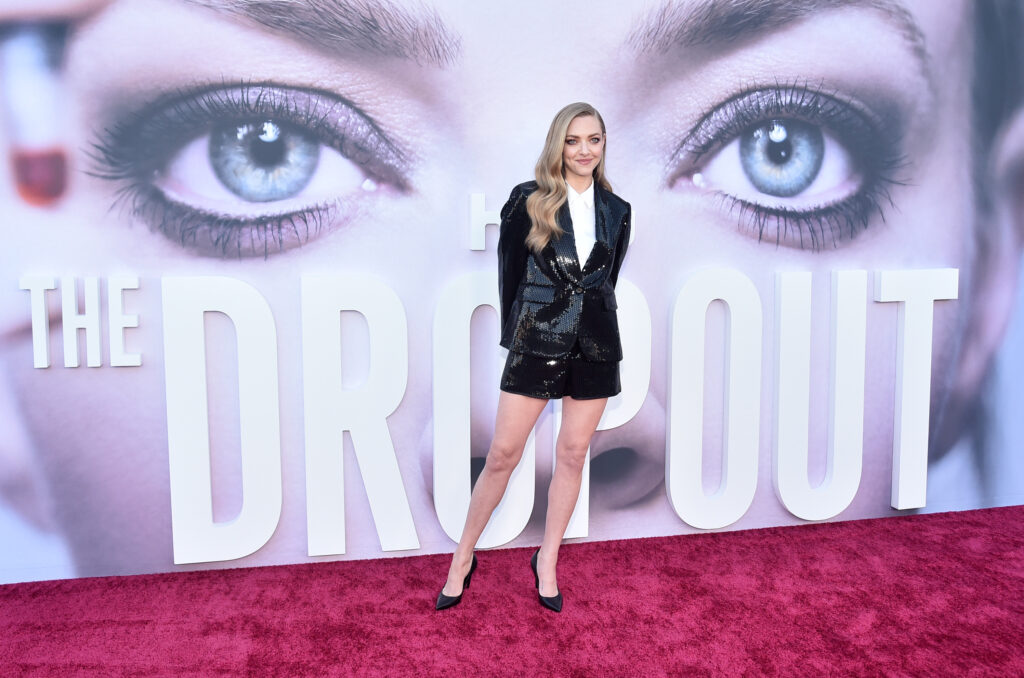
The biggest movie in the country right now — in the conversation, in the Oscars race and, increasingly, at the box office — is Nathan Fielder and Lance Oppenheim’s documentary “You Can See Everything,” in which Fielder moves in with disgraced Theranos founder Elizabeth Holmes in the last month before she reports to prison for defrauding investors. The movie also heavily references — for many reasons, only some of which I can discuss here without revealing spoilers — the 2022 Hulu series “The Dropout,” a fictionalization of Holmes’s story that starred Amanda Seyfried (who won an Emmy for the part) and was created by Elizabeth Meriwether.
After seeing “You Can See Everything,” I rewatched “The Dropout.” And I think the series might be the perfect time capsule for how we once thought about tech, for why we stopped thinking about it that way and for what we’ve lost in the process.
First off, the show remains terrific. Seyfried unquestionably deserved that Emmy, and it’s remarkable how stacked the rest of the cast is, from Naveen Andrews to William H. Macy to Laurie Metcalf to Sam Waterston to Stephen Fry to Anne Archer to Ebon Moss-Bachrach. Meriwether’s two shows since, “Dying for Sex” and “Furious,” are terrific as well; she’s on an incredible hot streak. Every “Dropout” scene that included the Walgreens execs had me roaring. The show is compulsively watchable and extremely funny.
But what it might do best is capture how much, during the time of Theranos’s rise, people truly wanted to believe that Silicon Valley might have the answers — that it might be run by altruists ushering in a better future. The show is full of scenes that take you back to that time. Thrilled crowds waiting in line the morning a new iPhone is released. Flirting at the Genius Bar. Memes and videos flying via text like the whole planet had been transformed into fodder for in-jokes between friends.
Holmes embodied this spirit. She famously adored Steve Jobs, even patterning her wardrobe after him, and in the early days of Theranos, back when so many believed its technology would work, she was revered much as Jobs was. And she wasn’t just an entrepreneur: She was an inspiration, particularly to young, ambitious and intelligent women who felt left behind (or worse) by the worlds of technology and finance. (It has been mostly forgotten how involved Holmes was in fighting for STEM education opportunities for young women and girls.) President Barack Obama recognized her at the White House; Vice President Joe Biden toured the Theranos lab. People looked up to Holmes. She was an example of what was right about America.
Can you imagine feeling that way about a tech CEO today? If anything, the leaders of the tech world are seen as what’s wrong with America now. Holmes deserves her share of the responsibility for that, but how inspired are you by, say, Dario Amodei? The idea that any tech CEO would aim to be inspiring has become ridiculous. We are far more scared of our tech titans now. They do not inspire faith in the future; they portend doom. (Even in their IPO filings!) “The Dropout” is a time capsule from a moment when we were more innocent and, it should be said, more delusional about where tech was headed.
In a great piece about “You Can See Everything,” writer Max Read argued that the film is a secret history of the tech industry. He writes that the first half is ”about the 2010s, and the second half is about the 2020s” — the transition from tech optimism to manic, reactionary paranoia — and I think he’s exactly right. I used to look at my phone with wonder. Now I look at it with dread. Don’t you? Don’t we all? And yet the tech industry and its leaders have only grown wealthier, more powerful and more relentless. Elizabeth Holmes may seem like the outlier who got caught and is being punished. But it seems obvious she was the canary in the coal mine all along.
The post ‘The Dropout’ came before ‘You Can See Everything.’ I rewatched it. appeared first on Washington Post.