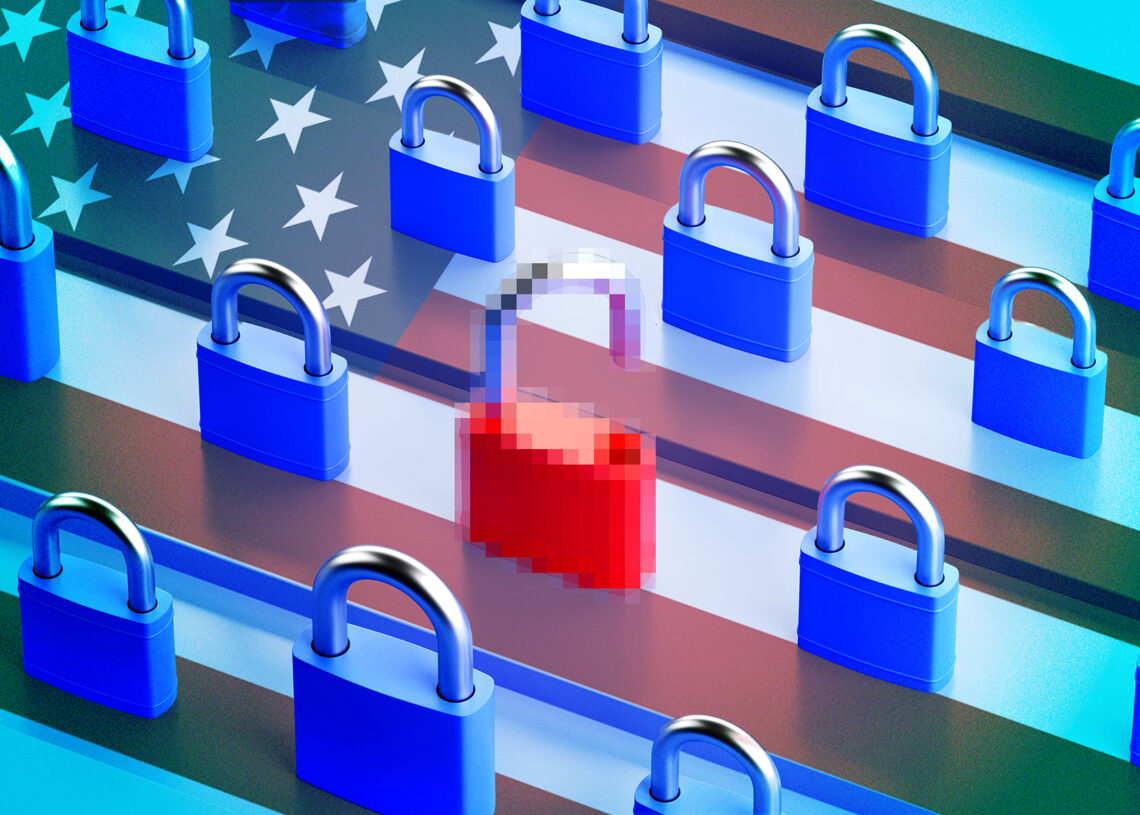
We should think about artificial intelligence safety as a race against time. Nobody knows what dangers the technology might bring. But by the time the United States and China eventually talk seriously about guardrails and rules of the road, it may be too late to prevent a catastrophic accident.
The two AI superpowers will have a chance to advance this safety dialogue next month when Presidents Donald Trump and Xi Jinping meet in Shenzhen, China, for their third summit this year. (Russian President Vladimir Putin will be there, too, but I think his only assignment should be ending the catastrophe he already created in Ukraine.)
What worries me is that the United States lacks a clear AI safety strategy as Shenzhen approaches. America is ahead in the AI technology race, thanks to the amazing frontier companies Anthropic and OpenAI. (The Washington Post has a content partnership with OpenAI.) But we’re far behind China in thinking about how government can oversee these thinking machines and limit damage without significantly slowing their progress.
China’s disciplined approach to AI is perhaps possible only for a one-party command economy. Xi articulates a clear national strategy, and Ding Xuexiang, China’s executive vice premier and a member of the Politburo Standing Committee, coordinates policy. This month, Ding discussed AI issues with prominent American advisers to prestigious Tsinghua University including former Apple CEO Tim Cook. Chen Yixin, head of China’s intelligence service, just published a detailed explanation of AI’s dangers and opportunities for national security.
China doesn’t seem to have as many AI “doomers” as the U.S. does. Chinese government experts worry about threats to the state, not humanity. But they’re increasingly talking about AI safety.
“The emerging Chinese approach is not ‘AI safety versus AI development,’” wrote Paul Triolo, a former U.S. government China analyst, on the Substack he devotes largely to U.S.-China AI issues. “It is an effort to make safety compatible with, and often supportive of, the rapid development of increasingly capable systems, while preserving the broad authority to intervene whenever political or national security interests are in play.”
The U.S. debate about AI safety is far more unruly. The top AI executives, Dario Amodei of Anthropic and Sam Altman of OpenAI, urge a slowdown, some to-be-determined level of governmental oversight and self-regulation as the technology rockets forward. Trump, by contrast, talks about AI as if it were a global UFC fight. (“Whoever wins AI, wins.”) Treasury Secretary Scott Bessent echoes Trump’s line that winning is everything. (“If [China] were to pull away from us on AI, then nothing would matter.”) But he also has led the American side of the AI dialogue with China.
The Trump administration’s handling of AI safety is similar to how it has dealt with other national-security issues. The president offers aggressive sound bites, but policy implementation below him is erratic and uncoordinated, with little interagency follow-through. The government machinery that’s supposed to operate through the National Security Council seems to be broken. As a result, a technology as world-altering as nuclear weapons is left to evolve on its own.
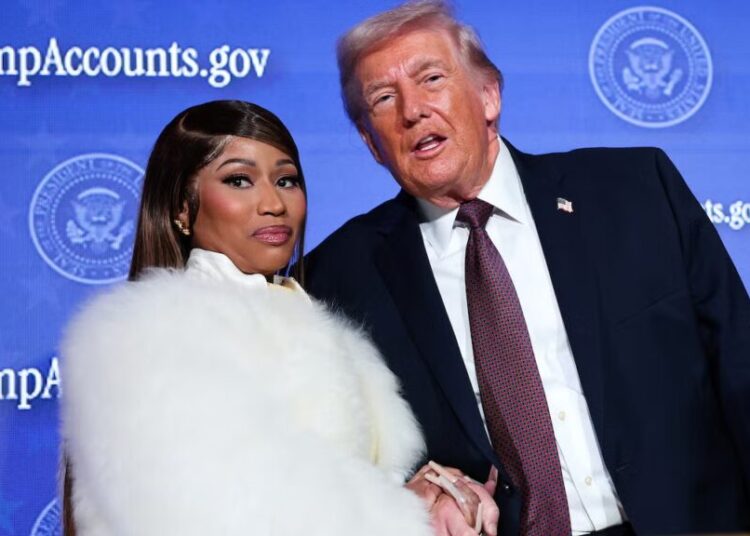
Trump appeared several months ago to be considering a national self-regulatory body for AI — perhaps like the Financial Industry Regulatory Authority, known as Finra, or simply an agreement on common ratings, like the Motion Picture Association has. Then, in late September, he gathered top tech executives to sign a voluntary pledge for self-regulation that had little detail.
AI dominance seems to be Trump’s main focus — along with a rebranding of the technology as “super intelligence,” reinforced by a nonsensical announcement Tuesday that he “will be officially BANNING the term, ‘AI/Artificial Intelligence.’” He appointed Director of National Intelligence Jay Clayton, a person with little AI experience, as head of the government’s “Super Intelligence Force” this month. This would all be comical if it weren’t so dangerous.
China understands the hard reality that it’s in an AI race that it may lose. Julian Gewirtz, who was the NSC’s top China expert under President Joe Biden, explained in a recent article that Beijing increasingly sees AI as a “winner-take-all technology that could allow American power to increase faster than rivals can catch up, making its primacy permanent.” He called this dominance loop “recursive advantage.”
Amodei, in a more triumphal moment two years ago, agreed that American AI dominance could create an “eternal 1991.” He wrote that if America can win the race, “we will have a world in which democracies lead on the world stage and have the economic and military strength to avoid being undermined, conquered, or sabotaged by autocracies, and may be able to parlay their AI superiority into a durable advantage.”
The dangers are clearer now, to Amodei and most other AI experts. While speed is important, so is a dialogue about risks. Anne Neuberger, a former top NSA official who oversaw AI for the Biden administration, told me this week that while a major AI accord with China is unlikely, “we could likely come to agreement on narrow safety guidelines to avoid a catastrophe and create an expert channel to discuss dangerous incidents.”
Bessent seemed to be aiming for such a limited “dialogue mechanism” when he met in New York in September with Chinese Vice Premier He Lifeng. But it’s not clear yet how the U.S. would organize the mechanism that Bessent described. It surely wouldn’t be based at the Treasury Department, which Bessent oversees.
“The achievable goal for Shenzhen is not a treaty or even a fully operational hotline,” Triolo told me this week. “It is a jointly understood protocol, backed by real domestic institutions.”
When dealing with big problems, it’s often best to start with small steps. That was true with nuclear arms control in the 1960s and ’70s, and it could be so with AI now. But nuclear weapons couldn’t write their own instructions, as AI may soon be able to do. The clock is ticking, and nobody knows when it will strike midnight.
The post The U.S. is winning the AI race but missing an important strategy appeared first on Washington Post.