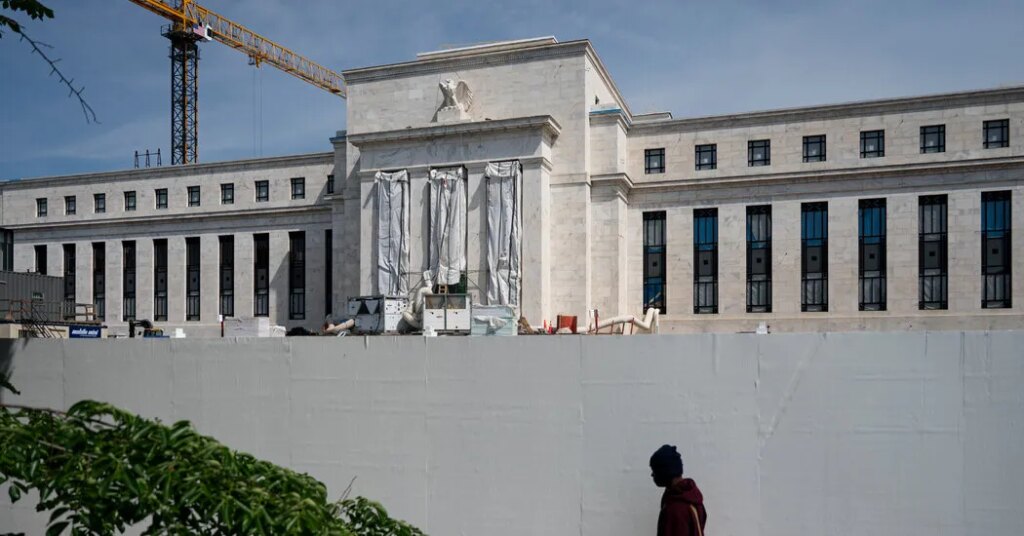
The Federal Reserve on Wednesday is expected to press pause on raising interest rates after delivering an increase last month for the first time since 2023.
Officials have strongly signaled that any reprieve is likely to be temporary given their view that they still have more work to do to tame persistent inflation. But, at least for now, top policymakers have sought to convey that there is no urgency to raise rates two months in a row.
What has complicated this message is that the inflation data in the lead-up to October’s gathering have been unequivocally disappointing. Price pressures appear to be accelerating, rather than moving toward the Fed’s 2 percent target, a level that has been missed for nearly six years.
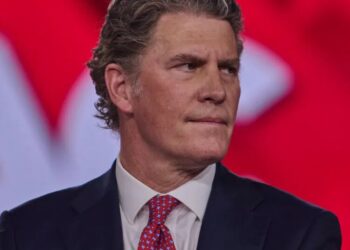
Kevin M. Warsh, who took over as Fed chairman in May, has made it a priority to get inflation back to that level more quickly. He will no doubt face questions about how holding rates steady advances the central bank toward that goal.
Looming large over Wednesday’s rate decision are the midterm elections, which take place less than a week after the meeting. Officials insist that the electoral calendar is not a factor in their deliberations, but the political backdrop has put heightened scrutiny on Mr. Warsh. President Trump handpicked him for the job under the assumption that he would lower rates. After September’s increase, rates are now in a range of 3.75 percent to 4 percent.
The Fed will release its rate decision at 2 p.m. in Washington on Wednesday. Mr. Warsh will hold a news conference at 2:30 p.m.
Here is what to watch for:
Return of the Dissents?
Officials voted 12-0 to raise rates in September, in an important show of unity about their resolve to counter elevated inflation. That consensus is likely to have broken down by Wednesday if the Fed follows through with holding rates steady.
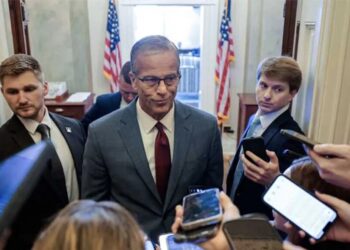
At least one or two dissents is probable, with the possibility of a third. They are likely to come from Beth M. Hammack, president of the Federal Reserve Bank of Cleveland, and Lorie D. Logan of the Dallas Fed. Neel T. Kashkari of the Minneapolis Fed could also join this group.
It would not be the first time this year that these three officials have issued dissents. They did so most recently in July when the Fed opted to hold rates steady. Instead, they voted for a quarter-point increase, citing inflation concerns.
Those concerns have not ebbed. In fact, the incoming economic data has likely amplified them.
One of the leading arguments from this group is that there are few signs that rates at the current level are exhibiting any restraint on economic activity. New sources of inflation have cropped up beyond the war with Iran, including a splurge of spending from artificial intelligence companies that have pushed up prices for computer chips and other crucial components. That is especially problematic given the lengthy period in which inflation has surpassed the 2 percent target. They argue that raising rates now will reduce the likelihood that the Fed will eventually need to squeeze the economy even more aggressively, with larger increases, to wring out price pressures.
How Many More Increases?
According to projections released last month, most officials thought the Fed would raise rates only once more this year after September’s increase. In that sense, an October skip was always the most likely outcome. Some officials thought further adjustments in 2027 would be necessary, but the range of views was much more disperse.
Based on how inflation has evolved, moving more gradually now might mean that the Fed has to deliver additional increases in 2027 to ensure that its policy settings are appropriately tight to rein in price pressures. Roughly three more quarter-point increases are expected through the end of next year, according to federal funds futures markets.
Mr. Warsh on Wednesday is unlikely to share his own outlook given his vehement opposition to providing guidance about what the Fed might do next.
When asked about forthcoming policy decisions at his most recent public appearance earlier this month, Mr. Warsh stressed that he did not “prejudge meetings.”
“I don’t believe in saying now what I might do at the meetings we have in the balance of this year,” Mr. Warsh said in Bangkok during the annual meetings of the International Monetary Fund and World Bank. “It’s a new chapter at the Fed, and we’re not in that business anymore.”
By leaving the policy path so open-ended, however, Mr. Warsh has stoked confusion that has whipped around expectations about what the Fed will do next. His fellow policymakers have filled the void with their own commentary, making the central bank’s communications appear much more scattered without a chairman providing his own perspective.
Financial Conditions
Going into this meeting, financial conditions, which track the availability of credit in the economy, are slightly less accommodative than they have been in the past. Yields on U.S. government debt is up sharply compared to just a few months ago, resulting in higher borrowing costs for consumers and businesses. A tech-led stock market sell-off coupled with more costly financing for A.I. companies “may have been the first sign that the Fed’s hawkish turn is materially affecting the A.I. growth engine,” said Andrew Hollenhorst, chief U.S. economist at Citi.
Still, Mr. Hollenhorst concluded that with the S&P 500 only slightly lower than its recent highs and A.I. projects still being funded in droves, it was “premature” to suggest that financial conditions had tightened sufficiently to eliminate the need for further rate increases.
At least on the margins, it’s possible that this shift has helped the Fed, in some capacity, get a better grip on inflation. How Mr. Warsh frames the recent move will be telling.
When explaining the Fed’s decision in September, Mr. Warsh described the rate increase as the central bank removing a “dose of accommodation so that financial and credit conditions would be more consistent with our ultimate objectives.”
So if, during his news conference on Wednesday, he leans into the idea that some of the Fed’s work has been done for it given the recent move in financial conditions, it would suggest that he believes the Fed does not have to raise rates as much as would otherwise. But if he dismisses that idea, that suggests the Fed has more to do.
The post What to Watch at the Federal Reserve’s October Meeting appeared first on New York Times.