To the Editor:
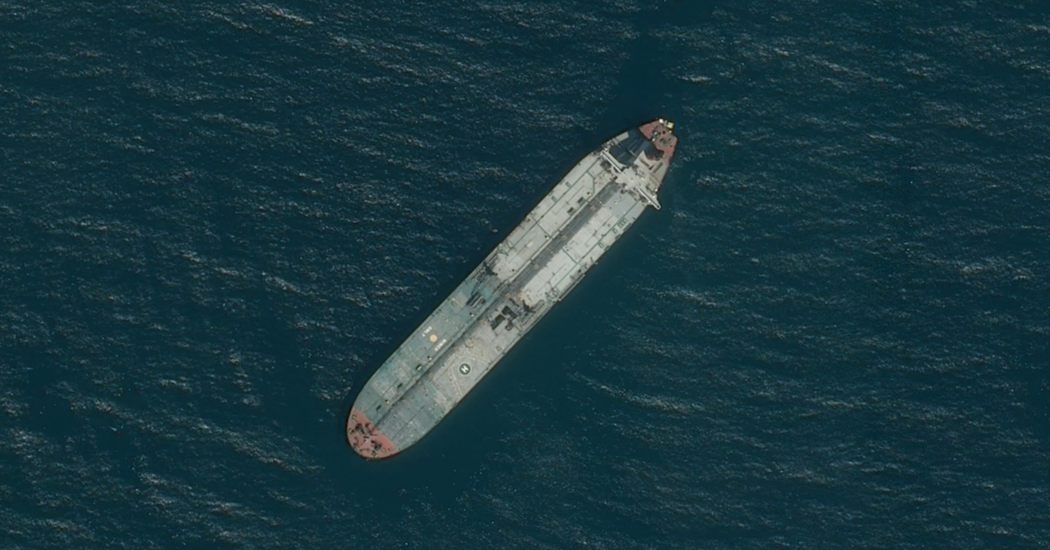
Re “U.S. Takes Tanker in Bid to Squeeze Maduro Further” (front page, Dec. 11):
As someone who lived in Venezuela for more than four years and appreciates the suffering of many poor people who deserve a better government, I could never support the action of an American military intervention. Our many interventions in Latin America were not only wrong but also supremely destabilizing and ineffective.
Maj. Gen. Smedley Butler was the most decorated Marine in history at his death in 1940. His words should make us shudder today. “War is a racket,” he said, an enterprise “conducted for the benefit of the very few at the expense of the masses,” and he described himself as “a gangster for capitalism.”
This is the role the administration is asking our military to take on today under the guise of a so-called war on drugs.
If we do not now see even more clearly how oil is at the root of this whole charade as new war drums beat against Venezuela, we continue to be blinded by the absurd rhetoric of this administration. And we should be ashamed.
Dave Pasinski Fayetteville, N.Y.
To the Editor:
A cynic might not believe that the seizure by the United States of an oil tanker or its more than 20 deadly drone strikes on boats in Caribbean and eastern Pacific waters since September have been carried out to prevent the smuggling of drugs.
What a cynic might believe, though, is that the next step is to cause the downfall of the current Venezuelan government, possibly by way of a United States military invasion. A cynic might also believe the next step after that is to have American oil companies invited to “help” Venezuela take advantage of its huge oil reserves.
Thomas Schneider San Diego
To the Editor:
The seizure of an oil tanker off the coast of Venezuela is only the latest of many incomprehensibly destructive actions by the Trump administration that make me once again recall the 1984 film “Red Dawn” about a Soviet-Cuban invasion of America.
At one point the high school resistance team of Patrick Swayze, Charlie Sheen and others rescues the downed pilot of a U.S. fighter jet. The pilot relays news of the progress of the invasion, and one of the kids asks, “What about Europe?”
The pilot says: “They’re sitting this one out. All except England, and they won’t last very long.”
I wondered, at the time, what could possibly happen to leave America, my America, so utterly isolated in a world of enemies.
Now I know.
Frank Reichenbacher Scottsdale, Ariz.
6 Older Women, and Decades of Connection
To the Editor:
Re “‘Group’ Is a Gift Still Treasured After 44 Years” (front page, Nov. 30):
It was surprising to read this article on the front page of The Times, although, being part of a group of five very senior women (in our 80s and 90s), I know the value and importance of my white-haired friends.
We met in New York at a world politics class and went out for lunch afterward, and the rest is history. Ours is more of a social club. We go to wonderful restaurants on our birthdays (and in between), get tickets together for concerts, plays and operas, and go to museums, cocktail parties and classes.
We take lovely walks in Central Park. Sometimes we are only two or three, sometimes five, and occasionally one of our children will join us. Each of us has at least one child living in New York, although we all lost our husbands after long and successful marriages.
We do sometimes swap recipes, although most of us rarely cook. We also discuss politics and books and life. We’ve lived a long time and have many stories and much experience. We are a real support system in times that are good and also difficult. We’ve been there, done that and are happy to share.
We all recognize that it is not that easy to make new friends after a certain age. We consider ourselves very fortunate to have formed these friendships so late in life; we don’t take it for granted.
Our toasts over dinner are remarkably similar: “Thank you for being a part of my life. I am so grateful to have you as friends. Good health and good times! L’chaim!”
Eileen Marech New York
The post The U.S. Seizes an Oil Tanker. What’s Next? appeared first on New York Times.