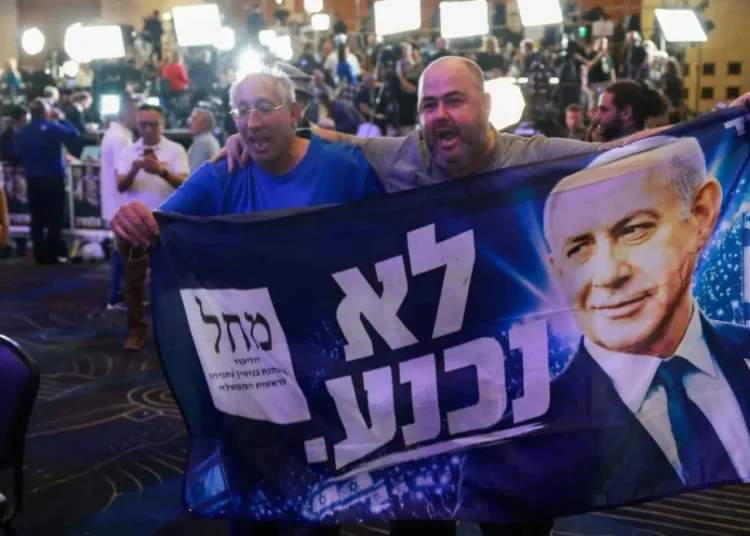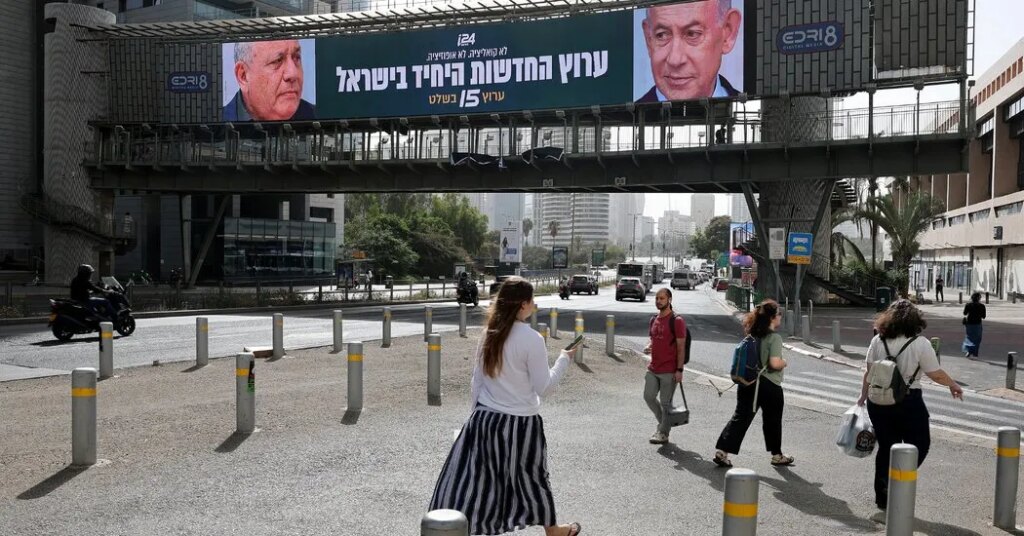
The election in Israel on Tuesday is unlikely to yield quick answers about who might lead the next government.
Voters don’t directly pick a prime minister in Israel’s proportional parliamentary system. They choose a party or slate, the first step in determining who may be selected to try to form a government. The process is not guaranteed to succeed and can lead to another election if it does not. Here are four things to watch for.
Turnout
This is considered one of the most consequential elections in Israel’s history, and voters turned out in record numbers.
Recent polls had suggested that voter turnout could be at least as high or higher than in the last general election, in 2022. That year, slightly more than 70 percent of eligible voters — nearly 4.8 million out of nearly 6.8 million people — participated. That election followed four other votes in quick succession from 2019 to 2021 in which turnout hovered near 70 percent.
This year, there are 7.3 million eligible voters, about 540,000 more than in 2022.
The 3.25 percent threshold
Parties must clear a threshold of 3.25 percent of the total vote in order to get a seat in the Knesset, or Parliament.
But no party is expected to gain a majority of 61 parliamentary seats, according to the polls. That means there will likely be lots of post-election negotiations among those parties who pass the threshold.
Parties or lists that do not reach the threshold lose those ballots. As a result, parties and candidates lobby voters not to waste their votes on a list that seems unlikely to meet this criterion.
At least one party has also faced repeated attacks from Prime Minister Benjamin Netanyahu’s Likud party and the far-right Religious Zionism party led by Bezalel Smotrich, Israel’s finance minister.
The targeted party, People of Israel, is led by Ofer Winter, a former Israeli brigadier general with hawkish views on national security. Some polls show that much of Mr. Winter’s support comes from voters who would normally choose Likud. Mr. Winter has faced claims that a vote for his party will be wasted or may end up going to the leading challengers.
While Mr. Winter initially said that he would support Mr. Netanyahu, he has refused any deals to withdraw from the race and has since signaled the pledge may have been premature.
Disinformation and challenges
Israeli election officials have said there is no evidence of threats to the integrity of this election in terms of widespread fraud or vote counting irregularities. But experts are concerned about disinformation campaigns undermining the vote or thwarting turnout.
Critics fear that some moves by the governing right-wing coalition may cast doubt on the outcome even before the vote happens or may thwart turnout among some voters.
Absentee voting is mostly prohibited in Israel. But by some estimates, tens of thousands of Israelis living abroad were expected to fly in to vote, a factor that could potentially swing the outcome.
Likud had filed a lawsuit challenging an initiative to fly in Israeli voters from abroad — a move widely perceived as an effort to limit opposition voters from showing up. The party had said the nonpartisan program provided benefits that could sway voters in violation of Israeli law. But it withdrew the suit this month after the initiative’s organizers agreed to limit flights and not to defray travelers’ costs.
Likud and other right-wing parties also filed motions to limit participation of several Arab candidates in the election.
The Central Elections Committee can vote to bar candidates or lists on certain grounds, such as expressing support for armed conflict against Israel. But the nation’s Supreme Court gets the final say. This month, it rejected a challenge to the Joint List, a merger of three majority-Arab parties, and to Raam, a historically Islamist party led by Mansour Abbas, who is running with Yoav Segalovitz, a former deputy minister of national security who was previously in the centrist Zionist party There Is a Future.
Voter suppression
In 2022, turnout in five of the largest Arab localities in Israel was lower, sometimes significantly, than the national figures. This year, officials in Arab communities worked to get voters to the polls in larger numbers and prepared for potential resistance.
Likud and the Religious Zionism party announced plans this month to deploy thousands of religious Jewish “observers” to “prevent fraud in voting and vote-counting in Arab communities.”
Critics contend that the presence of such observers, likely from far-right Zionist parties, was intended to intimidate Arab citizens of Israel, who make up 20 percent of the population and could be critical to the election’s outcome.
“The main issue we want to avoid is ‘fake news,’” said Abed Shahada, who leads voter turnout efforts for an organization representing mayors and other officials in Arab localities.
One major issue expected to drive voters is high crime in Arab communities. But if there are reports of or disinformation about criminal or violent episodes on Election Day that could keep people from the polls, Mr. Shahada said, teams are preparing by setting up a system to share verified information.
The post 4 Things to Watch in the Israeli Election appeared first on New York Times.