When “A Different World” premiered on NBC in 1987, the Black Power era was giving way to diversity initiatives and Black America was moving to the center of popular culture. Michael Jackson was the new Beatles, my grandmother would soon deem Oprah Winfrey’s episode about “Dirty Dancing” too spicy and the Jet magazine that arrived in the mail still published a schedule of every appearance of an Afro-American on network television that week.
The show’s two-part fifth season finale, “Save the Best for Last,” is a time capsule of Black middle class life that flattered a generation best known for being forgotten. In it, Whitley Gilbert has to make a choice. Byron, the successful politician from Virginia, stands at the altar. Dwayne, the promising engineer, is shouting his bid for her hand from the aisle. Five years at Hillman College, a fictional H.B.C.U., had remade Whitley, the archetypical Black American princess, as resolutely as the 1990s were remaking Black America. The decade promised us that technology, globalization and ambition would produce a new kind of New Negro, a generation that would not be torn between two Americas but whose right choices would finally unite them.
Dwayne steals Byron’s bride with a passionate “baby, please, please” that would make James Brown proud. Her mother faints. Their friends cheer. Whitley Gilbert chose the wrong man but the right future. For years, the ensemble cast of Whitley, Dwayne, Kim, Ron and Freddie had shown young Black Americans, including me, that graduating from college was not enough. The future would be won by those who chased corporate internships and attended every school networking event. That generation of Hillman “alumni,” were the proto hustle culture, embodying the idea that the best for Black America was yet to come if Black Americans learned the right way to strive.
Thirty years after my freshman year at North Carolina Central University, my own Hillman College, the reboot of “A Different World” arrived on Netflix. I expected it to be a nostalgia-bait spinoff of what was maybe the most important series in the history of Black television. Instead, I found a show that unintentionally memorializes the gap between the future many of us believed in and the diminished political reality of our lives.
Felicia Pride, the reboot’s showrunner, and its executive producer Debbie Allen, its greatest champion, know exactly what this show should be. The cast is stocked to the gills with beautiful young people, like before. Unlike before, the student body includes queer students and students from Africa. There isn’t a bad wig or unblended foundation line to be found. Near the end of the season, Deborah — Whitley and Dwayne’s daughter — hard launches the iconic Halle Berry pixie cut. I squealed with delight.
In the ’90s, we invested in Hillman’s students because they helped us imagine ourselves, whether our past or our future. There was always a place for the real world at Hillman. Issues like South African apartheid and the L.A. uprisings were backdrops for very special episodes. This go-round, politics show up in the form of white-nationalist bomb threats and financial insolvency. Not one but two fictional members of Congress work to rescue the college from its money problems. But the writers stop shy of promising that Hillman is still a place where Black students can make it if they just focus on their goals.
The world outside Hillman’s gates is actively resegregating the machinery of American progress. And the tools of resegregation now seem bigger, meaner and harder than the ones we overcame. Living the nightmare is enough. To watch ourselves lose innocence to it for a second time would be too much.
That is the show’s problem, but it is not its fault. The truth is, it’s never been a great time for young Black people to come of age in this country. This version of “A Different World” poses the same question it posed in the 1990s: Who can guarantee Black America’s place in the American dream?
Nostalgia doesn’t easily lend itself to the truth.
“A Different World” was created by Bill Cosby as an extension of “The Cosby Show” universe, but it would come to embody a revolution in the representational politics of Black America’s progress. The Huxtables became America’s first family on “The Cosby Show.” In “A Different World” they also became Black America’s first American family. The Huxtable kids, and their college friends, inherited the political wins of Jesse Jackson’s era but they also signaled to the show’s multiracial audience that an investment in Black educational mobility would yield a new Black citizen, one with aspirations indistinguishable from real American — white — families.
Critics took “A Different World” to task for its class politics, especially for mimicking white Ivys because Black elites could not fully integrate into them. By the time the series ended, it had left its mark on my cohort. We knew the Hillman way would leave a lot of Black people behind. But we needed to believe that social progress was America’s destiny and making good moral choices would guarantee it was also ours.
We did not come up with that idea. We merely believed two of the most powerful cultural icons of our time. Bill Cosby and Bill Clinton each pointed my generation of aspirational teenagers toward a Black Camelot. Then, Cosby was one of the most famous Black men in the world. His vision of Black America’s future meant something. He invested the cultural capital of being America’s dad into becoming America’s minister on Black aspirations. Despite being raised in subsidized public housing in Philadelphia, the comedian Cosby merged with the well-to-do Dr. Heathcliff Huxtable of “The Cosby Show.” That’s the Bill who built Hillman to show Black families what was possible.
But it was another Bill — William Jefferson Clinton — who made Cosby’s fictional world feel like an early draft of the real world. Clinton gave us Black cool in a white Southern package. He was from a place called Hope, like a divinely chosen character we could have learned about in vacation Bible school. He played saxophone on “The Arsenio Hall Show” and prayed well in Black churches. His casual affinity with and for Black Southern culture was political gold.
But it was Clinton’s two signature domestic legislative achievements that would define the odds of Black achievement for generations. The 1994 crime bill and 1996 welfare reform bill made the government stingier and meaner, while codifying two enduring racist stereotypes, the superpredator and the welfare queen. It cannot be overstated how much these stereotypes pushed us to go to college, for the right job, and with the right attitudes that would save us from these fates. “A Different World”’s popularity peaked over a decade before Cosby gave his infamous “pound cake” speech. That’s the one that mocked the way Black people dressed, the way we spoke, and our numerous misplaced values. But the DNA of his neoconservatism was already clear in the way “A Different World” was used as the carrot to the real world’s brutal stick.
Audiences loved the Huxtables because they proved that the civil rights movement and Black Power movement had been worth it. With its emphasis on morality as the source of Black power, “A Different World” would promise that those would be the last social revolution white people would have to endure. In the Bills’ America, Black Camelot felt like a question of when, not if.
Then, Black Camelot did come. America elected Barack Obama, twice. Then, Black Camelot died.
Surely, Whitley, Dwayne, Kim, and Freddie had a blast during the Obama years. In the reboot, the original ensemble returns. They have the look of people who spied the Obama presidency’s mountaintop. They also have the haunted eyes of people who watched it fade.
In the two decades after “A Different World” went off the air, Black people directed their striving into homeownership. Subprime mortgages and gentrification set us up for financial speculation, and the 2008 housing crash took care of the rest.
From 2006 to 2016, Black homeownership declined 5.6 percent. The median wealth of a Black family collapsed by about 44 percent between 2007 and 2013. Black people tried to outsmart this age of precarity by attending college. Higher education’s rapacious retreat from its public good mission welcomed our ambitions and saddled us with disproportionate debt for our troubles. Today, Black graduates owe $25,000 more on average than white graduates, and 51 percent of Black borrowers say that their loans are greater than their total net worth, according to the Education Data Initiative. College got risky and expensive as Black wage growth stagnated for a decade. Still, the Hillman generation kept the faith.
But as of September, Black unemployment is at 7 percent — nearly double the rate for white workers. The Black employment crisis isn’t an accident; it’s government policy. Political attacks on unions and the public sector have been a double whammy for Black men and women. The Department of Education has extorted colleges and universities to curtail higher education’s independence. At the same time, the Trump administration has infused certain minority-serving institutions with funding packages. The money is needed, but the way it’s given — playing some schools against others — goads Black institutions into keeping the peace with the very administration attacking Black people’s economic well-being.
Donald Trump’s election — and then re-election — was more than a symbolic injury to Black America. His administration has intentionally, skillfully devastated the foundations of Black security and mobility. The Supreme Court’s majority smells blood in the water. A series of decisions has effectively gutted the enforcement of the Voting Rights Act. Justice Ketanji Brown Jackson has argued that the Roberts court’s ostensibly colorblind rulings on race undermine the equal protection clause, writing that “deeming race irrelevant in law doesn’t make it so in life.” The right is slicing through liberal democracy to ensure no debts to Black America are paid and no new promises are made.
For Black Americans, education has never been only about mobility. The first H.B.C.U., Cheyney University of Pennsylvania, was founded in 1837, nearly three decades before Emancipation. From the very beginning of the struggle for Black citizenship, higher education played a pivotal part. H.B.C.U.s today make up less than 3 percent of American medical schools and still produce 70 percent of Black physicians. That’s to say nothing of the role of H.B.C.U. law schools and education and engineering programs.
In the 1990s that H.B.C.U. experience was a way station where we would enter college in our parents’ divided America but graduate into the new America, into an economy finally too busy to hate. If we were going to reach the promised land, it stood to reason that an H.B.C.U. would usher us across the divide.
Hillman represented that symbolic crossing. It was meant to fulfill generations of Black hope. But it was also supposed to be the final generational test. We who made it after Hillman would love it but not need it.
I returned to Hillman, 2026 edition, as a college professor, old enough to be my students’ mother (and in a few cases, their grandmother). They want to change the world and make a good living just as my generation once did. But A.I. is supposed to wipe out all the jobs their parents considered sure bets. The right to protest has been turned into the right to be surveilled. The chances they will fail to launch are high; the cost of failing is higher. The best I can do now is prepare young people for a world none of us can predict.
The data about Black America’s many crises are clear, and not even “A Different World” seems willing to tackle them. Republicans and their big tech allies have no real place for democratic institutions, or for Black — or any other minority — futures. The centrist Democrats imagine they can make America 2008 again, even though they don’t have the charismatic leader or the corporate power to do so. To the extent that there is a viable American left, they aren’t incubating Black leadership or taking Black America’s future seriously.
W.E.B. DuBois’s opens “The Souls of Black Folk” by asking, “How does it feel to be a problem?” Over a hundred years later, Black America has to reckon with how it feels to not even be a problem.
It doesn’t bode well for the next generation of Hillman graduates that neither our politicians nor our storytellers can concoct a vision of a future in which Black America is thriving. Nostalgia is fine for television shows. It is poison to progressive politics. It will not be enough to flip the Senate in the midterms (although I hope Democrats do) or to win the White House in 2028 if there is no new compelling vision of the American dream. Whatever the solution to the erosion of liberal democracy, it should be commonly held that no path back to power that does not consider Black America can be the American dream.
There is no going back for any of us. Just like there is no returning, not really, to Hillman College.
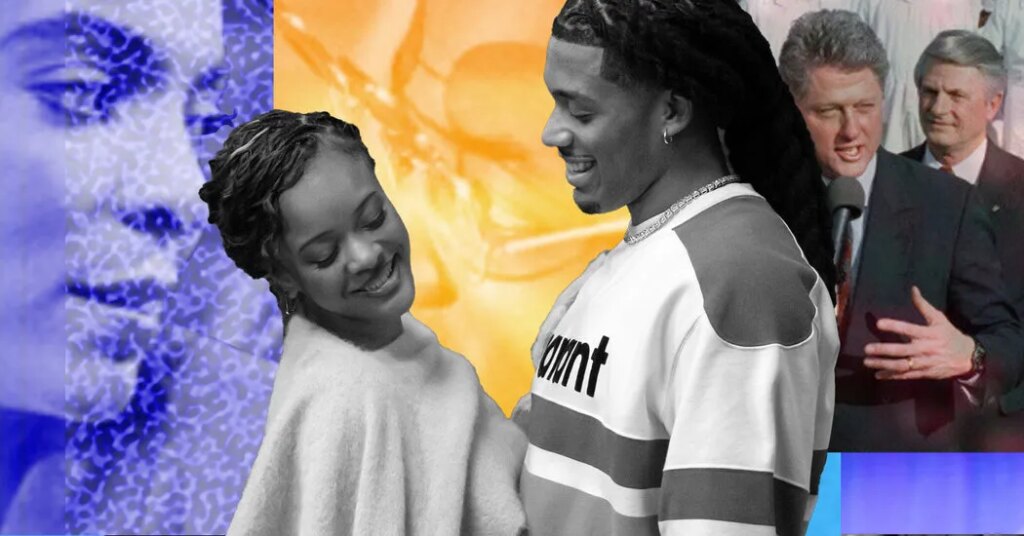
Source photographs: Quantrell Colbert/Netflix; Greg Gibson/Associated Press; Carsey-Werner Company, via Everett Collection; and Library of Congress.
The Times is committed to publishing a diversity of letters to the editor. We’d like to hear what you think about this or any of our articles. Here are some tips. And here’s our email: [email protected].
Follow the New York Times Opinion section on Facebook, Instagram, TikTok, Bluesky, WhatsApp and Threads.
The post I Believed in the Promise of Hillman College. What Happened? appeared first on New York Times.