Prime Minister Benjamin Netanyahu and Gadi Eisenkot, a former military chief of staff, have emerged as the top candidates to form the next government in Israel after the general election on Tuesday, the country’s first since the Hamas-led Oct. 7, 2023, attacks set off the war in Gaza.
But other candidates have brought their own drama to the campaign, which has also featured revelations about security failures and a furor over an A.I.-generated political ad.
Here are some key moments from the campaign.
An Alliance Underwhelms
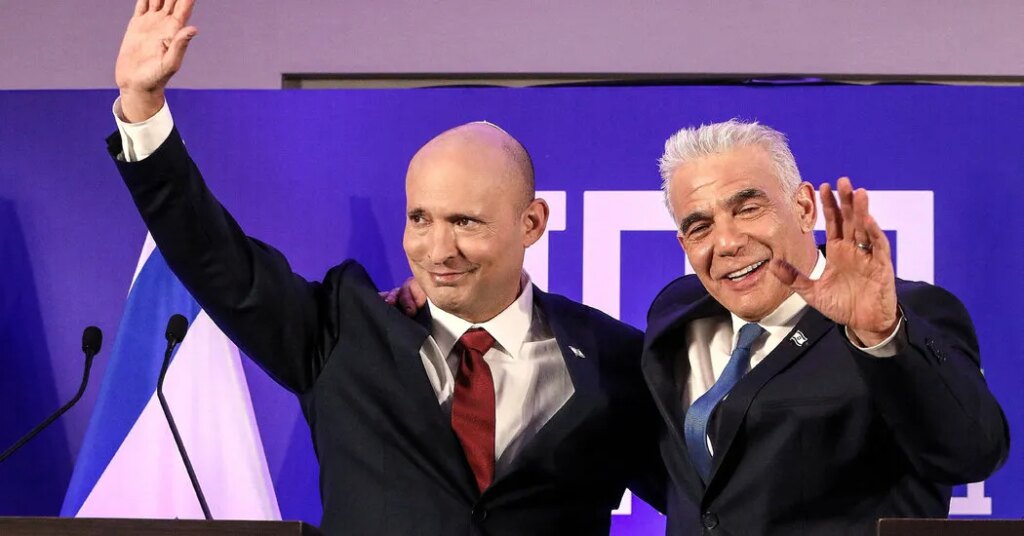
Before Election Day had even been set, the opposition politicians Naftali Bennett and Yair Lapid, both former prime ministers, announced a joint run for office. The two men have worked together before: They briefly unseated Mr. Netanyahu in 2021, forming a government that lasted less than two years.
Their announcement in April was seen as mutually beneficial, positioning Mr. Bennett as a candidate for prime minister and ensuring that Mr. Lapid would remain one of the most prominent figures in the anti-Netanyahu bloc.
But their ambition to make their unified party, B’Yachad, the largest in the Knesset quickly fizzled. Surveys consistently suggest the party will finish in third place.
An A.I. Video Sparks Anger
Parties across Israel’s political spectrum have published A.I.-generated content to reinforce their messaging. The content has sometimes stirred up controversy — no more so than in July, when Mr. Netanyahu posted a video depicting Mr. Eisenkot.
In the video, Mr. Eisenkot is shown running through a meadow, arms open, toward a man with a striking resemblance to his late son Gal, who was killed in 2023 at the start of the Israeli military’s war in Gaza. But he runs past the young man, instead embracing Mansour Abbas, a prominent Arab politician. Mr. Netanyahu has sought to paint Mr. Abbas, who could help Mr. Eisenkot form a governing coalition, as a supporter of terrorism.
Mr. Netanyahu’s party, Likud, denied that the young man in the video looked like Mr. Eisenkot’s son or was meant to evoke him. But many Israelis reacted to the ad with anger and disgust. Matan Kahana, a former lawmaker running on Mr. Eisenkot’s slate, said there was “no bottom to the pit the Likud is willing to sink into.”
An Unexpected Partnership
One of the campaign’s most surprising moments came when Mr. Abbas and Yoav Segalovitz, a veteran Zionist politician and former police commander, announced a joint run. Teaming up on the slate of the United Arab List, or Raam, they offered themselves as an example of Jewish-Arab cooperation, even as they braced for intense criticism from both of their communities.
“There are people who are afraid of partnership,” Mr. Abbas said. “There are parties that are afraid of partnership. They are afraid of what people will say, afraid of what they will lose. Raam is not afraid of partnership. Raam advances it.”
A Warning Ignored
Mr. Netanyahu came under new pressure over reports in the Israeli media and in The New York Times that Sheikh Mohammed bin Zayed, the president of the United Arab Emirates, had warned him in advance of Oct. 7, 2023, that Hamas was considering a major attack on Israel.
The warning from Sheikh Mohammed never reached the leaders of Israel’s security establishment, The Times reported, citing five former senior Israeli officials. Mr. Netanyahu has denied the reports.
The FlyDubai Attack
Israelis seemed to forget the election for a day in late September, when the news emerged that a handful of their fellow citizens had stopped a pilot from crashing a FlyDubai commercial jet bound for Tel Aviv.
Mr. Netanyahu spent hours celebrating the passengers’ resourcefulness, diverting attention away from headlines at the time about his and other officials’ failure to stop the Hamas-led attack in 2023.
Within days, however, his government was on the defensive over revelations of security failures that had allowed the FlyDubai pilot, an Omani man said to have embraced extreme Islamist views, into the cockpit in the first place.
The post 5 Key Moments From Israel’s Pivotal Election Campaign appeared first on New York Times.