
Ukrainian data shows its air defenses largely held up against one of Russia’s most prominent new threats despite a 10-day Starshield slowdown.
Though high-speed interceptor drones were hindered by the reported throttling, Kyiv’s forces managed to intercept 74% of Russian jet-powered Shaheds from October 14 to 24, compared with a typical rate of 77%, according to analysts at the Washington-based think tank Institute for the Study of War.
The organization bases its analyses on interception data released by Ukraine’s air force, which said Russia had launched hundreds of the turbojet attack drones over the 10-day period.
The drop of three percentage points, or roughly 3.8%, translates to a “still relatively high interception rate” but doesn’t mean Ukraine can rest easy, the ISW analysts wrote.
Many interceptons were owed to Ukrainian fighter jets countering Russian jet Shaheds with air-to-air missiles or guns.
For months, fighter aircraft have been Ukraine’s primary and most successful air defense so far against jet Shaheds — an assessment that Ukrainian air force spokesperson Col. Yuriy Ihnat repeated to local media on Monday after Starshield services returned to normal.
“We are counting on the aviation component,” he told RBC Ukraine, referring to helicopters and fighter jets.
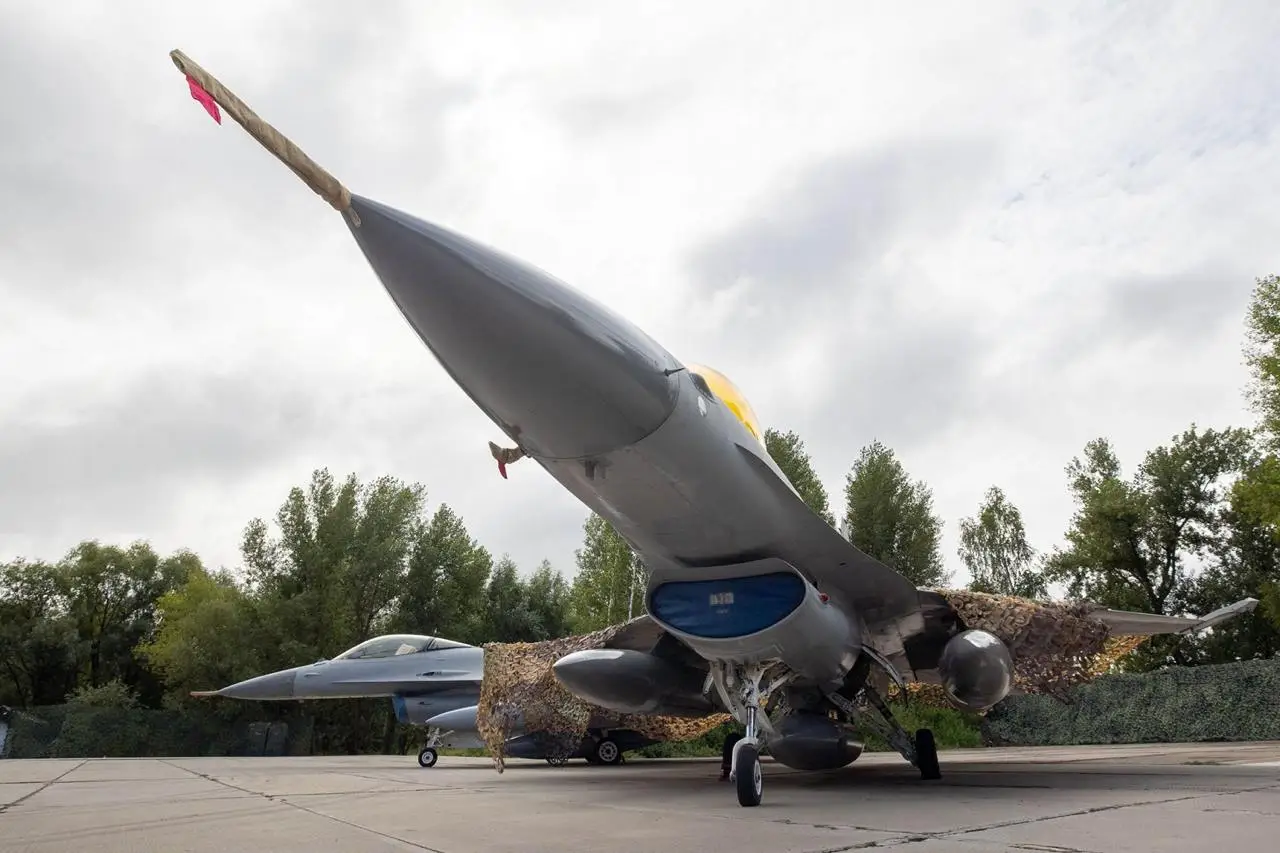
One of Ukraine’s main aircraft in this fight is the F-16 Fighting Falcon, which Ihnat said in April could shoot down 10 Russian Shaheds each in a single night. The F-16 carries the M61A1 Vulcan, a six-barrel, Gatling-style rotary cannon that fires 20mm rounds.
Kyiv requisitioned more than 50,000 of these rounds from Denmark last week in a scramble to bolster its air defenses while Starshield, the military version of Starlink that its interceptor drones rely on, was limited by a speed cap. That many rounds is enough for roughly 100 sorties.
The F-16 pillar can’t last forever
But ISW analysts wrote that the F-16 strategy poses a few complications for Ukraine. Using its gun to shoot down jet Shaheds, for example, “requires a high pilot skill level and increases the risk to the airframe and pilot,” the wrote.
The practice also increases maintenance demands for Ukraine’s already-strained fighter jets and distracts them from other missions they could be needed for, the analysts added.
“Supplementing the Ukrainian air defense umbrella with interceptor drones is Ukraine’s best chance at developing a robust air defense umbrella capable of sustaining high interception rates of Russian jet-powered drones over the long term,” the analysts wrote.
Indeed, before Russia began surging launches of jet-powered drones, Ukraine had reported much higher interception rates of over 90% against propeller Shaheds in some months.
These had been largely boosted by Ukraine’s mass adoption of interceptor drones, or small drones that cost just a fraction of traditional interceptor missiles.
But Russia’s increased use of turbojets on its attack drones, the more advanced of which can fly at speeds of up to 370 mph, meant Ukraine has to radically evolve its designs to keep up. While it now has several types of drones capable of catching and destroying jet-powered Shaheds, the new interceptor effort as a whole is still in early stages.
Many of these new interceptors became ineffective during the 10-day slowdown of Starshield, which Ukraine said stopped working when a drone flew faster than 100 mph.
The reason for the connectivity problems is still unclear. They emerged as President Donald Trump and SpaceX CEO Elon Musk both openly criticized Ukraine for strikes on Russian energy infrastructure as the White House sought to lower gas prices.
Trump and Musk have separately said they were not responsible for the slowdown to Starshield, which is owned and operated by the US government.
Musk, while maintaining that the US controls Starshield, later also accused Ukrainian forces of breaching civilian network Starlink’s terms of service by using it for drone strikes.
On Saturday, Ukrainian President Volodymyr Zelenskyy said Starshield services were restored.
Meanwhile, some Ukrainians are already bracing for a new threat from Russia through cheap, mass-producible cruise missiles. One such missile, the Filin, has been listed by Russia as capable of flying as fast as 500 mph.
Read the original article on Business Insider
The post Ukraine’s Starlink slowdown only dropped its interception rate against Russia’s new Shaheds by a few percent appeared first on Business Insider.