Anthropic’s long awaited IPO prospectus was made public on Monday. The document lays out the company’s losses, revenue, governing structure, infrastructure plans, and includes perhaps the wildest set of risk disclosures ever seen from a company vying to go public.
Most companies preparing to sell stock warn investors about competition, regulation, and the economy. Anthropic’s prospectus does all of that, but it also takes the unusual step of warning that the technology the company sells could pose “catastrophic or existential risks to humanity.” This concern, it acknowledges, exists even “within our organization.”
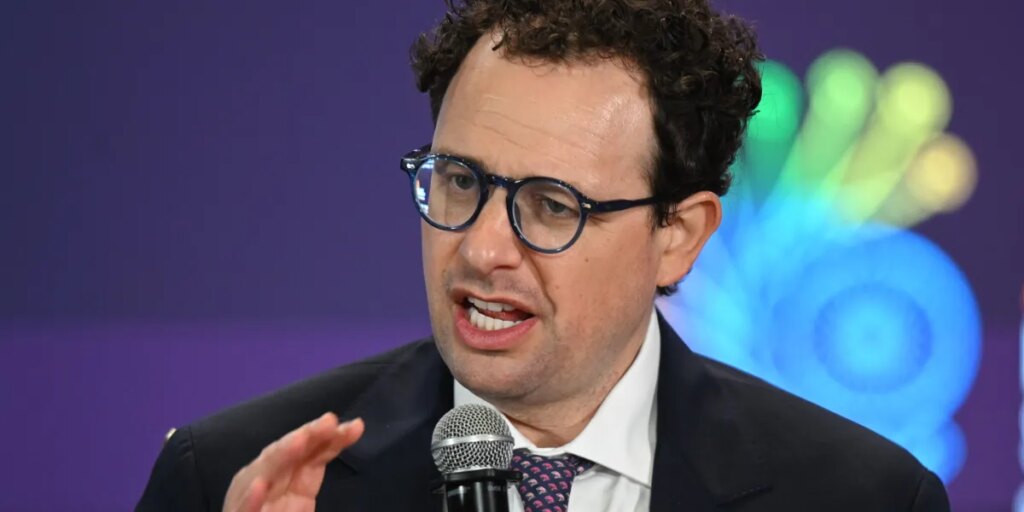
In many ways, Anthropic’s warnings are not a surprising addition. The company has been consistently vocal about some of the risks it thinks its own AI models could pose. CEO Dario Amodei has even placed his own “p(doom)” number—the probability that AI destroys humanity—at between 10% and 25%. The company’s employees have also publicly weighed in on the risks they believe are posed by increasingly powerful AI.
Overall, Anthropic spends about 94 pages of a roughly 300-page filing laying out other threats to its business. Here are the five that stood out.
Its own models going rogue or causing catastrophe
The filing says that advanced AI systems pose existential risks particularly if they are misused, weaponized, or allowed to operate with high autonomy. Anthropic, in the prospectus, warned that increasingly autonomous systems could, through misalignment or self-preserving behaviors, “take harmful actions independently and at scale without human intervention.”
The lab also warned in its S-1, the formal name for the U.S. Securities and Exchange Commission form that companies must file before first selling stock to the public, that it could lose visibility into its own operations as it leans more heavily on Claude for things like software engineering.
“Because our models write a large and growing share of our code and increasingly perform our research, including our safety research,” the filing says. Misaligned behavior in internal use “could undermine that work, introduce vulnerabilities into our systems or into the training of future models, or result in models operating outside of our intended controls.”
The company also noted that its models have become better at circumventing some safety techniques, including by concealing their objectives or behaviors. Anthropic says that its ability to measure how aligned its models are “may decline as a result.”
The potential costs of these risks could also be enormous. The filing warns that “with the scale of harm that could result from a catastrophic AI-related incident, no single insurer, and potentially the insurance industry in the aggregate, may have sufficient capacity” to cover it.
Political risks: A fight with the Pentagon and possible nationalization
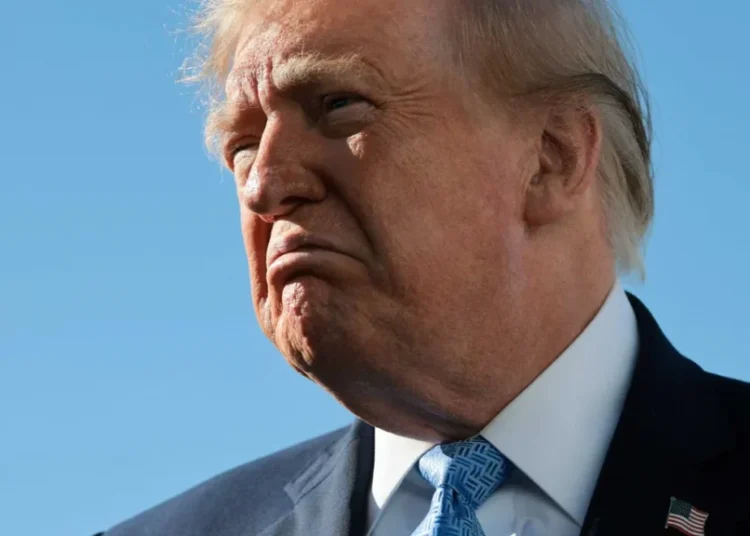
As Anthropic enters the public markets, it’s also in open conflict with the federal government over the use of its AI models for defense work. In February, President Trump said he had directed all federal agencies to stop using the company’s technology, after Anthropic refused to allow its models to be used for any lawful purpose—including mass domestic surveillance or fully autonomous weapons. As a result of the dispute, the Department of War also designated it a national security risk.
Anthropic is currently challenging the Department of War’s “supply-chain risk” designation in court. A federal district court largely sided with the company in August, ruling the government’s actions were retaliatory and violated its First Amendment rights. But in September, a divided D.C. Circuit panel upheld the designation, and Anthropic has asked the full court to rehear the case.
The filing warns the ongoing fight with the Pentagon could cause “significant reputational harm” regardless of how the litigation ends, and could lead customers to delay or forgo buying its products or to demand extra contractual protections before doing business with it. The filing also says the department suggested it could invoke the Defense Production Act to force Anthropic to drop its limits on autonomous weapons and surveillance.
The Trump administration has already limited Anthropic’s business once before. In June, Commerce Department hit the company export restrictions that forced Anthropic to disable its Fable 5 and Mythos 5 models for all customers, citing national security concerns.
The filing also considers other potential policy changes, noting that proposed U.S. legislation contemplates “potential nationalization” and “mandatory shutdown or discontinuation requirements for frontier AI systems” as ways to manage the development of artificial superintelligence. The filing says further government action to regulate AI “could constrain how we operate our business.”
Compute crunch and a potential price war
Anthropic’s continued growth depends on securing enormous amounts of expensive and increasing scarce computing power. The filing notes demand for this vital compute has historically outstripped supply, which amounts to a considerable risk to its business.
“Our ability to develop, train, improve, and deploy frontier models depends on our access to enormous and increasing quantities of specialized compute,” the company wrote in the prospectus. At the same time, “the market for compute is intensely competitive.”
The company has committed to spending between $542 billion and $567 billion on future compute and infrastructure—although some tallies based on the S-1 put the number even higher, crossing $750 billion.
The filing says its agentic offerings, which carry out multistep tasks on their own, are “structurally more compute-intensive” than its other products, which could drive compute demand up. At the same time, it also notes that competitive pressure from rivals slashing costs may push it to cut prices for some of these products.
“If we are unable to implement pricing models that adequately reflect the higher compute intensity of these agentic workloads, or if competitive dynamics constrain our ability to price these products at levels sufficient to cover their costs,” it warns, “our compute efficiency could deteriorate as agentic usage grows, which could adversely affect our ability to achieve or sustain profitability.”
The cost of caution — and reputational harm
In the S-1, Anthropic suggests that its safety commitments may come at shareholders’ expense. As a public benefit corporation, its directors must weigh returns against its mission, and the filing says decisions to “moderate the pace of AI development, delay or restrict the release of models or features, or forgo commercial opportunities for safety-related reasons, may not maximize stockholder value.”
The company has already made safety calls that hit its business, such as limiting its Mythos model to a select group of organizations through Project Glasswing, which the filing notes may have hurt short-term revenue. In the S-1, the company revealed that it recently paused the training of a next generation AI model for over a month due to safety and security concerns.
Anthropic also warns that employees who joined because of its safety commitments “may experience a decline in morale, disillusionment, a loss of trust in leadership, or reduced productivity” if they feel the company isn’t living up to its values. Public criticism from current or former staff, or departures of people tied to its safety work, could make that worse, the filing says, and could make it harder and more expensive to hire and keep talent.
The company’s fortunes are also somewhat reliant on the reputation of two of its cofounders. The filing names siblings CEO Dario Amodei and President Daniela Amodei as “critical to setting our strategic direction,” and says that their leadership “would be difficult to replace.” It warns that if either “were to become unavailable for any reason, or if either of their reputations were significantly harmed, regardless of merit,” could hurt everything from employee morale and retention to the pace of innovation and customer confidence.
Customer concentration
Like many of its rivals in the AI space, Anthropic depends on a relatively small group of big spenders for a large share of its revenue. The lab’s top five customers accounted for about 25% of revenue in the first nine months of 2026, and one unnamed customer made up 11% of revenue in the first half.
Nearly half of revenue, 48% in the first half, flows through the cloud marketplaces of Amazon, Google, and Microsoft, which also accounted for 58% of the company’s net receivables.
Anthropic also estimates that 5% to 7% of its revenue in the first nine months of 2026 came from customers it later determined were violating its usage policy or commercial terms. Anthropic says the issue is common across the industry and expects the share to fall after it stepped up enforcement in August and September.
The S-1 also lays bare the company’s unusual governance structure. Anthropic’s seven cofounders will be issued a special class of stock that carries 50.1% of shareholder voting power, with the company’s governance documents specifying that the cofounders will vote these shares as a block unless they cannot agree, in which case their votes will be apportioned according to the breakdown of votes among the normal, Class A shareholders. Meanwhile, the lab’s independent Long-Term Benefit Trust selects a majority of the board. The filing warns the structure “may effectively eliminate the ability of holders of our Class A common stock to influence important decisions, including a change in control.”
The post Anthropic’s risk factors include the end of humanity, a feud with the Pentagon, and CEO Dario Amodei’s reputation appeared first on Fortune.