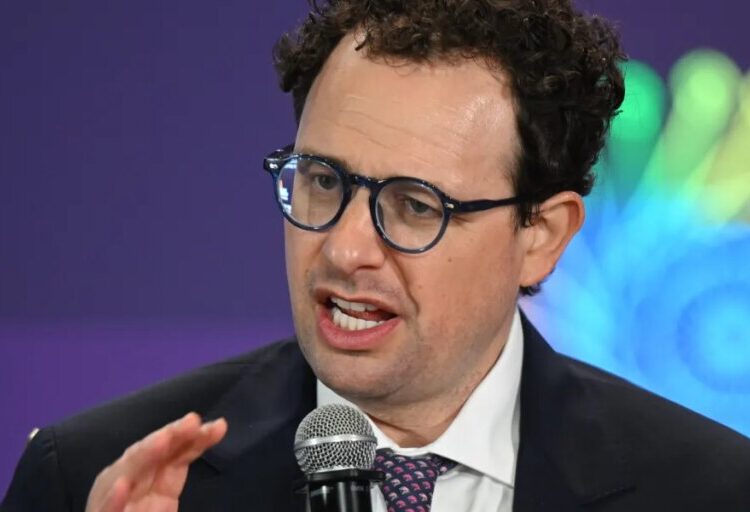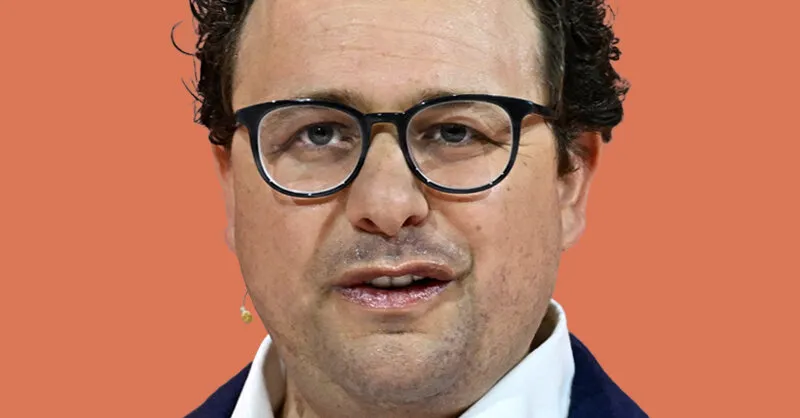
Anthropic, the artificial intelligence company behind the Claude chatbot, is preparing to go public in a debut that could value it at $2 trillion and become the largest-ever initial public offering. That would turn the San Francisco start-up’s seven founders, who left OpenAI to create Anthropic in 2021 after disagreements with OpenAI executives over how A.I. should be built, into the latest tech billionaires.
Here’s a who’s who of Anthropic’s founders:
Dario Amodei
Dr. Amodei, 43, is the chief executive of Anthropic. In the past year, he clashed with Defense Secretary Pete Hegseth over the use of A.I. in autonomous lethal weapons and for mass domestic surveillance, and has been at odds with other tech leaders over whether A.I. should be openly shared or tightly controlled.
In a 3,800-word essay in September, Dr. Amodei called for a global slowdown of A.I. development. Weeks later, he had a private dinner with President Trump and attended a luncheon the president hosted with other A.I. leaders.
Dr. Amodei grew up in San Francisco’s Mission District with his younger sister, Daniela, who is also an Anthropic founder. Their father, who died when Dr. Amodei was in his early 20s, was a leather craftsman, and their mother managed renovation projects for libraries in San Francisco and Berkeley, Calif. The siblings attended Lowell High School in San Francisco.
Dr. Amodei studied physics at the California Institute of Technology and transferred to Stanford to finish his undergraduate degree. He attended Princeton for a doctorate in biophysics and computational neuroscience as a Hertz fellow and later returned to the Bay Area as a postdoctoral researcher focused on “trying to improve diagnostics and curing cancer” at Stanford’s School of Medicine, he told The New York Times’s Ross Douthat in February.
In 2014, Dr. Amodei joined the Chinese internet company Baidu as a researcher, before moving to Google and then OpenAI in 2016. At OpenAI, he had roles including vice president of research, leading the development of large language models like GPT-2 and GPT-3.
Daniela Amodei
Ms. Amodei, 39, is the president of Anthropic. She manages business operations and the company’s executive leadership.
“Dario and I have been fighting and getting over it for almost 40 years because he’s my brother and I used to steal his toys,” she said at the Stanford Graduate School of Business in May. “So we know how to work through conflict together.”
Ms. Amodei attended the University of California, Santa Cruz, for a degree in English literature. She worked in global development in Maryland and Uganda, then on Matt Cartwright’s successful Democratic campaign for a U.S. House seat in Pennsylvania in 2012 and in communications for his office in Washington.
In 2013, Ms. Amodei returned to San Francisco for a recruiting job at the payments company Stripe, then rose to the head of risk operations. She joined OpenAI in 2018 as an engineering manager, later becoming vice president of people and then, in 2020, vice president of safety and policy. Her husband, Holden Karnofsky, was one of the founders of the effective altruist movement, in which philanthropists seek to maximize the positive impact of their giving. As adults, the Amodei siblings once lived together in a San Francisco group house.
Jared Kaplan
Dr. Kaplan, 42, is Anthropic’s chief science officer. He helped develop the company’s method of training models to align with a set of written policies and principles, called “constitutional” A.I.
Dr. Kaplan went to the Illinois Mathematics and Science Academy outside Chicago. At a start-up event last year, he said he had become curious about physics because his mother was a science fiction author. He studied physics and math at Stanford and earned a Ph.D. in physics from Harvard. Dr. Kaplan met Dr. Amodei in the mid-2000s while car-pooling to an event for the Hertz fellowship, which both received in graduate school.
“We mostly spent the car ride talking about philanthropy,” Dr. Kaplan said at a Hertz Foundation event last year.
He did postdoctoral research at the SLAC National Accelerator Laboratory before working as an associate professor at Johns Hopkins University. He joined OpenAI as research consultant in 2019.
Sam McCandlish
Dr. McCandlish, 36, is the chief architect of Anthropic. Among other things, he focuses on large-scale model training. Before taking that position in October, he was chief technology officer.
Dr. McCandlish studied math and physics at Brandeis, earning a master’s degree in physics. His Ph.D. at Stanford focused on theoretical and mathematical physics. He later worked as a postdoctoral fellow at Boston University. In 2018, he joined OpenAI as a safety fellow and was a member of the technical staff building GPT-3 and Codex, a coding and productivity tool.
“None of us wanted to found a company — we just felt like it was our duty,” he said in a round-table discussion with the other founders posted on Anthropic’s YouTube channel in 2024.
Tom Brown
Mr. Brown, 39, is Anthropic’s chief compute officer. He oversees the computing infrastructure used to train the company’s A.I. models. A public advocate for data center expansion, he recently helped lead negotiations with the federal government after the administration told the company to suspend foreign nationals’ access to its most advanced A.I. models, Fable 5 and Mythos 5. He, along with Dr. Amodei, attended a luncheon to discuss A.I. safety with Mr. Trump and other A.I. leaders at the White House in September.
Mr. Brown grew up in San Francisco and earned his bachelor’s and master’s degrees in engineering at the Massachusetts Institute of Technology, studying computer science and cognitive sciences. He worked at and founded a few start-ups and joined OpenAI in 2016 as one of the first 20 employees. He then left for Google but returned to OpenAI in 2018 as research engineering lead.
Mr. Brown previously lived in a group house in San Francisco called Archive, along with Amanda Askell, Anthropic’s resident philosopher, and Benjamin Mann, who co-leads the company’s Labs team, which tests experimental products.
Jack Clark
Mr. Clark, 38, was head of policy at Anthropic but moved into a new role in March as the head of public benefit. In this role, he started the Anthropic Institute, an internal think tank focused on A.I.’s societal, economic and security impacts.
He grew up in Brighton, England, and attended Varndean School, Varndean College and then the University of East Anglia, where he studied English literature and wrote for the student newspaper. Mr. Clark then worked as a technology journalist, writing for The Register and Bloomberg. While a journalist, he met Dr. Amodei in 2015 at a conference, he said in the discussion posted on Anthropic’s YouTube channel.
Mr. Clark joined OpenAI in 2016 to run strategy and communications and then became the policy director. He writes a weekly newsletter about A.I. called Import AI.
Christopher Olah
Mr. Olah, 34, is Anthropic’s interpretability research lead. He works on reverse-engineering artificial neural networks into human-understandable algorithms, according to his personal website. In May, he joined Pope Leo XIV at the Vatican for his encyclical, which called for protections against the rise of A.I. At the presentation, Mr. Olah made a seven-minute speech urging the world to scrutinize A.I. development and “tell the labs when we are failing.”
Mr. Olah grew up in Toronto and went to the private Abelard School. He was selected as a Thiel Foundation fellow at 19 and received $100,000 to launch independent machine learning and neural network research.
He worked on a 3-D-printing start-up and interned at Google before joining the company full time in 2015. At Google, he sat next to Dr. Amodei and also worked with Mr. Brown. In 2016, Mr. Olah co-founded Distill, a peer-reviewed journal about machine learning.
In 2018, he joined OpenAI, where he led interpretability research to understand and explain the inner workings and decision-making processes of A.I. systems.
The post Meet Anthropic’s Seven Founders as It Prepares to Go Public appeared first on New York Times.