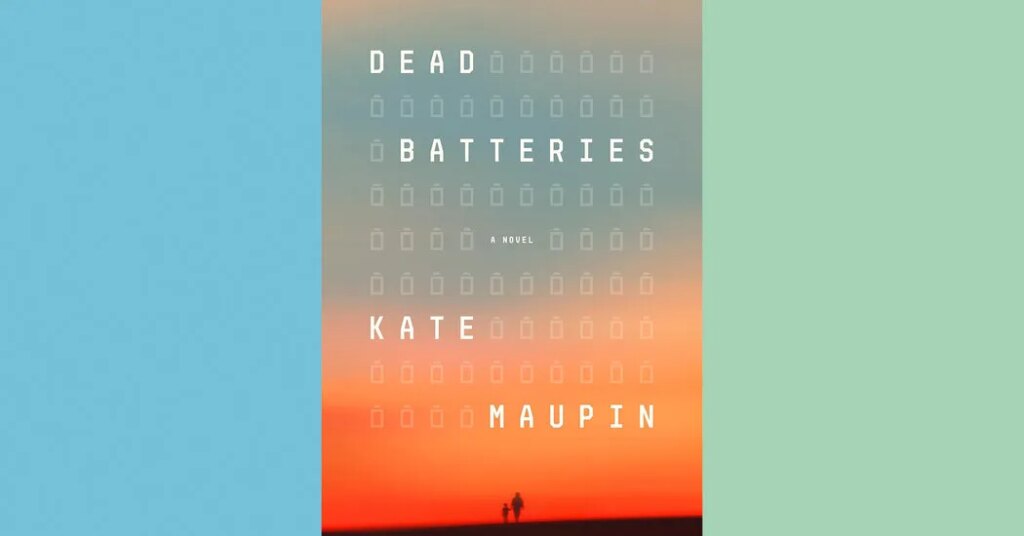
DEAD BATTERIES, by Kate Maupin
Early in Kate Maupin’s dystopian debut novel, “Dead Batteries,” a mother hunts through the drawers and cupboards of a stranger’s abandoned house, looking for supplies. In the background, a long-dead corpse lies on a bed, “rotting in a pink pajama set and sunshine-yellow robe.”
The scene is arresting and artfully described, but another word also comes to mind: familiar. We’ve seen similar moments on shows like “The Walking Dead” and “The Last of Us.” Some people’s first encounter with an episode like this was surely in the pages of Cormac McCarthy’s bleakly beautiful 2006 novel, “The Road,” in which a father and his young son cross an emptied American landscape, ravaged by an unnamed catastrophe.
In some ways, “Dead Batteries,” which also involves traveling on foot through a depopulated America but from a woman’s point of view, reads like a direct response to “The Road.” The mother from the opening scene, May, who is also this book’s feisty narrator, mentions McCarthy’s novel by name. (She picked up a copy from an abandoned library, she says, but stopped reading halfway through, afraid of how it might end.)
In “Dead Batteries,” the disaster is a virus, White Lung, which killed most of the world’s population a year or so before the events of this novel begin. May, a rare survivor, is a single parent of 10-year-old Davis, who has autism and O.C.D. Davis is mostly nonverbal, needs constant supervision and has a habit of running when scared. But he’s also a kid who loves his Game Boy and Cadbury chocolate bars.
Like “The Road,” “Dead Batteries” is a meditation on parenthood in which an apocalyptic scenario serves to illuminate the everyday struggle and profundity of guiding a child through an uncertain world. Both novels explore classic questions about the nature of humanity, namely: Can you ever truly trust a stranger?
But “Dead Batteries” is, pointedly, a story about a mother. Davis’s father abandoned the family long before the virus struck, leaving May to care for her son alone for years, a job that is particularly labor-intensive because of his specific needs. The book’s main action takes place over the course of just a few days, during which May handles her son’s intense physical reactions, his toileting regressions, and — worst of all — the criticism of other survivors. (One woman dares to question the wisdom of offering Davis his Game Boy during a meltdown, concerned that it rewards “misbehavior.”) Maupin writes especially compellingly about the challenges and misunderstandings unique to this kind of parenting.
Among the book’s many other sources of tension is a eugenics-inspired cult that roams around shooting anyone they deem weak. A more idyllic-sounding community of survivors, Beacon Village, poses a different kind of threat to May and her son: Every member is expected to contribute in some measurable way, even children. If Davis is judged on the axis of usefulness, will the group allow them to join? Like birthday parties and field trips in the old days, here is one more club from which May and her son might be excluded. “Where will the new order of the world shuffle this untrainable soldier?” she worries.
But May is used to solitude, accustomed to her two-person “bubble” of routines with her son. (This habit of isolation may even be the reason they survived the contagion.) Angry and insightful, May is no longer sure that living among other people is what’s best for her son.
May’s dark humor, her fierce love for a child who marches to his own rhythm and her unvarnished descriptions of life as a special-needs parent are enough to make this dystopian story feel a little bit new, after all.
DEAD BATTERIES | By Kate Maupin | Crown | 274 pp. | $29
The post Imagine ‘The Road’ From a Mother’s Perspective appeared first on New York Times.