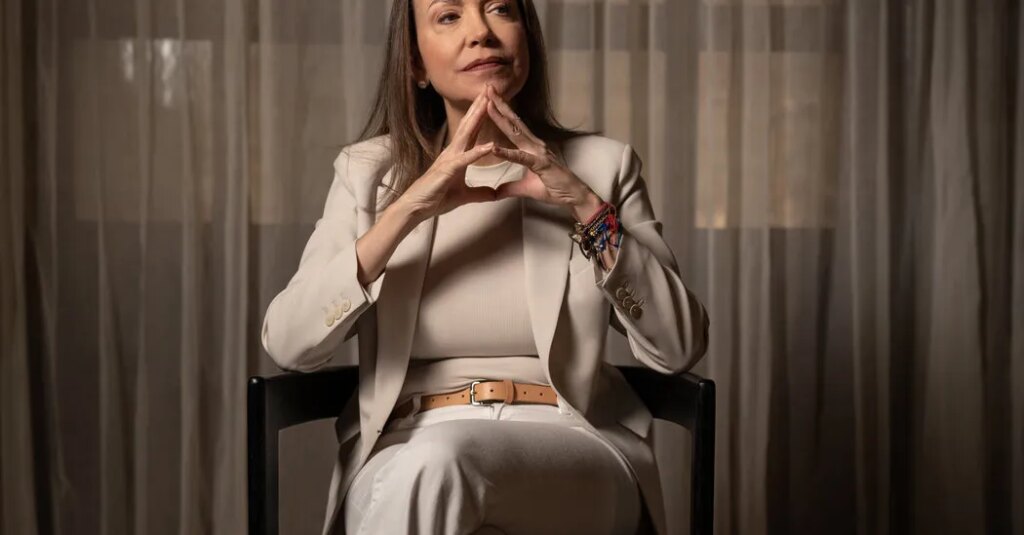
María Corina Machado, the leader of the biggest opposition movement in Venezuela, returned to her country on Sunday after nearly a year in exile since slipping out to receive the 2025 Nobel Peace Prize.
A conservative former lawmaker and a longtime opponent of Venezuela’s socialist ruling party, Ms. Machado has returned to press for elections in a country reeling from the political changes that have taken place since she left and from devastating earthquakes in June.
Just weeks after she traveled to Norway in December to receive the peace prize, the United States in January invaded Venezuela, captured its president, Nicolás Maduro, and backed Delcy Rodríguez, who had been appointed his vice president after a 2024 election widely seen as rigged.
Ms. Machado had been in hiding domestically since Mr. Maduro claimed victory in that election and had to travel abroad secretly. But Mr. Maduro’s removal did not guarantee her return.
Ms. Machado praised the U.S. invasion and gave her Nobel medal to President Trump. While in exile, she pledged to go back and push for elections, including in a recent interview with The New York Times. But until Sunday, her efforts to return were repeatedly thwarted.
“I am here,” Ms. Machado wrote in a message on social media from Venezuela on Sunday. “With you all.”
Here’s what to know about Ms. Machado, the movement she leads and what her return means for Venezuela.
Who is María Corina Machado?
Ms. Machado, 59, is the eldest daughter of a prominent family in Caracas. She attended an elite Catholic girls’ school in Caracas and a boarding school in Wellesley, Mass. She studied engineering and finance, and later worked for the family company, Sivensa, a large steel producer.
Parts of the company were expropriated in 2010 by President Hugo Chávez, the founder of the country’s modern socialist movement, who took control of dozens of privately owned companies as part of his nationalization program.
In the early 2000s, she became a political activist and a founder of Súmate, a voting rights group that led a failed effort to recall Mr. Chávez, who died in 2013.
Mr. Maduro held power in the years that followed until he and his wife, Cilia Flores, were captured in January by the United States, where they both await trial on charges of narco-terrorism, drug trafficking and torture of detainees amid violent repression of the political opposition.
Ms. Machado joined the National Assembly in 2010, winning a record number of votes. She leads the Vente Venezuela opposition party and in 2023 announced a bid for the presidency.
But she was blocked from running in the 2024 election because of what the government said were financial irregularities when she was a national legislator. She called this a politically motivated maneuver meant to keep her from power and backed a surrogate, a little-known former diplomat named Edmundo González.
Mr. González ran against Mr. Maduro, who claimed victory in the election.
The opposition, however, collected evidence that it said showed Mr. González won by a wide margin and alleged that Mr. Maduro had stolen the vote. The Carter Center, an independent vote monitoring organization, has called the opposition’s count accurate.
The Norwegian Nobel Committee said last year that it had recognized Ms. Machado primarily for her efforts to advance democracy “in the face of ever-expanding authoritarianism in Venezuela.”
In a statement on Sunday, Ms. Machado’s spokesman, David Smolansky, called her return “a major step toward a democratic transition and free, fair and verifiable presidential elections in the near future.”
Did she support U.S. actions in Venezuela?
Ms. Machado was a strong supporter of Mr. Trump’s military buildup in the Caribbean last year. Like Mr. Trump, she argued that Mr. Maduro posed a regional security threat.
In statements to the press before his capture, Ms. Machado said that her movement was prepared to take territorial and administrative control of Venezuela if Mr. Maduro were to fall from power.
She had also promoted an economic plan to American and other investors, saying that a democratic Venezuela under her movement’s control could generate $1.7 trillion in wealth in 15 years, in part by privatizing the oil industry.
The Trump administration seemed to agree with that assessment. Since capturing Mr. Maduro, the United States has moved to privatize the Venezuelan oil industry, allowing Ms. Rodríguez to make opaque financial deals. Ms. Machado recently criticized one of these agreements but has said that she would respect deals that comply with Venezuelan law should she be in power someday.
Ms. Machado gave her Nobel medal to Mr. Trump in a meeting in January, though the peace prize which he has long coveted is not transferable, according to the committee that awards it.
Still, the Trump administration has kept Ms. Machado at a distance.
The relationship between Ms. Machado and the Trump administration grew tense after devastating twin earthquakes struck Venezuela in June, when she pressed for help in returning home and was told there were fears this would destabilize the country.
What has the Trump administration said about her return?
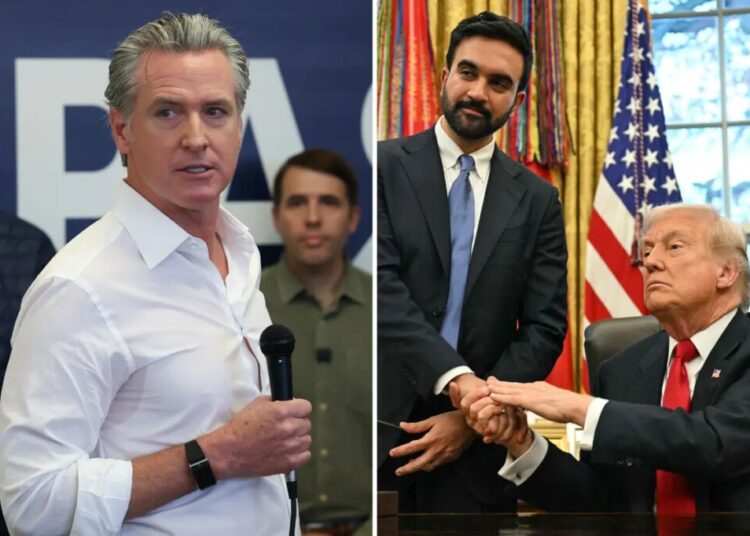
After the announcement of her return, Mr. Trump told reporters in Washington on Sunday that Ms. Machado is “a very nice woman,” without signaling support for her leadership. “She gave me her Nobel Prize, so how can I say anything else? And I hope she’s safe. She’s a very nice woman,” he said. “But we’re doing really well in Venezuela.”
Secretary of State Marco Rubio said in a social media post on Sunday that “the conditions allowing for the safe return of Ms. Machado is the direct result” of reconciliation efforts in Venezuela that the United States has supported. The post offered no timeline for elections.
“The United States expects the freedoms of all sectors of Venezuelan politics to continue to be respected,” he wrote. “Likewise, we expect all political actors to support these talks which represent the best chance Venezuela has had in thirty years to peacefully achieve not just a free and fair election but an enduring democracy.”
Mr. Smolansky, the aide to Ms. Machado, on Sunday thanked Mr. Trump, Mr. Rubio, the U.S. government, Congress and allied governments for their “continued leadership and support” in his statement about her return.
The post Who Is María Corina Machado? appeared first on New York Times.