CARACAS, Venezuela — María Corina Machado, the Venezuelan opposition leader and Nobel Peace laureate, returned to Venezuela on Sunday after more than 10 months abroad — a homecoming that could test the Trump administration’s control over the country.
Machado will push for elections to replace the interim government that was installed after the U.S. military’s seizure of President Nicolás Maduro in early January, a top Machado adviser said.
“I am here,” Machado posted on X. “With you.”
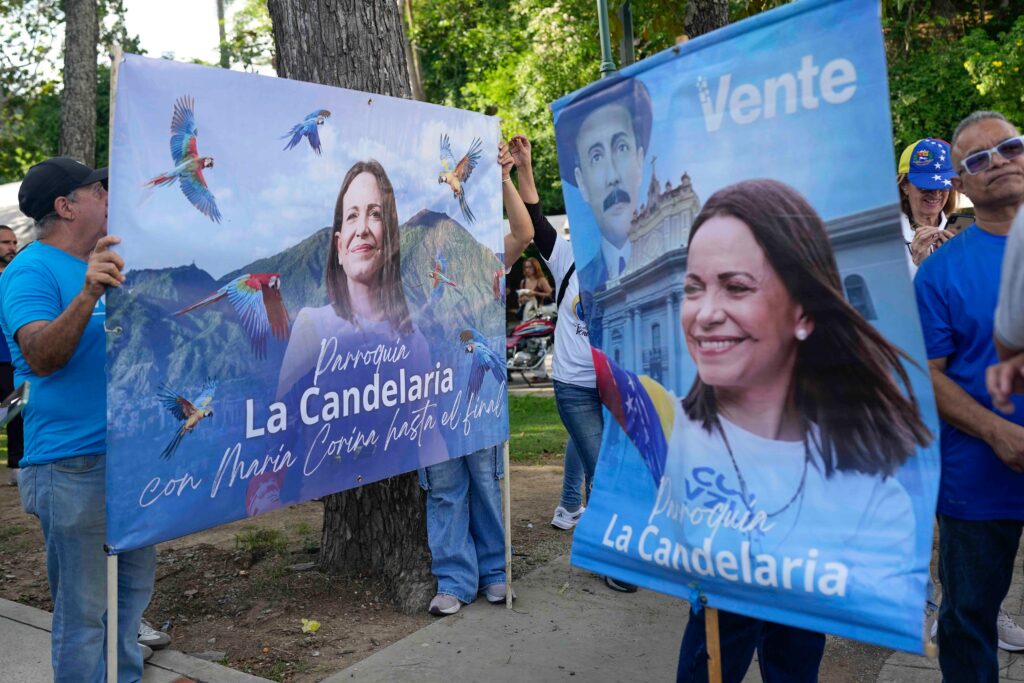
Machado, a devout Catholic, appeared Sunday at a church in western Lara state, where her return instantly galvanized supporters as hundreds clapped, cheered and cried. “A promise is a promise, and here it is,” one woman shouted.
Edmundo González, the exiled opposition leader who ran for president in the country’s 2024 elections with Machado’s backing after she was barred from running, said he was thrilled to announce that Machado “is on Venezuelan soil.”
“Today is a very important day for Venezuelans,” González posted on X. “Our sovereign voice returns with her to lead and guide this process! Very soon I will be with you and with her so that our country truly advances toward freedom.”
Maduro banned Machado from leaving Venezuela in 2014, and the Venezuelan government had long said she would become a fugitive if she tried to leave the country. Evading threats of arrest, she escaped last year to receive the Nobel Peace Prize in Oslo.
Her campaign has said she has made several unsuccessful attempts to return in recent months, as the Trump administration deepened its control over the country and threw its weight behind interim president Delcy Rodríguez.
It was not immediately clear how Machado had traveled. In recent months, she had been living mostly in Panama City.
Word of Machado’s possible return to Caracas began to circulate in limited circles last week, but U.S. officials were not informed in advance on the timing of her planned arrival, according to a person familiar with the United States’ Venezuela policy who spoke on the condition of anonymity to discuss sensitive information.
Calls with details from Machado’s team began arriving to U.S. officials only on Sunday morning, the person said.
“There was no prior knowledge, let alone acquiescence,” the person said.
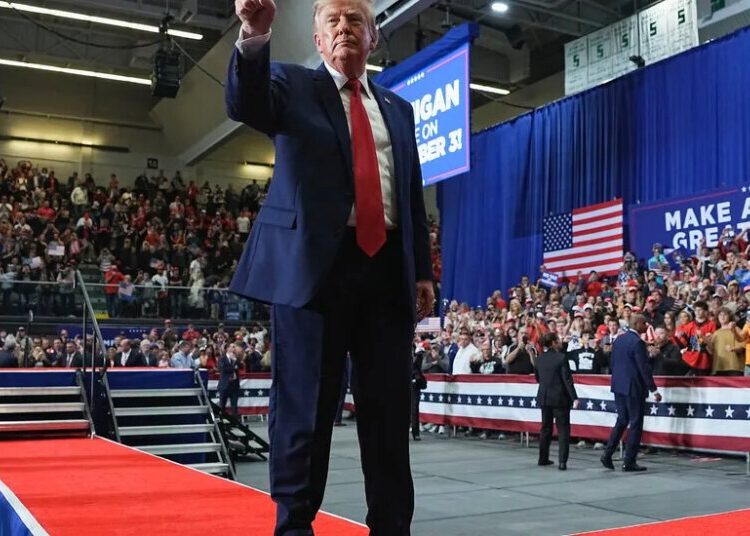
President Donald Trump, speaking to reporters at the White House on Sunday, said he did not know anything about Machado’s return but described her as a “very nice woman.”
“She gave me her Nobel Prize, so how can I say anything else?” Trump said. “And I hope she’s safe. She’s a very nice woman. But we’re doing really well in Venezuela.”
Speaking on Fox News on Sunday morning, Trump said that “we have total control of Venezuela, and we’re being very fair to them.”
Days after the U.S. capture of Maduro, Machado handed Trump her Nobel medal. Machado said the Venezuelan people were giving Trump the medal “as a recognition for his unique commitment with our freedom.”
Within the White House, however, her attempts to return home have raised a measure of concern.
After Maduro’s capture, the administration chose to work with Rodríguez, Maduro’s former vice president, whom Washington has portrayed as a cooperative and capable “partner.”
That, the person familiar with U.S. policy said, would not “change” with Machado’s return.
Secretary of State Marco Rubio credited U.S. intervention with making Machado’s return home possible. “The conditions allowing for the safe return of Ms. Machado to Venezuela is the direct result of the U.S. supported reconciliation talks which has already seen hundreds of political prisoners freed and hundreds of political opposition figures return from exile,” Rubio said in a post on X on Sunday.
“The United States expects the freedoms of all sectors of Venezuelan politics to continue to be respected,” Rubio added. “Likewise, we expect all political actors to support these talks which represent the best chance Venezuela has had in thirty years to peacefully achieve not just a free and fair election but an enduring democracy.”
The Trump administration is worried in part about whether Machado will seek present herself as a more assertive alternative to Dinorah Figuera, the doctor and more moderate opposition figure tapped by the U.S. to negotiate a democratic transition with Rodriguez’s government.
U.S. officials view those talks as making progress on issues including a revamp of Venezuela’s top court and electoral council.
The concern is that Machado “goes in and blows all that up, and takes all of that backwards. She doesn’t understand there’s no plan B,” the person familiar with U.S. policy said. “She can’t go back to the old playbook.”
The third round of negotiations led by Figuera concluded last week, with little progress toward setting a date for presidential elections, which is the main objective of the talks. The absence of elections is a central grievance in growing protests in the country in recent weeks.
Figuera has said the presidential election should happen at the latest by 2028, with the timing depending on political and institutional guarantees being put in place first.
U.S. officials are concerned Machado could seek to mobilize large-scale demonstrations aimed at destabilizing Rodríguez at a time when the Trump administration is satisfied that her leadership has stabilized the country.
#AHORA | @MariaCorinaYA llega a la Iglesia de Santa Rosa, en #Lara, para agradecer a la Divina Pastora por su regreso a Venezuela, luego de diez meses fuera del país. ¡Con fe y de la mano de Dios, se reencuentra con los venezolanos y su tierra! Bienvenida, @MariaCorinaYA, tu… pic.twitter.com/Cfuv0BwYmD
— Comando ConVzla (@ConVzlaComando) October 25, 2026
Trump has said Rodríguez is “doing a great job” and has referred to her as a “terrific person.” In August, Trump announced that the U.S. government had taken a major stake in Venezuela’s oil industry.
“If her goal is to turn Caracas into Paris, that’s going to be a problem,” the person familiar with U.S. policy said, referencing the recent street demonstrations in the French capital.
Amid reports that U.S. officials were refusing to facilitate her return, Rubio earlier this month denied that the Trump administration was blocking her entry.
In an interview with NBC News in January, Rodríguez said that if Machado were to return to the country, “she will have to answer to Venezuela.”
“She must answer to the country for her call to impose an economic blockade on Venezuela,” Rodríguez said. “She must answer to the country because she has called for an invasion of Venezuela. She must answer to the country because she applauded foreign military aggression.”
Machado is framing her homecoming as the start of an electoral push.
Two years after the opposition was able to prove its victory in an election that Maduro claimed he won, polls still place her as the most popular political figure in Venezuela.
David Smolansky, a senior adviser to Machado on security and foreign affairs, said in an interview with The Washington Post on Sunday that she will push to schedule a date for free and fair presidential elections that guarantee the participation of all Venezuelans.
She will also continue to demand the release of all political prisoners in the country and will aim to meet with those who have already been released, Smolansky said.
Machado also hopes to meet with human rights defenders, members of civil society organizations and those affected by the catastrophic earthquakes that struck the country in June, he said.
Smolanksy also pointed to an opposition-led protest Thursday in several cities across the country. “The message was very clear,” Smolansky said. “People want to participate. They want there to be free presidential elections and ultimately a transition to democracy.”
The Nobel committee honored Machado in October 2025 for her long campaign for democracy against Maduro’s authoritarian state. Knowing Trump coveted the award, Machado immediately praised him and said she was dedicating the prize to him.
“We are on the threshold of victory and today, more than ever, we count on President Trump, the people of the United States, the peoples of Latin America, and the democratic nations of the world as our principal allies to achieve Freedom and democracy,” Machado posted on social media.
In a follow-up message, she dedicated the prize “to the suffering people of Venezuela and to President Trump for his decisive support of our cause.”
Schmidt reported from Mexico City. Violet Jira in Washington contributed to this report.
The post Opposition leader María Corina Machado returns to Venezuela to push for elections appeared first on Washington Post.