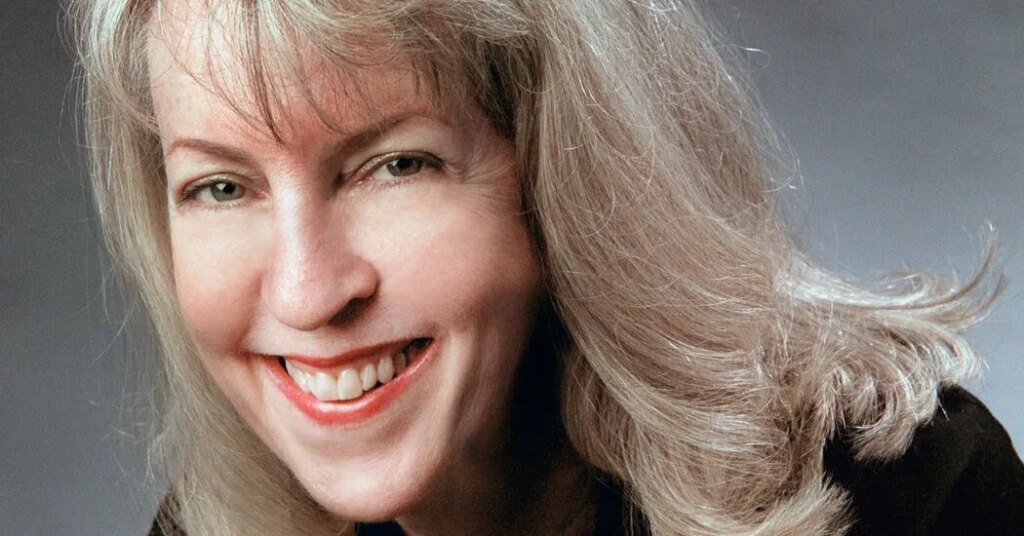
Caryle Murphy, whose intense, monthlong coverage of Iraq’s invasion of Kuwait in 1990 for The Washington Post — an assignment that ended with her escape to Saudi Arabia from Saddam Hussein’s forces — earned her a Pulitzer Prize, died on Oct. 19 in Fairfax County, Va. She was 79.
Her death, in a hospital, was caused by viral pneumonia, her husband, Herbert Howe, said. In 2015, Ms. Murphy had been diagnosed with pulmonary fibrosis and three years later received a lung transplant.
Ms. Murphy was The Post’s bureau chief in Cairo in late July 1990, when David Ignatius, the paper’s foreign editor, called to tell her there was reliable information that the Iraqis were likely to invade. At the time, she had a mysterious ailment that left her struggling to stay awake.
“I said, ‘Can you possibly get to Kuwait?’” Mr. Ignatius recalled in an interview. “She got off her sickbed and was one of the few correspondents from American journalism in Kuwait when the tanks rolled in.”
Over four weeks, she reported from Kuwait City about roads littered with burned-out armored cars and trucks; early signs of Kuwaiti resistance; embassies that were under siege; the absence of civil administration; and antiwar protests, mostly by women.
“When someone takes your country,” a Kuwaiti woman told Ms. Murphy, “it’s like tearing out your heart.”
Ms. Murphy felt she was in danger of being rounded up by Iraqi forces and left her hotel to hide in homes, first with Americans and then with Kuwaitis. With phone and Telex lines dead, she had to find other means to send her stories, which included passing them to people leaving Kuwait or rolling them into a tube, with a note identifying herself, and tossing them over the wall of a friendly embassy. The U.S. embassy would not let her use its classified communications channels.
Some of her stories carried her byline but, after a few days, The Post removed her name to protect her.
She decided to leave Kuwait for several reasons, including not wanting to subject the family that was hiding her to Iraqi threats to hang anyone sheltering a Westerner. One attempt to flee failed. But on Aug. 27, wearing a black veil and robe, she escaped from Kuwait in a nine-vehicle caravan that drove four hours across the desert to Saudi Arabia.
“Stranded cars, left by their occupants, litter the landscape,” she wrote in The Post. “No one talks as our car bounces over the sandy ridges. Three times, we have to stop to dig out one of the vehicles. Two are finally abandoned because their engines died. We meet only two Iraqi soldiers, but they don’t attempt to stop us.”
She remained largely in Saudi Arabia, where in January and February 1991 she covered the Persian Gulf war, in which a military coalition led by the United States liberated Kuwait.
A few months later, she was awarded the Pulitzer for international reporting, which she shared with Serge Schmemann of The New York Times for his coverage of the reunification of Germany.
“It’s really nice to get the mother of all prizes,” Ms. Murphy told The Post newsroom. She also won the George Polk Award for foreign reporting.
Carole Marie Murphy — who change the spelling of her first name in the 1960s to make it more distinctive — was born in Hartford, Conn., on Nov. 16, 1946, and grew up in Brockton, Mass. Her father, Thomas, was a pediatrician, and her mother, Muriel (McCarthy) Murphy, managed the home while raising six children.
In 1968, Ms. Murphy earned a bachelor’s degree in history from Trinity College in Washington (now Trinity Washington University); years later, in 1986, she received a master’s degree in international public policy from the Johns Hopkins School of Advanced International Studies.
Looking to travel after her undergraduate degree, she taught English and history for two years at an all-girls’s school in Nyeri, Kenya. Back in the United States, she started her journalism career at The Brockton Enterprise before going back overseas as a freelancer.
In 1976, she was reporting for The Post from Angola — one year after the African country became independent from Portugal but during its civil war — when she was accused by the government of working for the C.I.A. She was placed under house arrest for more than a week, interrogated over her sources for one article and expelled from the country.
She was soon hired full-time by The Post, starting as a suburban reporter in Virginia before being assigned to South Africa from 1977 to 1982. She then returned to cover immigration and other beats.
In 1984, she met Robert Gersony, a consultant to the State Department who told her about mass killings of civilians in Uganda under the strongman leader Milton Obote.
Mr. Gersony had gained no traction within the Reagan administration to intervene to stop the killings, which, she wrote in The Post, were considered by Ugandans and foreign observers “worse than the atrocity-ridden eight-year rule of the country’s former ruler, President Idi Amin.”
The publicity generated by Ms. Murphy’s article “stopped the killings,” Mr. Gersony said in an interview, in part by leading Elliott Abrams, the assistant secretary of state for human rights, to tell the BBC at the time that Uganda no longer had the backing of the United States. The interview was heard around Africa, and Mr. Obote soon met with Chester A. Crocker, the assistant secretary of state for African affairs.
In response to the exposure of the killings, Mr. Gersony recalled, the Obote government opened the Luwero Triangle — the region where the International Committee of the Red Cross estimated that more than 300,000 people were killed — to relief operations.
“The government delegitimized itself with its actions,” Mr. Gersony said. “And Caryle’s article was the vehicle for breaking the Obote government,” which fell in a bloodless military coup in 1985.
Ms. Murphy joined The Post’s Cairo bureau in 1989 and reported from the Middle East for five more years, before moving to the religion beat. After taking a buyout from the paper in 2006, she returned to Saudi Arabia two years later as a freelancer for The Christian Science Monitor and other publications.
As a public policy scholar at the Wilson Center, she researched and wrote “A Kingdom’s Future: Saudi Arabia Through the Eyes of Its Twentysomethings” (2013). It was her second book, following “Passion for Islam: Shaping the Modern Middle East: The Egyptian Experience” (2002). She also wrote about religion for the Pew Research Center.
In addition to her husband, whom she married in 2017, Ms. Murphy is survived by two sisters, Karen Burke and Colleen Kirchgessner; and two brothers, Kevin and Kenan Murphy.
In one of her final dispatches from Kuwait, in August 1990, Ms. Murphy wrote in a first-person story that a week before the Iraqi invasion, Mr. Hussein’s “bullying rhetoric and even his huge military buildup on the border, still seemed like distant, familiar rumbles to most Kuwaitis.
“Invasion? ‘Forget it,’ they said. ‘We’ve heard all this before from Iraq.’”
Everything still seemed normal, she wrote. The city’s beaches were crowded, and the Kuwaiti military had not been placed on alert, for fear that Mr. Hussein would be provoked.
“It was,” she wrote, “a fatal mistake.”
The post Caryle Murphy Has Died. She Earned a Pulitzer for Reporting in Kuwait. appeared first on New York Times.