Arguments about tax theory are often theoretical. Sure, you can point to the British householders who bricked up windows to avoid paying taxes on them. But in a modern economy and tax system, the effects of taxation are harder to measure.
These days, legislators generally don’t enact tax hikes so confiscatory that they trigger an immediate, obvious response. They adjust income tax rates by a few percentage points, fiddle with the deductions or impose new levies on some tiny portion of the economy, like using ride-hailing services. That can affect decisions about savings, work and investment, but probably not immediately. These gradual changes make it hard for economists to distinguish tax policy’s effects from everything else that’s happening in a $33 trillion economy. That leaves plenty of room to debate whether — and how much — taxpayers respond to incentives.
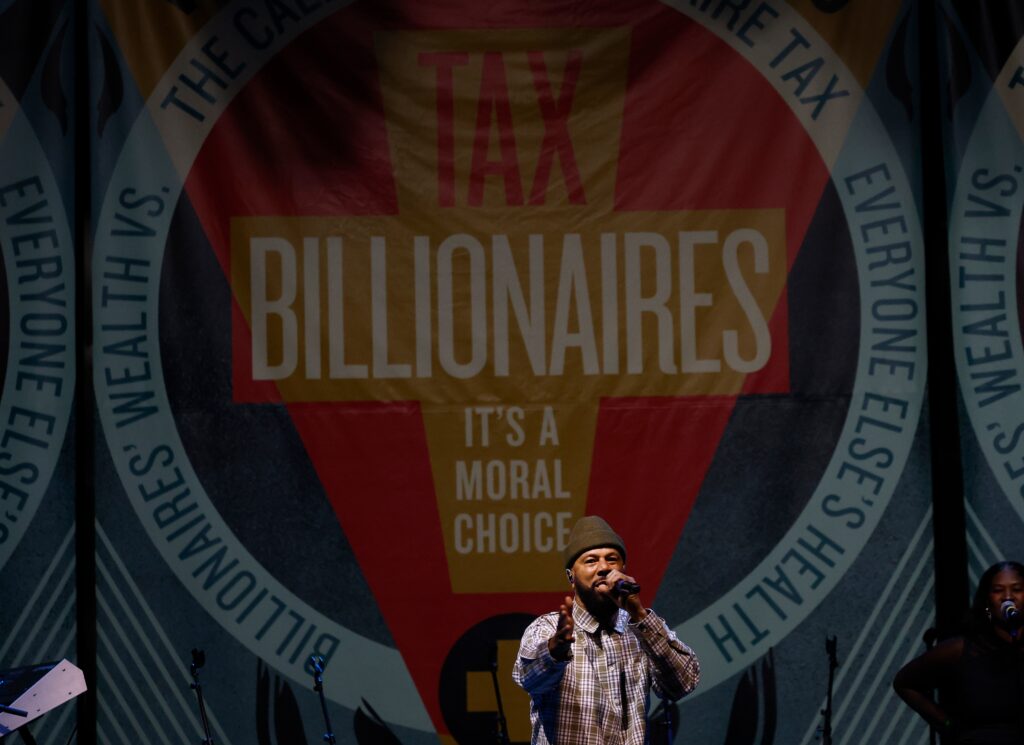
So economists can thank a California chapter of the Service Employees International Union for providing Americans a natural experiment: What happens when you slap a whopping wealth tax on some of the richest people in the world? The SEIU has sponsored Proposition 40, a ballot initiative to levy a one-time 5 percent wealth tax on California billionaires, with much of the money going to the health care system that (not coincidentally) employs many SEIU members. Depending on what California voters decide — a recent poll suggests the initiative is leading but still short of a majority — we may get a clear example of the limits of taxation.
As Californians ponder, economists are arguing vigorously — even viciously. Wealth tax proponent Gabriel Zucman has been slinging barbs back and forth with the Hoover Institution’s Joshua Rauh, who recently published a working paper with Benjamin Jaros suggesting that the initiative will probably cost California money after billionaires leave the state, taking their income taxes and business activity with them.
The fight boils down to assumptions. How many billionaires will leave? How many have already left? How many have managed to establish residency elsewhere to the satisfaction of California tax authorities? If the initiative doesn’t pass, will they return, or will they stay far away from California and its ballot initiatives? When the government inevitably insists that billionaires are actually still living in California, who will win the lawsuits? Will a court strike the law down?
You can quarrel with some of Rauh and Jaros’s assumptions (and believe me, Zucman does). Rauh and Jaros assume many billionaires will leave and stay gone, even if a court strikes down the tax. That’s defensible but aggressive.
But it’s even easier to challenge Zucman’s belief that the impact will be modest. The proposal’s architects simply assumed that revenue losses from avoidance and evasion would only be about 10 percent of the total tax haul, a figure Zucman repeated in a recent paper. Ten percent is a suspiciously round, conveniently low number, even though an enormous new wealth tax imposed on a small group of the world’s most mobile people is exactly where you’d expect to see unusually clear, large changes in taxpayer behavior.
Several California billionaires have already announced their departures, including Peter Thiel and Google founders Larry Page and Sergey Brin. Zucman’s paper notes that if some of the most prominent tech barons succeed in fleeing, revenue estimates fall to $89 billion, but then argues that there are many small-fry billionaires who escape Forbes’s wealth rankings but still have to pay the tax. Adding them back in raises revenue to $115 billion.
This assumes the undetected small fry haven’t done their best to exit, but why would we assume that? Why should we believe that those who loudly announced they were shifting their residency before the year began were the only people who fled ahead of the SEIU initiative?
Mike Solana, the chief marketing officer at Founders Fund (where Thiel is a partner) and founder of tech site Pirate Wires, reported speaking with 20 billionaires would be affected by the wealth tax. They comprise about 10 percent of the state’s known billionaires. All 20, including some Democrats, said they were making exit plans; three said they’d already left. You can dismiss Solana as a Thiel acolyte, but I’ve heard from others in those circles that most of the state’s billionaires are planning their departure, if they haven’t already left.
Former International Monetary Fund chief economist Olivier Blanchard finds this surprisingly selfish. Zucman thinks it’s irrational. The billionaires already have so much. Why shouldn’t they want to give a measly 5 percent of their wealth to California’s dysfunctional government? Besides, the law’s architects were too clever for them: The tax is retroactive, so it’s already too late to flee. And because it’s one time, it makes no sense to bolt from the barn that has already burned down.
But billionaires, like economists, are capable of making assumptions. They probably assume that if the tax succeeds, progressives will come back for an encore. And if it fails, they’ll try, try again. Those seem like sound assumptions — sounder, in fact, than the assumption that Californians can grab 5 percent of everything the billionaires have, and the billionaires will just have to sit there and let them take it.
The post Taxing billionaires is easy. Keeping them is harder. appeared first on Washington Post.