SLEUTH-HOUND: The Case of the Real Sherlock Holmes, by Lindsey Fitzharris
In the fall of 1876, a young Scotsman named Arthur Conan Doyle became a medical student at the University of Edinburgh. His family, driven toward bankruptcy by an improvident, alcoholic father, hoped that Arthur — the eldest of nine siblings — could rescue them by becoming a successful doctor.
But Conan Doyle turned out to be a mediocre student. He knew it, too; when he received his degree in 1881, he drew a picture of himself, diploma in hand, with the caption, “Licensed to Kill.” After a decade trying to build a practice, he started supplementing his income by writing, planning to take advantage of the thriving new market for crime fiction.
And then he had a dazzle of inspiration. Conan Doyle wanted, he would say later, to write a different kind of detective: savvy about science, obsessive about evidence. He began thinking about one of his Edinburgh professors, a physician named Joseph Bell, known to students and faculty alike for his brilliant gift for reading the smallest detail about a patient.
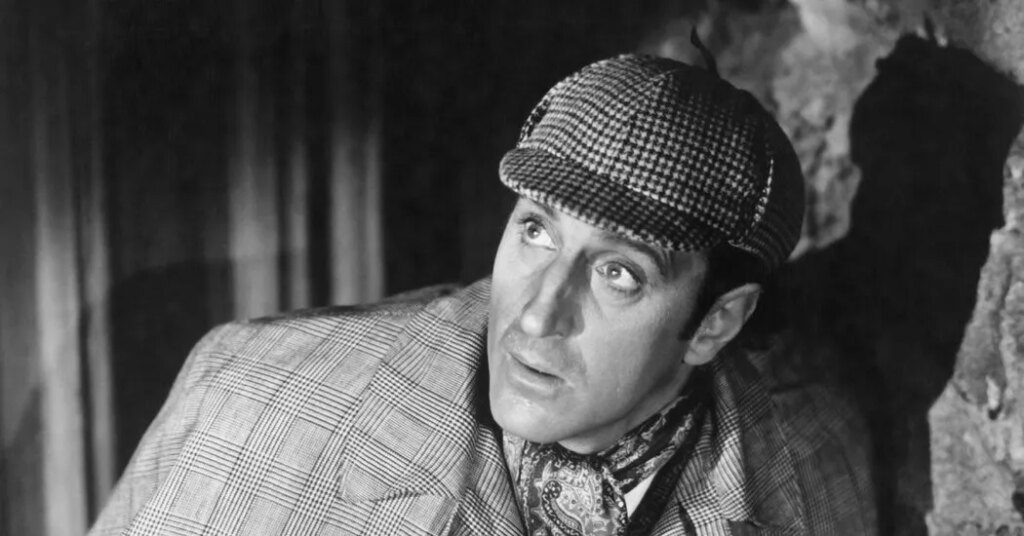
As “Sleuth-Hound,” Lindsey Fitzharris’s fascinating tale of medicine and murder, reveals, this would make Conan Doyle the world’s most famous writer of detective stories — and turn Bell into the unwitting real-life model for Sherlock Holmes.
Bell was both an instructor at the university and a senior surgeon at Edinburgh’s Royal Infirmary of Medicine. His passion for evidence-based medicine led him to a side gig assisting in police investigations. (Bell worried, he said, that the police too often made up their minds ahead of the facts and went off in the wrong direction.)
“Without Joseph Bell, it is unlikely that the Sherlock Holmes the world has come to know and love would even exist,” Fitzharris writes. In an 1891 magazine interview, Conan Doyle described Holmes as the “literary embodiment” of his former teacher, and he would go on to honor Bell the following year by dedicating the first book of collected Holmes stories to him.
Bell’s Sherlockian talents are on full display throughout Fitzharris’s book. He identifies one patient as a fisherman after noticing a faint glimmer of fish scales on his hands and clothes; a tailor by the pinprick marks on his hands; the habit of pipe smoking from a mark on a woman’s lip.
But “Sleuth-Hound” is more than a tribute to Bell’s virtuosity. The book also explores the path of Conan Doyle’s career, tracks the history of forensic medicine as it becomes a reputable science, and provides a vivid, sometimes grisly, sometimes enraging portrait of 19th-century British society.
This is familiar territory for Fitzharris, who holds a Ph.D. in the history of science, medicine and technology, and whose first book, 2017’s “The Butchering Art,” told the story of the British surgeon Joseph Lister and his fight to promote hygiene in medicine during the 1800s. Bell himself was an early adopter of Lister’s rules for cleanliness, as was Bell’s longtime partner in criminal investigation, Henry Duncan Littlejohn, the police surgeon and medical health officer for the city of Edinburgh.
The murder investigations conducted by Bell and Littlejohn open the way for Fitzharris to examine the social conditions of the time, from the plight of poor children to the unforgiving rules of Britain’s social hierarchy.
One of the most incisive examples involves the 1888 trial of an Edinburgh woman, Jane Kelly, who was beaten to death by her husband. Bell and Littlejohn assembled undeniable evidence of a brutal and ultimately fatal attack. But at the time a husband smacking around his wife was not considered especially bad behavior; the medical evidence compelled a guilty verdict, but the jury did not find her death sufficient to justify execution — the standard punishment for murder. “The verdict reinforced a legal and societal commonplace of the era,” Fitzharris writes. “A woman could be beaten to death, yet her killer still might escape the gallows.”
A few years after that trial, Conan Doyle admitted to the press that Bell was the inspiration for his detective. He wrote to thank Bell for helping him launch his detective series and also warned him that a plague of publicity was likely to follow. As it did. Bell thanked him for the honor but added, some months later, that “the fiends of your profession won’t let me alone.”
Conan Doyle himself wearied of Holmes’s fame. In 1893 he wrote a story in which his detective apparently suffers a fatal fall — “Killed Holmes,” he wrote in his diary — although some 10 years later, he would succumb to public pressure and resurrect Holmes, to readers’ delight.
When Bell died in 1911, several obituaries described him as the real-life Sherlock Holmes. As Fitzharris makes clear, he was far more. The fictional Holmes exemplified Bell’s passion for detail and logic. But Conan Doyle’s detective never exhibited the kindness or the dedication to social justice that characterized Joseph Bell, the solid moral center of this probing and excellent book.
SLEUTH-HOUND: The Case of the Real Sherlock Holmes | By Lindsey Fitzharris | Farrar, Straus & Giroux | 307 pp. | $30
The post Who Inspired Sherlock? Elementary! appeared first on New York Times.