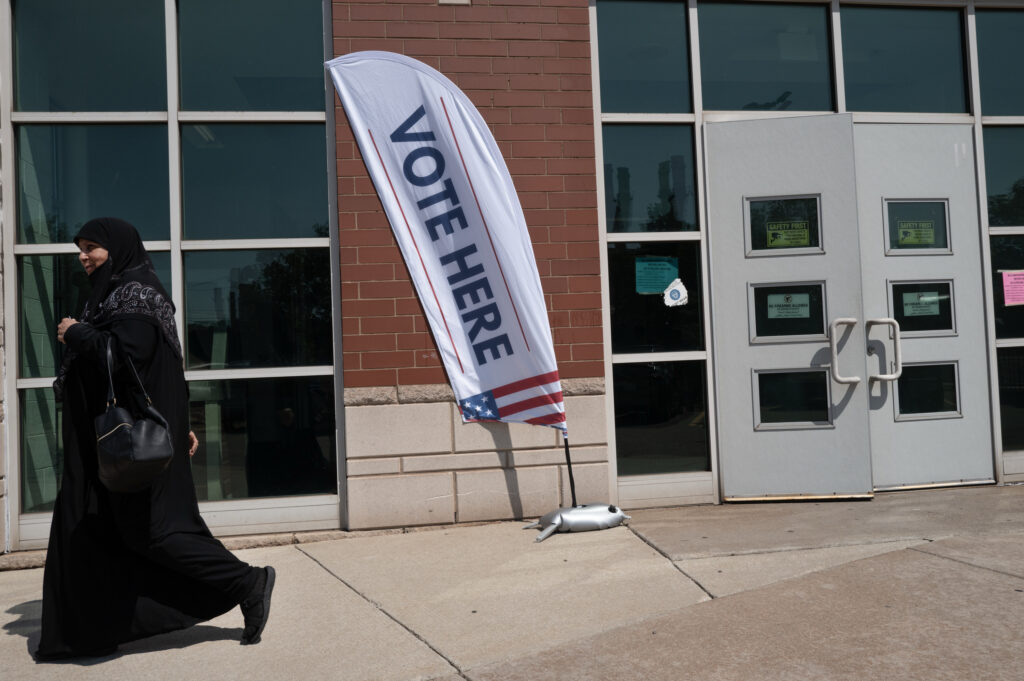
The cost of living is a top issue for voters in November’s midterm elections.
But plenty of other issues are rising to the top in these final weeks. Here’s a look at some leading concerns driving the elections.
Get The 5-Minute Fix in your inbox
Corruption
Political strategists say they’re seeing the issue of corruption resonate more with voters, particularly the belief that politicians are using their service to enrich themselves and their friends.
It’s not hard to see why this has risen to the top for voters: A recent Washington Post/ABC News poll finds66 percent of registered voters say President Donald Trump is using the presidency to enrich himself, with a growing share of Republicans agreeing with that sentiment. Trump has made more than $1 billion off cryptocurrency and significantly increased his net worth while in office.
Democrats are spending tens of millions on ads on this topic. They are trying to tie Republican candidates to the Jeffrey Epstein files, alleging that Republicans want to protect their wealthy friends who associated with the now-deceased convicted sex offender. Democrats are also running ads highlighting Trump’s costly White House ballroom and other construction projects.
Strategists say that individual allegations of corruption could even determine which party controls the Senate.
It’s a major Democratic talking point in Texas’s Senate race, where Republican candidate Ken Paxton has for years faced allegations, including from his staff, of accepting bribes, as the state’s attorney general. He was acquitted in a Senate trial after being impeached by the House in 2023.
Republicans say it’s also resonating in Kansas’s surprisingly close Senate race, where Sen. Roger Marshall (R) is facing allegationshe’s using taxpayer money to travel to political events.
In Minnesota, Republican Senate candidate Michele Tafoya is gaining traction by trying to link the Democratic candidate, Lt. Gov. Peggy Flanagan, to the state’s welfare fraud scandal.
Health care costs
Besides lowering taxes, Republicans hope voters will credit them in November for working to lower prescription drug prices.
Trump has been negotiating with pharmaceutical companies to lower prices, but those deals are shrouded in secrecy, raising questions about how effective and long-lasting they are.
Prescription drug prices have started to decline, though experts say it’s for a mix of reasons.
Republicans face some obstacles in convincing voters they are the best party to lower health care costs burdening many Americans.
Republicans let enhanced federal subsidies for the Affordable Care Act expire last year, raising premiums for millions of Americans who buy their own health insurance. Their tax bill cut federal funding for Medicaid, which is starting to impact rural hospitals and especially maternity care. The administration recently kicked 760,000 Americans off their health insurance, alleging fraud. Employer health care costs are also scheduled to go up.
A New York Times/Siena College poll conducted in September finds that voters trust Democrats over Republicans on the issue of health care by 24 percentage points, their largest lead on any issue polled.
Artificial Intelligence
There’s a widespread sense among Americans that big tech — and the billionaires driving it — are reshaping issues including policing, the environment, neighborhoods and utility costs for the worse.
The poster child for all of this is data centers, which are popping up everywhere to power AI computing. Trump has lowered environmental regulations, making it much easier to build them without community input.
Once welcomed by politicians, they’re now talked about skeptically on the campaign trail. Data centers can consume more electricity than entire cities, and over the past few years, both parties have done an about-faceon whether to give tax breaks to build them.
“Data centers are a big political issue wherever I look,” Republican campaign strategist Mike DuHaime told me this summer.
Residents in a Virginia county recently managed to block Amazonfrom building more data centers.
Americans have also turned against Flock cameras (police cameras that use AI to read license plates) and have raised concerns about privacy and how it could be used in the wrong hands. The Post reported that at least 69 police officials have been accused, charged with or convicted of using the readers inappropriately, including to stalk their girlfriends or ex-wives. YouGov polling found that more Americans oppose law enforcement’s use of the technology than support it, a reversal from last year.
The AI industry is a powerful player in politics, and it has started to push back on its image, running ads in Kansas, Ohio and Wisconsin to promote data centers.
Amber Phillips writes The 5-Minute Fix newsletter, a quick analysis of the day’s biggest political news. Send her an email here, or ask a question that could be featured in an upcoming newsletter.
The post The top issues in the midterms appeared first on Washington Post.