Cruising to Philadelphia in an Enterprise car, I behaved like a model rental car driver. I didn’t eat any crumbly or sticky foods while behind the wheel. I parked in a secured lot downtown. I used my blinker.
A month later, I received evidence claiming otherwise: photos of me zipping along Connecticut Avenue in Washington, D.C., 14 mph over the speed limit. In an accompanying message from the rental car company, I discovered an even harsher truth. I owed them $120 for a traffic camera ticket issued by the District of Columbia, plus a $20 administration fee.
I had been caught lead-footed.
Long after the rental car company releases your security deposit, phantom charges can still haunt you. You may have used a toll road without paying the fee; triggered a traffic camera while speeding or running a red light; or parked at an expired meter and the slip blew away.
These types of accrued expenses can take time to process — in my case, a month — and can catch you by surprise. Additionally, since you are not the car’s owner, dealing with an unpaid toll or ticket comes with different consequences and fees.
After returning from a trip in France, Bernard Crane learned that he had incurred fines from two traffic camera violations, plus a $29 transaction fee levied by the rental car company. The French government said he could pay or contest the tickets. He chose Option A.
“It would have been fun contesting them in French court,” said Crane, a criminal and business lawyer in the D.C. area, “but paying for it wouldn’t have been.”
To help navigate this fraught landscape, we offer five steps to finding a satisfying resolution — and keeping a clean rental car record.
Step 1: Read the contract
We know: You just want to grab the car keys and go, but you should familiarize yourself with the rental contract’s terms and conditions — specifically, how the company handles electronic toll fees, parking tickets and traffic camera citations.
“Some companies don’t highlight that clearly, but [the contract] usually says you are responsible for any fines, citations or anything you collect while driving that vehicle,” said Nabeel Kibria, a D.C.-area traffic lawyer with Monument Legal.
Policies vary by rental car company and location, but in general, the firm will handle the fines in one of two ways: Pass the charges onto you or pay them on your behalf and charge your credit card on file.
“When permitted, we work with the issuing authority to transfer liability to the renter,” said Nicki Seddon, a spokeswoman for Enterprise Mobility. “If liability cannot be transferred and local laws require payment, we pay the violation and seek reimbursement from the renter as outlined in the rental agreement.”
My personal experience: I confess, I didn’t read the contract and was therefore surprised to learn that Enterprise had paid the ticket. While I was grateful they helped me avoid a late fee, I wish I’d had the opportunity to contest the fee, or at least ask DMV adjudication services for a reduced penalty.
Step 2: Know your destination’s road rules
When you are driving in or around a new destination, check to see if the area has deployed toll gantries and traffic cameras. If you anticipate using toll roads, transfer your transponder to the rental vehicle before you set out, or switch your GPS settings to “no tolls.”
Be aware that traffic laws may vary from one jurisdiction to another. For example, D.C. prohibits right turns on a red light, while other U.S. cities allow it once the intersection is clear of traffic and pedestrians.
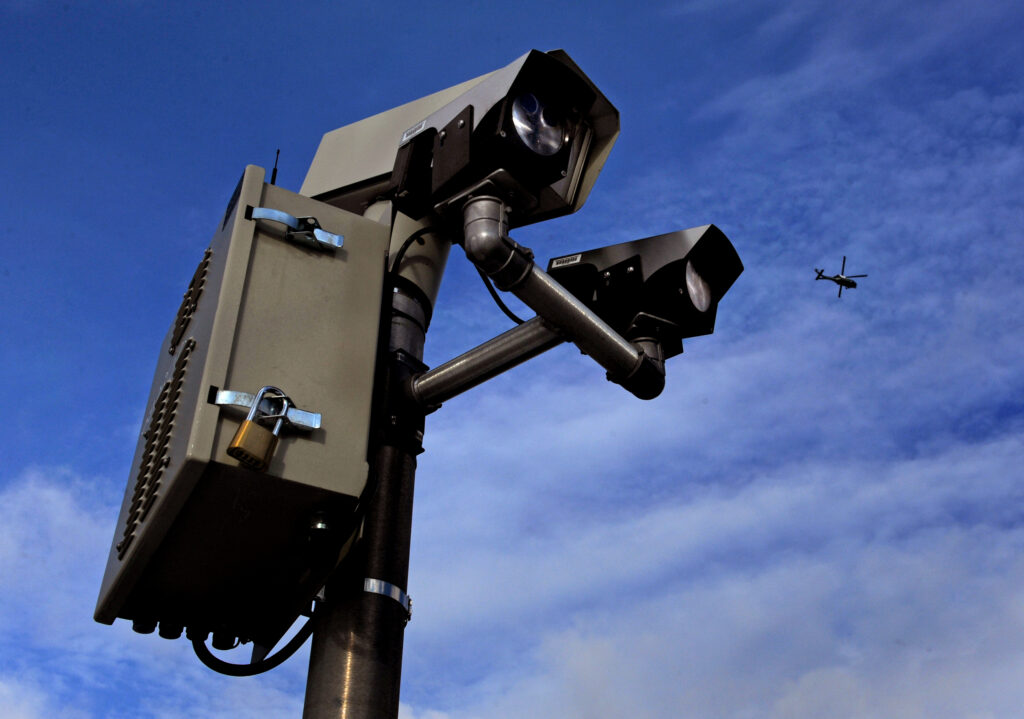
As for traffic cameras, be aware that Big Brother watches for more than just speeding and blowing through red lights. The cameras also nab people for driving in HOV lanes or rolling through stop signs, among other infractions.
My personal experience: As a D.C. resident, I should’ve known better. The city has roughly 540 automated traffic cameras. At least I remembered to request a transponder for the toll-lined route north.
Step 3: Double-check the information on the citation
Be wary of unsuspected charges, especially an “unpaid toll” text message, a pervasive phishing scam. If the message looks suspicious, do not click on any links. Call the rental car company and verify the claim.
If the toll or ticket is legit, confirm the information on the rental car company’s notification, such as the timestamp and location of the incident, license plate and proof that you were the vehicle’s renter.
Next, plug the citation or invoice number into the ticketing agency’s website. Double-check the details. If there are any inaccuracies or discrepancies, contest the charge, a near-guaranteed win.
Amy Nofziger had rented a car for an Ohio road trip and, weeks later, received a letter from Enterprise that she owed money for a toll in Columbus. Weird, she said, because Columbus doesn’t have toll roads.
“The only toll road is up in, like, Cleveland,” said Nofziger, senior director of victim support for the AARP Fraud Watch Network, “and Lord knows I’m not going there.”
She disputed it, and the rental car company refunded her credit card.
My personal experience: The images that Enterprise sent me were dark and grainy, but seeing myself behind the wheel was not critical to my case. The ticket was for the car, not the driver, and all of the details checked out. I was not going to beat this on a technicality.
Step 4: Be proactive with your payment
If you see the flash of a traffic camera or pass under a toll gantry without a transponder, you know what’s probably coming next. However, you don’t have to wait for the rental car company to relay the bad news. You can be proactive, thereby avoiding the administration fee.
To find your toll or ticket, continually check the online portal of the issuant. You should be able to use the license plate number to pull up your case and payment options.
Alternatively, if you disagree with the charge, you can contest it by mail or in person. Preserve all of the documents to show the rental car company that you are handling it.
My personal experience: I had no idea I had exceeded the speed limit until it was too late.
Step 5: Pay the ticket or fight it
Camera traffic violations are a drain on your wallet, but, unlike tickets issued by a police officer, they will not damage your driving record or increase your insurance rates.
“The camera doesn’t know who’s driving the car. It can’t see inside. It takes a picture of the license plate,” Kibria said. “Therefore, it doesn’t come to you or your residence. It goes to wherever the license plate is registered to, whoever owns it.”
When deciding which path to follow, consider the cost and time investment, as well as which party you owe — the rental car company or the ticketing authority — and your defense.
“If I knew I was on the road at that time and it said I was so many miles over [the speed limit], I would probably pay it, even if it was expensive, because it probably was me,” said Nofziger, a self-described fast driver.
Crane also paid the $100 to settle his violations, an easy process through the online portal — even in French.
If you decide to contest, you will have better odds if you owe the state or city authority instead of the rental car company.
“Once the ticket is paid, you have given up your right to contest the ticket. The rental car company has given up that right for you,” Crane said. “You paid the ticket. Game over.”
If the rental car company paid on your behalf, you can try asking the ticketing agency to reopen your case, citing due process.
“I don’t think you’ll get anywhere with it,” Crane said, “but it might make you feel better.”
My personal experience: At DMV adjudication services, the clerk said my ticket was closed because it had been paid. But, she added, the rental car company should have provided me with an opportunity to dispute — or at least discuss — the charge.
Her advice: Take it up with Enterprise.
Enterprise said if a customer wishes to contest a paid citation, it will review the reason for the dispute and “all available evidence.”
I decided to rest my case and use the $120 as a reminder to be the best rental car driver I can be.
The post Can you fight a camera ticket you got in a rental car? You can try. appeared first on Washington Post.