Mary Felder knows the danger of violence in Philadelphia. She was once shot while cleaning up an alley in the Strawberry Mansion neighborhood. Almost two years later in 2024, her 33-year-old son was fatally shot in another part of the city.
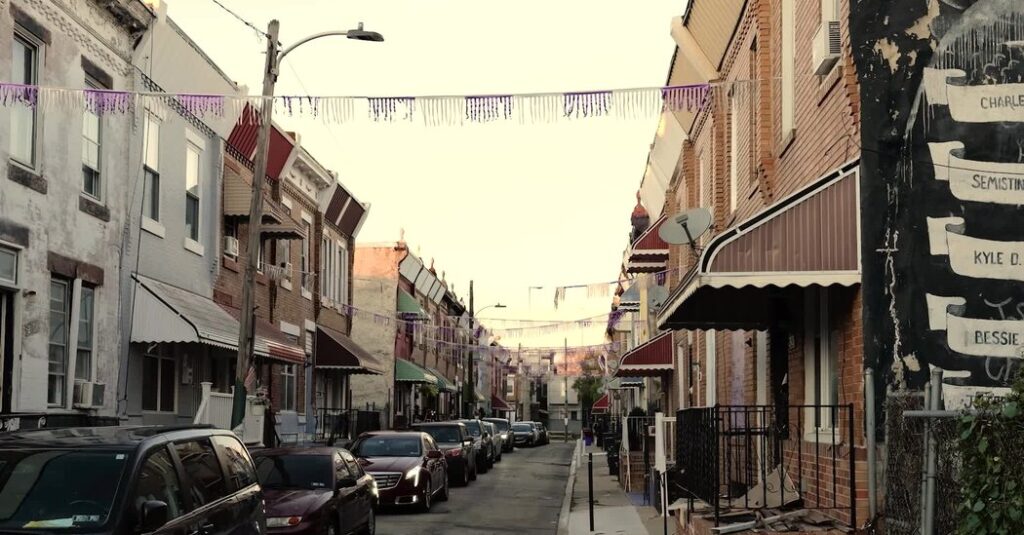
She knows shootings have been down in Philadelphia the past couple of years. But she’s gotten even more peace of mind from what’s gone up: a new streetlight about 50 feet from her home.
No single factor explains the sharp declines in gun violence Philadelphia has seen since 2022. Instead, many experts point to a range of interventions working in concert. One of those concepts is crime prevention through environmental design, the discipline of improving the appearance of neighborhoods to deter crime.
In Philadelphia, environmental design interventions have included cleaning up vacant lots, installing warmer streetlights and developing community gardens. The City Council recently approved $277 million for a Housing Opportunities Made Easy program. The program has dedicated some $11 million for initiatives focused on blight reduction and neighborhood beautification.
Fixing up a property’s appearance prevents it from becoming a place to stash guns and drugs, researchers at the University of Pennsylvania Crime and Justice Policy Lab found. It also reinforces residents’ sense of ownership over the space by making it look cared-for.
For a long time this idea was conflated with “broken windows” policing — cracking down on minor property crimes with harsh punishments. Those zero-tolerance models enabled discriminatory practices such as “stop and frisk” and worsened mass incarceration.
Still, the notion that enriching neighborhoods makes communities safer continued to ring true. Later research has reinforced that idea.
Several studies by the University of Pennsylvania lab have pinpointed reductions in crime after a few interventions. When the Philadelphia Energy Authority swapped out old high-pressure sodium bulbs in streetlights for warmer LED ones that offered better coverage, nighttime gun violence fell 21 percent. In areas where abandoned buildings were remediated, gun crimes decreased 39 percent.
While the research showed sizable reductions in gun crimes after the interventions, many residents said a more immediate and tangible impact came from the bonds neighbors formed.
One local pastor in South Philadelphia heard from a community member that she would have to either spend more money to get to work safely or find a new job after being repeatedly accosted on ill-lit streets. The pastor, Hendy Matahelemual of Indonesian Light Church, enlisted fellow ministers from the community to help.
Members of at least four congregations gathered for a prayer walk and documented streetlight outages. Their efforts eventually led the Philadelphia Energy Authority to enhance the city’s streetlight network in crime hotspots.
Mr. Matahelemual said the real power of the streetlight project was in bringing together Black Baptists, Indonesian Mennonites and white nondenominational Christians.
“The best thing in safety is you know your neighbors,” he said. “We are living in our silos, but this kind of collaboration creates a bridge and opens doors.”
Beautifying the block, according to locals, creates a pathway for residents to connect and learn about what is happening in the neighborhood.
John Solomon, a Strawberry Mansion native, leads a group of violence interrupters who bring residents planters with solar lights. The nonprofit PhillySafe provides the pots, and delivery drops double as safety patrols.
Drivers speeding by honk in recognition. Residents on stoops wave them down, asking how to get a planter. Those interactions, Mr. Solomon said, have an invisible yet meaningful impact.
“You have people coming up to us, getting involved in the thing that we do in our community and providing us intel on shootings that happened,” he said.
West Harold Street stands out among neighboring streets for its warm environment. On one block, friendly chatter echoes from one porch to another. Thick green stems pop against brick row homes. Twinkling bistro lights line the corridor at night.
As John Williams, a homeowner, sprayed a hearty leaf with water, he said the small fixtures did more than make the block pretty. They also got retirees out of their homes and helped keep crime away.
“It’s a close-knit block, so you cannot do anything without it being seen,” he said. “We look out for one another.”
Before the streetlights were upgraded, the area around Ms. Felder’s home had experienced several shootings annually. After new lights were installed, the number fell. There were zero shootings in her vicinity in 2024 and only one so far this year.
Other parts of Philadelphia that introduced street-level interventions saw similar results.
On a map of the 57 most shooting-afflicted blocks in Philadelphia, Kensington, a neighborhood that has experienced higher rates of violence, homelessness and drug use than the rest of the city, has been flooded with targeted interventions. In the midst of it is a community farm on Hart Lane.
Before goats and chickens bobbed around the grass, the land was abandoned. Jessica Shoffner, who lives next door, said the lots the farm replaced were a hot spot for drugs, sex work and violence. After community members banded together to build the garden, Ms. Shoffner said violence on the block seemed to wane.
“It can be easy to feel scared where I live,” she said. “Building community makes me feel safer.”
Researchers call that feeling social infrastructure. Enhancing public spaces draws people out of their homes, putting more eyes on streets and creating conditions for community members to develop meaningful relationships, said Eric Klinenberg, a professor of sociology at New York University.
Over time, neighbors develop camaraderie. Those “deeper connections” and the sheer presence of people outside, Mr. Klinenberg said, help deter crime.
Since the Hart Lane Neighborhood Farm’s opening, the block has experienced less violence. But less than 200 feet away, homicides and shootings continue to plague a street corner notorious for drug-related violence.
As that example shows, environmental interventions are not a panacea. They are a modest part of many citywide efforts to prevent violence.
To Bill McKinney, the executive director of a nonprofit that has built several gardens in Kensington, enhancing the environment is a useful cosmetic intervention. But eliminating gun violence, he said, requires addressing more systemic issues of poverty, trauma and more.
“There is very little reduction of violence as a result of environmental changes,” Mr. McKinney said. “It’s like, Hey, we solved it on this block. And all that means is, one block away, everyone’s dying.”
In Kensington, gun violence considerably decreased during the last decade, but the neighborhood saw a temporary resurgence in 2024.
That year, city officials cleared out an encampment for homeless people a few blocks north of Hart Lane, and federal authorities broke up a large firearms trafficking ring operating a few blocks west of the area. Mr. McKinney believes those events pushed much of the activity toward the garden.
Researchers acknowledged that some crime might be displaced by the interventions. Their studies controlled for the possibility and found that it was rare. In many instances, adjacent streets also experienced slight declines in crime.
In the Nicetown neighborhood, a decline in violence helped kick-start an environmental improvement. Shootings there have declined over the past five years, from a high of 25 fatal shootings in 2021 to four so far in 2025. As that unfolded, Ariel Presley helped enact a tree-planting program.
What started with one seedling in front of her home has grown into a line of trees running down her street. Children now ring her doorbell asking if she has any flowers they can pot. People she rarely saw outside their homes sought out seedlings.
“You get to know your neighbor, you get to see another human being, not being afraid, but actually seeing them, looking them in their eye, and having those human interactions,” she said. “Maybe you’ll think twice before pulling the trigger, because you are from the same block, you are from the same community.”
Annie Fu contributed reporting.
The Headway initiative is funded through grants from the Ford Foundation, the William and Flora Hewlett Foundation and the Stavros Niarchos Foundation (SNF), with Rockefeller Philanthropy Advisors serving as a fiscal sponsor. The Woodcock Foundation is a funder of Headway’s public square. Funders have no control over the selection, focus of stories or the editing process and do not review stories before publication. The Times retains full editorial control of the Headway initiative.
Shayla Colon is a reporter for Headway, a team at The Times that explores the world’s challenges through the lens of progress.
The post In Philadelphia, Beautified Blocks Build Community and Safety appeared first on New York Times.