The Trump administration asked the Supreme Court on Wednesday to clear the way for work to continue on a more than 500-mile stretch of the border security project in and around a major national park in Texas.
The appeal came after a federal judge in Texas halted work this month following a challenge by an environmental group, preservationists, a river guide and landowner, who said it would harm wildlife, deprive people of property, upset livelihoods and block access to the Rio Grande.
The $1.7 billion project, which has generated considerable backlash, includes a road, as well as cameras, sensors and vehicle barriers. U.S. Customs and Border Protection does not plan to erect a 30-foot high fence like those that have been built along other parts of the border.
The Trump administration wrote in its filing with the high court the injunction caused a “disruption of the government’s ability to secure a quarter of the southern border against cartel incursions, drug trafficking, and illegal entry … and irreversible delays, costs, and operational harms from halting already-begun construction.”
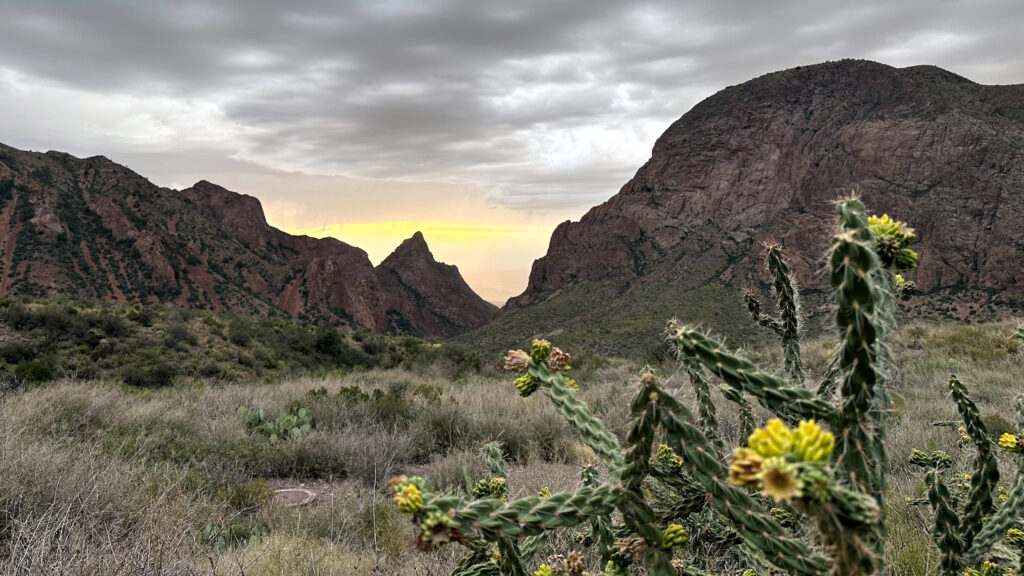
Big Bend National Park consists of more than 800,000 acres of protected lands along the border with Mexico that is home to threatened animal species and features archaeological sites and iconic scenery.
The plaintiffs filed their lawsuit in April, claiming the Trump administration had violated the Constitution by waiving dozens of laws to fast-track construction through the rugged, sparsely populated land that cuts across seven counties.
U.S. District Judge Kathleen Cardone ruled the administration must comply with all applicable laws before construction can resume.
“As Plaintiffs have demonstrated, without an injunction, they and the public at large stand to permanently lose protected wilderness that benefits tourism, recreation, farming, ranching, spirituality, aesthetic sensibilities and education,” Cardone wrote in her opinion issued Oct. 14.
Earlier this year, then-Homeland Security Secretary Kristi L. Noem found the administration did not have to comply with dozens of mostly environmental laws because there was “an acute and immediate need” to expedite the project to combat the illegal entry of migrants and drug trafficking.
Congress granted the Department of Homeland Security authority to waive any laws necessary “to ensure expeditious construction” of the border wall and associated roads in the 2005 Real ID Act.
The administration said more than 89,000 people were apprehended trying to enter the United States in the area known as the Big Bend sector between 2021 and 2025. Roughly 15 percent of drugs seized along the border in recent years were recovered in the sector.
“Plaintiffs’ environmental, recreational, and aesthetic interests do not outweigh the harm to the public,” the government wrote in court filings.
But the plaintiffs questioned whether it was necessary to speed construction.
They pointed out the stretch had by far the least number of apprehensions of any of the six sectors along the southern border — adding up to about 2 percent of total apprehensions or fewer each year. The drug seizures in the area account for less than 1 percent of all non-marijuana drugs.
The Trump administration began work on the Big Bend section in mid-August, clearing the way for the road that will eventually run the length of the park.
It announced a temporary pause of that work after the suit was filed.
The section of the border project in and near Big Bend National Park has been one of the most controversial in the president’s plan to install a nearly complete barrier along the 2,000-mile border with Mexico. It has drawn opposition from a bipartisan group of lawmakers, environmental groups and others.
The plaintiffs said it will cause irreparable harm to sensitive wildlife habitats, block livestock access to the Rio Grande and prevent river guides from leading tours, as well as disturb historic sites.
“If allowed to continue, additional vegetation will be removed, habitat will be fragmented, cultural and historic resources may be disturbed, and the character of the Big Bend landscape will be permanently altered,” the plaintiffs wrote in their motion for a preliminary injunction.
The post Trump officials ask Supreme Court to let border security project resume in national park appeared first on Washington Post.