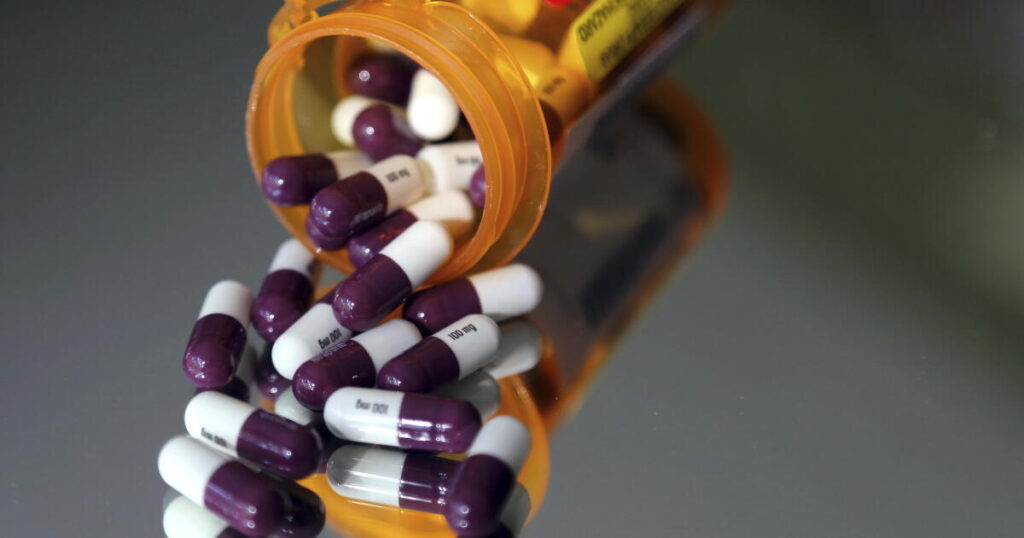
Days before it was to go into effect, the Trump administration pushed back a U.S. customs rule threatening the supply of vital prescription drugs imported by millions of Americans.
Under the rule, Customs and Border Protection and the Food and Drug Administration will require coding on packages that makes it easier to know what’s in them. It is aimed at collecting tariffs on even low-value imports and at catching illegal drugs such as fentanyl. It will also add costs and complex paperwork to each order.
Now the regulation, which was set to start Thursday, is delayed until Jan. 20.
Although it is illegal to import most FDA-approved prescription drugs, the U.S. has allowed Americans to import legal medications in small quantities for personal use since 2003. The FDA rarely inspects the parcels.
“The information we have is there’s going to be a complete shutdown on Oct. 22,” Tim Smith, general manager of the Canadian International Pharmacy Assn., said in an interview early this month. The 51 licensed retail pharmacies in his organization urged their hundreds of thousands of U.S. customers to file extra orders before Oct. 9 to be sure as many medications as possible arrived before the clampdown, Smith said.
“These are people in every case who have gone to the doctor, gotten a prescription for whatever, gone to the pharmacy to fill the order, seen how expensive it’s going to be, and then looked for an alternative,” he said. “Those are the people who’ve been coming to us for years.”
As Donald Trump campaigned in 2016, allowing people to import drugs was part of his platform. In his first term, President Trump let states buy cheaper drugs from Canada. He told Floridians at 2020 rallies that their state could “go to Canada” to obtain drugs for them.
But although Florida and Colorado joined the importation program, neither state has brought in any drugs yet.
Patients have, however, and they flooded authorities with at least 109,000 letters urging the FDA to clarify that the rule won’t stop personal-use drug shipments, said Ken Hunter, executive director of the Campaign for Personal Prescription Importation. And Trump ally Laura Loomer called the rule a case of stupidity or sabotage, under a headline that asked, “So Why Is Someone in His Administration Trying To Make Prescription Drugs More Expensive Before The Midterms?”
Seventy-one congressional Democrats signed an Oct. 1 petition led by Reps. Jan Schakowsky of Illinois and Mark Pocan of Wisconsin to warn about the potential effect of the rule. Three House Republicans from Florida wrote separately to CBP and the FDA, noting that Floridians, unlike Americans in Northern states, can’t easily drive to Canada to buy medicine.
By cutting off imports, Hunter said, “they are going to lose millions, maybe billions in tariff revenue.”
“Why would you want to cut off this massive revenue source?” he asked. “Why would they want to cut people off from lifesaving medications two weeks before midterms?”
Pressure by advocacy groups may have led the agency to back off, said Lucia Mueller, president of PharmacyChecker, which helps patients find legitimate pharmacies to obtain cheaper drugs.
“Loomer’s political argument is sound,” she told KFF Health News. “We know she’s had Trump’s ear before.”
The agency’s Oct. 14 news release on the delay said it would help “avoid disruptions to certain international postal shipments.” It didn’t specifically refer to drug imports.
“This is an important short-term success,” said Gabriel Levitt, founder of Prescription Justice, a nonprofit that advocates for more-affordable drugs. “However, the underlying threat to personal prescription drug importation remains, and the next 90 days will be critical.”
A 2020 study found that 2.3 million Americans regularly imported medications from abroad, and some surveys show much higher numbers. About 4 in 10 Americans in a recent KFF survey said cost had led them to not take medications as prescribed over the last year.
When he was diagnosed with atrial fibrillation years ago, Leslie Waters learned that a 90-day supply of the blood thinner Eliquis, or apixaban, would cost $486. “Holy crap!” said the retired computer scientist, who said he lives off a monthly $1,886 Social Security check. Waters, of San José, learned about the Canada option on the internet and has been buying 90-day supplies from a pharmacy there for $57, including shipping.
Under previous administrations, orders worth $800 or less weren’t taxed or saddled with extensive paperwork. The new rule will require shippers of even low-value international parcels to transmit detailed information about their contents to CBP, along with tariff payments, which must be transmitted through a licensed customer broker.
Zonos, a U.S.-based company that handles logistics for mail from Canada and other countries, told clients in early September that its understanding was that CBP would no longer allow in personal prescription drug packages after the rule took effect, said Smith, of the Canadian pharmacy trade group. In an Oct. 6 webinar, Zonos senior broker Angela Macke said that the company would continue to ship the drugs but that it didn’t know whether the agencies would let them reach patients.
The pharmacy announcements have frightened thousands of customers, said Bill Hepscher, whose company, Canadian Medstore, has six Florida storefronts that help patients import drugs.
“It’s really been hair on fire,” he said. “I could spend my entire day fielding phone calls from people saying: ‘Can I no longer get my Eliquis? I could have a blood clot or stroke!’”
Hepscher said about half his clients buy their drugs from Canada, with many of the others buying from Australia, New Zealand, the U.K. or Turkey. He said 2025 was his company’s busiest year ever — changes to Medicare drug plans and increased enrollment in high-deductible Affordable Care Act plans had led seniors and younger people facing higher costs and copays to seek Canadian drugs.
“I only have 23 days’ worth of pills,” Roland Hofferber told KFF Health News in early October. The retired supply chain engineer in Muscatine, Iowa, takes Jardiance, also known as empagliflozin, to slow his chronic kidney disease. “If I don’t get some through pretty soon, I’m going to have to cut back or quit.”
The drug would cost him $641 for three months in the U.S., he said. He buys a generic from an Indian pharmacy for $54.
The FDA “hasn’t given parameters as to what they will approve and what they won’t,” Zonos’ Macke said during the webinar. “We’ve been told there will not be a general ban. But we cannot reassure U.S. patients. We have to see how FDA applies. They could be lenient. They could be very strict.”
When asked whether patients could still import prescription medicines, CBP spokesperson Jessica Turner said that pharmaceuticals remained under the FDA’s jurisdiction and that the FDA “will continue to determine whether imported medication shipments are admissible.” Department of Health and Human Services spokesperson Emily Hilliard said the FDA would “continue to evaluate personal imports on a case-by-case basis.”
White House spokesperson Allison Schuster did not respond to questions about imports, but said Trump “remains dedicated to lowering the cost of prescription drugs.”
Since the summer of 2025, patients have had to pay tariffs on brand-name medicine shipments. In 2022, the FDA said it typically checked about 1 in 2,000 medication packages passing through U.S. customs.
“A lot of products weren’t even looked at, because CBP and FDA didn’t have full visibility” into what entered the country, Prescription Justice’s Levitt said. The rule requires shippers to post a bond and fill in a complex data form for each package, he noted.
“Let’s say you’re importing 90 days’ worth of Eliquis,” Levitt said. “FDA can now look on a screen and see that. Do they let it in, or refuse it under law?”
“If they don’t, there’s going to be a cohort of people who cannot afford their drugs anymore,” he said. “And those people are going to suffer.”
Allen writes for KFF Health News, a national newsroom that produces in-depth journalism about health issues and is one of the core operating programs at KFF — the independent source for health policy research, polling, and journalism.
The post ‘Go to Canada’: Trump touted Americans’ access to cheaper drugs. A new rule threatens it appeared first on Los Angeles Times.