

After being diagnosed with multiple sclerosis (MS) in 2021, living with severe symptoms, and becoming one of the most famous celebrities with the disorder, Christina Applegate learned some shocking news: She doesn’t actually have MS.
In an October 20, two-part episode of her podcast “MeSsy” with Jamie Lynn Sigler (another actor diagnosed with MS), Applegate shared that she took over half a year off from recording the podcast to process the news of her MS misdiagnosis.
According to Applegate, her doctor framed the revelation as a positive update. “She came into my room and said, ‘Congratulations, you don’t have MS,'” Applegate said in the podcast.

But to Applegate, no longer having an explanation for the pain, balance issues, tremors, incontinence, and fatigue she’d been living with for years felt more like being “back at square one.”
“You don’t get misdiagnosed and then all of a sudden, I’m better,” she said. “If anything, I’ve gotten worse, in some ways.”
Applegate’s story is far from a medical anomaly. MS researchers estimate that about 15% of worldwide MS patients are actually misdiagnosed, based on a 2024 meta-analysis of multiple studies.
The risks to patients are two-fold, Dr. Marwa Kaisey, an associate professor of neurology at Cedars-Sinai, who also appeared on the podcast, told Business Insider. “One is thinking you have MS — a lot of the medications we use to treat MS have side effects and risks like infections,” she said. “The other category is, if you don’t know what you have, then you’re not getting treated for your actual diagnosis.”
Kaisey and another researcher shared why MS is so challenging to diagnose — and why more people might end up with Applegate’s experience in the future.
The race to diagnose a hard-to-diagnose disorder
There is no single blood test that can diagnose MS.
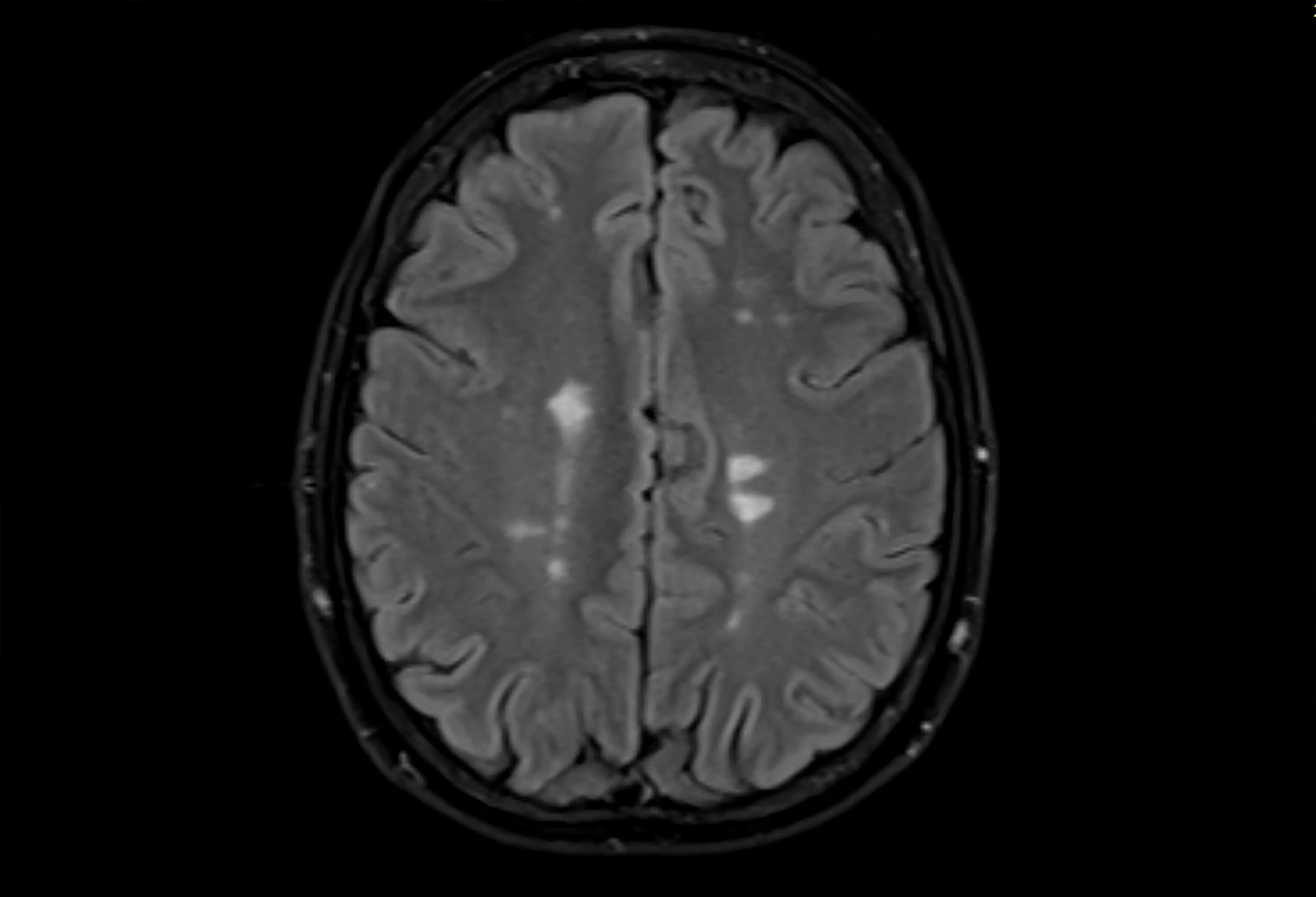
Instead, doctors often piece together an MS diagnosis using a neurological exam (testing balance and reflexes), MRI scans, a lumbar puncture (or spinal tap), and possible blood tests to rule out other conditions such as Lyme disease.
Sometimes, doctors overrely on a single diagnostic, such as an MRI finding, without performing enough other tests, Dr. Andrew J. Solomon, a professor of neurological sciences at the University of Vermont who co-authored the meta-analysis, told Business Insider.
In 2019, Solomon co-authored an MS misdiagnosis study that found that patients who were initially diagnosed with MS were later told they actually had other conditions, such as migraine, radiologically isolated syndrome, spondylopathy, and neuropathy, which can share overlapping symptoms with MS and similar brain scan results.
In the podcast, Applegate revealed that she had a nerve test to rule out peripheral neuropathy, as well as MRIs and a lumbar puncture. While her spinal fluid test showed a low level of immune proteins that can support an MS diagnosis, she had nearly 40 brain lesions and worsening symptoms, leading doctors to diagnose her with MS.
Solomon said MS should be diagnosed by “confirming each element of our diagnostic criteria and ruling out other things,” rather than assuming it must be MS if the MRIs and symptoms fit.
The problem is, both physicians and patients are eager to diagnose MS as early as possible, he said. Correctly spotting MS early can lead to better treatment results and a higher likelihood of disability prevention, according to research.
Plus, for patients dealing with a plethora of debilitating symptoms, “a period of diagnostic uncertainty is uncomfortable,” he said, even though the best course of action is to wait and perform more tests.
A new testing protocol revealed Applegate’s misdiagnosis

In the podcast, Applegate shared that her brain lesions were missing “strings” associated with MS.
It’s a finding associated with a new, more accurate diagnostic tool for Kaisey, who also co-authored the 2019 study with Solomon, explained on the podcast.
The central vein sign (CVS), is an MRI biomarker that can help differentiate MS brain lesions from ones associated with other disorders. It refers to a small vein that appears as a dot or thin line through the center of a brain lesion.
CVS was only recently adopted as part of the recommended MS diagnostic criteria, in 2025 — four years after Applegate was first diagnosed with MS. Kaisey told Business Insider that part of her work is expanding education around newer diagnostic tools, noting that not all physicians are using CVS yet.
Solomon hopes more doctors will include CVS in their diagnostic protocols, especially for existing MS patients or those who switch providers without being evaluated by their current doctors. “If something doesn’t fit, there’s an opportunity there to reevaluate if the diagnosis is right,” he said.
Many misdiagnosed MS patients feel exactly like Applegate does

When it comes to learning about an MS misdiagnosis, Solomon said experiences like Applegate’s aren’t that uncommon.
“I’ve heard many stories where some doctor was very enthusiastic about telling a patient they actually didn’t have MS,” he said. “But many of these patients are suffering, and they still have symptoms. So it’s not always necessarily a happy thing.”
For Applegate, her initial MS diagnosis provided clarity and direction. “That was my answer to everything that was going on,” Applegate said. Some might relate to Applegate’s “square one” feeling, particularly if their doctor was an MS specialist and won’t see them anymore, Solomon said. Without a formal diagnosis, they might also worry about insurance coverage for treatments that have provided some relief.
There is also the emotional part of having an MS diagnosis. “I leaned into other friends, I leaned into the community,” Applegate said. “I had a reason as to why my day sucked every day, and now I don’t have a reason.”
Knowing she doesn’t have MS also made her feel like she “let everybody down” after becoming one of the “poster children for MS,” she said. It made her wonder if she was somehow imagining symptoms or at fault for her pain.
Given how common MS misdiagnosis is, Solomon believes it’s a good thing that Applegate is sharing her story.
“It’s kind of wonderful that Ms. Applegate is public with this because if the number is really 15%, you can do the math,” he said. “There are a lot of people out there who might ask their doctors about the accuracy of their diagnosis and find out that, in fact, they had something else.”
Read the original article on Business Insider
The post Christina Applegate thought she had MS for 5 years. Now she’s learned she was misdiagnosed — and her symptoms remain unexplained. appeared first on Business Insider.