The Trump administration plans to dole out $8 billion in aid to farmers, a key Republican constituency that has been buffeted by economic problems ahead of the midterm elections.
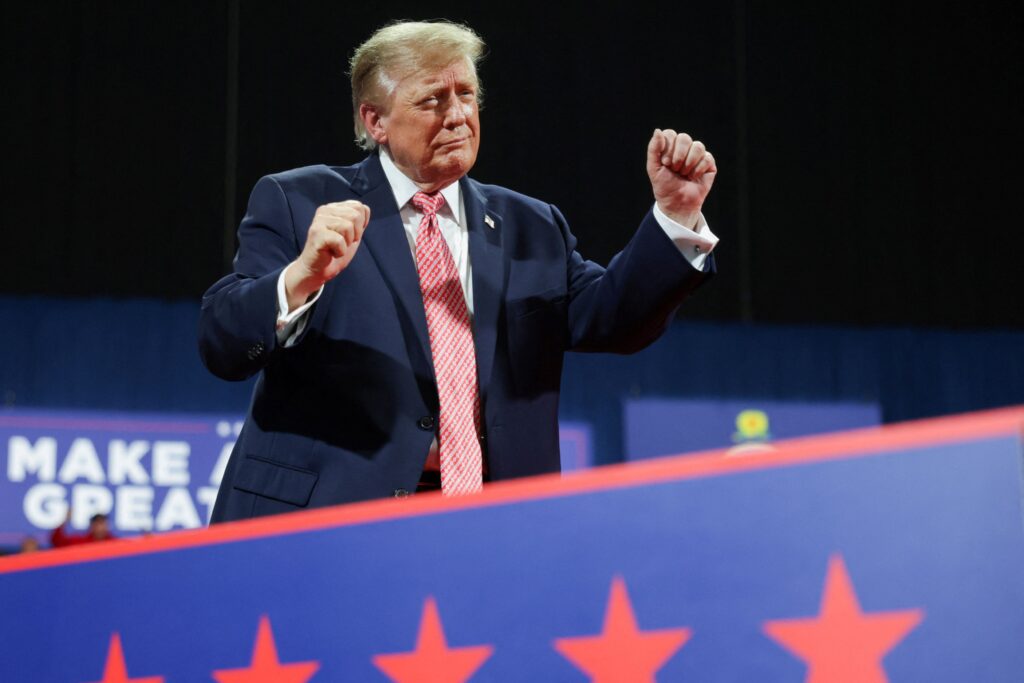
The U.S. Department of Agriculture will provide the payments to farmers who have experienced losses “to offset diesel costs during this harvest season,” Trump announced at a rally in Kansas on Monday night.
Economic problems in farm country have created electoral headaches for Republicans in heavily agricultural states that are typically reliable bastions for the GOP.
Those electoral troubles brought Trump to Kansas this week, a state that hasn’t elected a Democrat to the Senate since 1932. He also has held rallies in Iowa and Texas, where polls show Senate races to be toss-ups. Races in deep-red Nebraska, South Carolina and Mississippi are also more competitive than usual.
Trump attributed the new farm aid Monday to Kansas’s incumbent, Republican Sen. Roger Marshall, who won his seat by more than 11 percentage points in 2020 but now is locked in a close race with Democrat Adam Hamilton in several recent polls.
The new farm-support plan, called the Harvest Fuel Relief program, will provide aid using a formula based on farmers’ planted acres combined with cost, yield and price estimates, according to the USDA.
The plan marks the second time in a year that the Trump administration has provided direct payments to farmers. Earlier this year, the Agriculture Department began $12 billion in payments as part of the Farmer Bridge Assistance program, intended to help farmers with diminished exports caused by the president’s trade wars.
The cost of diesel has skyrocketed over the last year as a result of the Iran war, which the U.S. started with Israel in February, and the continued war between Russia and Ukraine. The average cost of diesel is now $6.32 per gallon, according to AAA, nearly double the price this time last year.
High diesel prices have pushed up the cost of harvesting and shipping farm products. That’s worsened the problems farmers faced from increased fertilizer costs, which are also closely tied to the price of oil. Farmers have also faced increased equipment costs and export challenges as a result of the president’s tariffs. All that has collided with weaker crop prices, which have made it harder for farmers to cover their expenses.
Other administration efforts to bring down prices, notably an August announcement that the administration would lift tariffs on foreign beef imports, have only increased farm-country frustration with the president.
Trump has attempted to ease diesel prices by expanding the availability of tax-free dyed diesel, which is usually limited to off-road use like agriculture, but experts have warned that his move could increase competition for limited diesel supplies.
Trump also pushed the Group of 7 nations to release 100 million barrels of diesel reserves. And he struck a controversial deal with Russian President Vladimir Putin in which Putin agreed to supply diesel to the global marketplace and the Trump administration temporarily rolled back sanctions on Russian energy imports. Whether Russia can actually deliver a significant amount of diesel remains unclear, and market analysts say the move is unlikely to provide much price relief.
The post White House pitches $8 billion to farmers as midterms near appeared first on Washington Post.