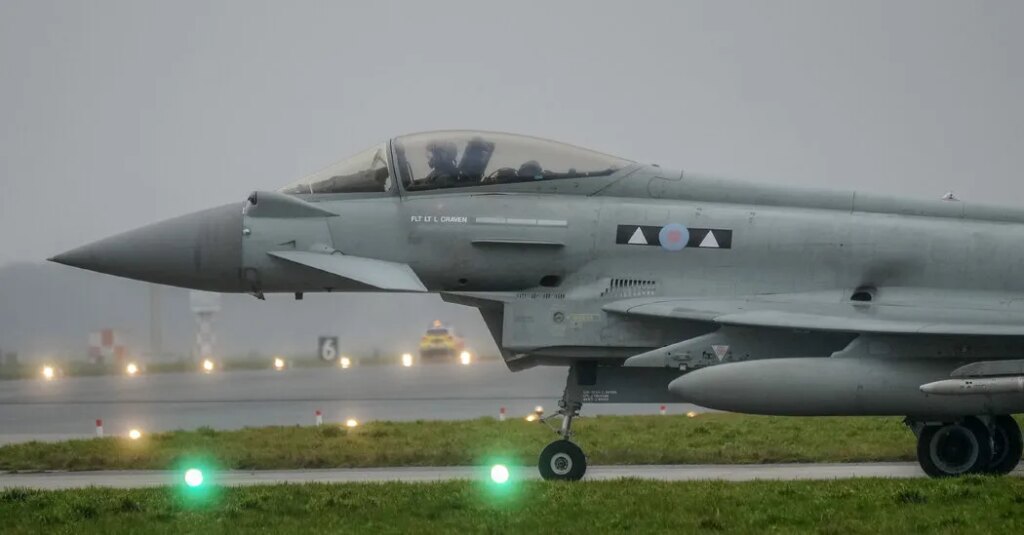
British fighter jets will be sent to help defend cities and critical infrastructure in Saudi Arabia amid a spike in missile and drone attacks from Houthi rebels in Yemen, the British government announced on Tuesday.
Britain’s ministry of defense said that R.A.F. Typhoon fighter jets would be used for “defensive counter air missions” in the Middle East but would not participate in offensive strikes against the Iran-backed Houthis, who are engaged in a bitter war with the Saudi-backed Yemeni government.
“The continuing attacks from the Houthis on our ally Saudi Arabia are absolutely despicable,” Wes Streeting, Britain’s defense secretary, said in a statement.
Houthi attacks on Saudi targets have been growing in number and intensity in recent weeks. Ten days ago, more than a dozen people were killed and about 300 were injured in an attack on King Khalid International Airport in the Saudi capital, Riyadh.
Saudi leaders have been asking allies for support, with varying degrees of success. President Trump has so far rebuffed requests from Crown Prince Mohammed bin Salman for additional American military assistance in fighting the Houthis. Egypt’s president has pledged help, pending parliamentary approval.
Britain had already deployed air defense equipment to help the Saudi military shoot down incoming missiles and drones. And earlier this month, a British air-to-air refueling plane took part in missions to “degrade Houthi military targets in Yemen that threaten the Saudi and Yemeni people,” the statement from the British ministry of defense said.
The addition of the fighter jets, which officials said was approved by Prime Minister Andy Burnham, is new. A British military transport aircraft will also help to move equipment, and British advisers will be deployed to support their Saudi counterparts.
Mr. Burnham’s decision to provide additional support for Saudi Arabia builds on the British military’s gradually increasing presence in the turbulent Middle East. His predecessor, Keir Starmer, deployed fighter jets and other military assets to defend allies in the region after the United States and Israel began a war with Iran earlier this year.
But like Mr. Starmer, Mr. Burnham has sought to avoid playing an active role in attacks on either Iran or the Houthis. Many people in Britain have said they regretted the country’s participation in the Iraq war that President George W. Bush started after the attacks of Sept. 11, 2001.
Military officials have said that British forces in the Middle East have permission to shoot down Iranian missiles and drones to protect freedom of navigation through the Strait of Hormuz or prevent attacks on British interests or British allies in the region.
Tuesday’s statement about defending against Houthi attacks similarly said that British jets “will operate in a defensive role and will not conduct offensive strikes against the Houthis.” And it said the Houthi attack strategy of attacking Saudi Arabia “deepens Yemen’s already devastating humanitarian crisis, and it is in the U.K.’s national economic and security interest that they do not succeed.”
The post U.K. Sending Fighter Jets to Help Defend Saudi Cities From Houthi Attacks appeared first on New York Times.