I keep thinking about an emoji posted in a group chat of more than 50 young men: a devil’s face ( ). And a text: “This is crazy work” — which I take to mean wild, out of bounds, outrageous. These and other Snapchat messages written by members of Cornell University’s Chi Phi fraternity have provoked intense outrage on behalf of Jane Doe, who says she was sexually assaulted by seven men that night, because the misogyny on display is so transparent. “Free pussy”; “Like you can walk in and whip it out”; “Shop still open?” This, almost everyone agrees, is abhorrent behavior. It is the language of rape culture.
Why the devil emoji? I think the forbidden nature of sex with Jane Doe was part of the chat’s collective excitement. I see a tacit awareness that a severely intoxicated woman can’t consent to sex — and an insistence on going ahead anyway. Then: a shared delight that the group of brothers is getting away with it, together. The men cheered: “I fucking love chi phi”; “CHI PHIII.” Masculinity is performed, proved and reveled in: You show yourself to be big men on campus by collectively preying on a vulnerable woman.
Why do men in groups behave this way? What makes a man in front of an audience of other men offer up a woman like a piece of meat for consumption? Two of the men whom Jane Doe describes assaulting her that night were something like friends to her. In the days after, they sent messages that appeared sympathetic and caring. “I’m so so sorry,” one texted. Another wrote, “How’ve you been coping with the stress? You need anything?” These same men were the ones who advertised her body for the taking to their fraternity brothers. (All the men accused by Jane Doe have denied wrongdoing.)
I am a professor at Cornell, and a few days ago I spoke to Diego Estrada, a former student of mine who served as the president of a fraternity on campus, graduated and was working as a live-in adviser at a different fraternity in fall 2024, when news broke of Jane Doe’s allegations. I wanted to understand what the conversation was like within fraternities at the time.
Mr. Estrada described to me the mood he observed at one of the frats he thought of as socially comparable to Chi Phi. The members there overall seemed sympathetic to the Chi Phi men; they felt bad that these men were being “ruined” by what Jane Doe was saying. Their response, Mr. Estrada said, was identical to the victim-blaming comments we now see spreading online: that Jane Doe brought what happened on herself by drinking and going to the fraternity house.
He told me he was appalled by what he heard, but said nothing. He didn’t want to be seen as a scold. Nor did he want to lose his job at the time, and consequently his meal plan and housing.
My term for the sympathy shown to male perpetrators over female victims is “himpathy.” I see this insidious sentiment at work in the Chi Phi chat in the loyalty that bonds frat brother to brother, which would make any attempt to hold each other accountable feel like a betrayal. It appears that nobody who saw the group chat that night openly objected to the behavior; on the contrary, many of the men egged one another on and seemed to escalate it. At least two men entered the room where Jane Doe was after seeing the chat, and one reported back to it that she was still in there. (To be fair, one member of Chi Phi did share the Snapchat conversation, perhaps feeling enough moral compunction to document what was happening.)
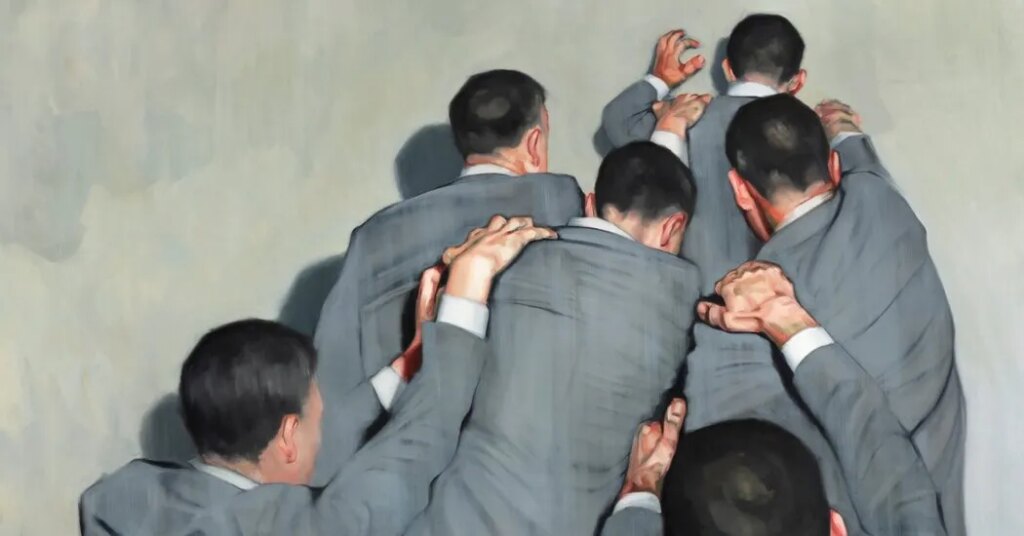
The Chi Phi group chat fits into a clear pattern of men subjugating women as a way of bonding with other men. According to the norms within many all-male groups, when one man proposes doing something immoral or illegal, the bro code dictates that other men go along with it. Sociological research has shown that one of the ways men demonstrate their masculinity to one another is through misogynistic sexual violence, as well as aggression and coercive control of women.
It’s easy to see, then, how male group dynamics can turn toxic all too quickly: One particularly entitled or cruel man decides to prey on a vulnerable woman, and invites other men to participate. They feel not only excited but even honor bound to take up that invitation. A 2007 study found that men who join fraternities are three times as likely to commit sexual violence during their freshman year, even though they were no more likely to have committed assault beforehand. That data has since been further supported. Frats appear to have the power to take men and turn them into rapists.
A secondary rule of the bro code is that you don’t call out another man’s bad behavior or intervene to protect the victim. A fraternity brother has a strong sense of duty to protect and uplift his own. And he in turn feels entitled to loyalty from his brethren. After Jane Doe’s allegations came out on campus, one of the accused men complained to another that he felt abandoned by Chi Phi. “Talking about ‘brotherhood’ and then no one except a couple real ones check in, much less acknowledge our existence,” he wrote. “Dead ass bro,” was the response. These men felt sorry for themselves. They even felt like victims.
I recently read a report titled “Campus Gang Rape: Party Games?” that analyzed more than 50 cases of gang rape on university campuses of all kinds: Ivys, small liberal-arts colleges, state schools. It identified a pattern:
A fraternity holds a party. In many cases … a young woman often has had too much to drink and/or too many drugs. Therefore she may be unaware that the “friendly” persuasion of the brothers is actually a planned pursuit of easy prey. By the time she recognizes her predicament, her confusion has changed to fear and panic, and escape seems impossible. She is unable to protest or her protests are ignored. Anywhere from two to eleven or more men rape her.
The report was published over 40 years ago, in 1985. What is new in the case of Jane Doe is that old patterns of sexual predation are being enabled and facilitated in terrifying ways by modern technology. Groups of men can now form and coordinate with far greater ease than they could in any previous era. They can invite one another to commit rape from behind the anonymizing shield of their screens. Online, the misogyny and rape culture that can foment within all-male spaces operates on a grand scale, at the speed of light.
The effects of this are evident far beyond the university. In France, Dominique Pelicot recruited upward of 50 men from a website to rape his drugged wife. An Italian Facebook group devoted to trading nonconsensual photos of wives and girlfriends numbered in the tens of thousands. This year a CNN investigation reported on a chat room in which men from around the world shared strategies for, and videos of, drugging and assaulting their partners; one French lawmaker referred to such groups as online rape academies.
Even in the more mundane corners of the internet — gaming, YouTube, social media — we find groups of men congregating to air their resentments toward women and plan sexual exploitation. In September, Wired wrote about Maddie Kowalski, a university student who was recorded during sex acts without her consent. The videos were circulated on Snapchat, where they were picked up by an online doxxing community and further disseminated on X. The videos, with Ms. Kowalski’s name attached, were ultimately viewed millions of times. The devastating impact on her and other women who have been similarly victimized can hardly be overstated.
The internet is where young people come of age, and it is soaked through with such misogyny. Perhaps this is why sexual violence has not diminished in the post-#MeToo era. Indeed, at Cornell sexual violence appears to be increasing. The university’s 2025 survey data showed that 35 percent of female undergraduates had experienced some form of sexual assault during their time at Cornell, compared with 23 percent in 2023.
Last week, Michael Kotlikoff, Cornell’s president, suspended fraternity parties until the end of the school year. But ultimately this policy is likely to be as successful as Prohibition was in ending alcohol consumption: Parties will be driven underground while Greek life remains in operation.
Ban the frats, I say, and Mr. Estrada, the former frat president, almost agrees with me. But he is struck by how he feels when he says it: guilty, ashamed, as if he is betraying his brethren in even contemplating their dissolution.
He told me that his girlfriend asked him recently what he would have done if he’d been part of the Chi Phi group chat that night. He was characteristically honest and insightful in his reply. “I was thrown off by my internal response because immediately what I thought of was, well, am I still fraternity president?” he said. “It’s kind of terrifying. That’s how much it’s been drilled into me, as president, that my job is to protect my brothers and defuse the threat, versus the need to be a good person.”
Kate Manne, a moral, social and feminist philosopher at Cornell University, is the author of “Entitled,” “Down Girl” and “Unshrinking” and writes the newsletter More to Hate.
The Times is committed to publishing a diversity of letters to the editor. We’d like to hear what you think about this or any of our articles. Here are some tips. And here’s our email: [email protected].
Follow the New York Times Opinion section on Facebook, Instagram, TikTok, Bluesky, WhatsApp and Threads.
The post What Makes Men in Groups Behave So Badly? appeared first on New York Times.