The Oct. 16 online news article “White House preservation group took $2.5M from man who wanted to demolish East Wing” cited the role Jacqueline Kennedy played as founder of the White House Historical Association. There’s an additional piece of history that further highlights the WHHA’s hypocrisy in remaining silent as Kennedy’s garden was torn up and the East Wing torn down. I helped tell it in “The Sketch That Stopped the Bulldozers,” which appeared in the May 23, 2024, edition of the WHHA’s “White House History Quarterly.”
In the early 1960s, it was proposed that all the historic buildings on Lafayette Square’s west side be demolished and replaced with a mammoth federal office building. The Committee of 100 on the Federal City stepped forward with a proposal that was captured in a sketch done by my father, Grosvenor Chapman. It illustrated how the historic buildings could be retained by building new federal offices behind them.
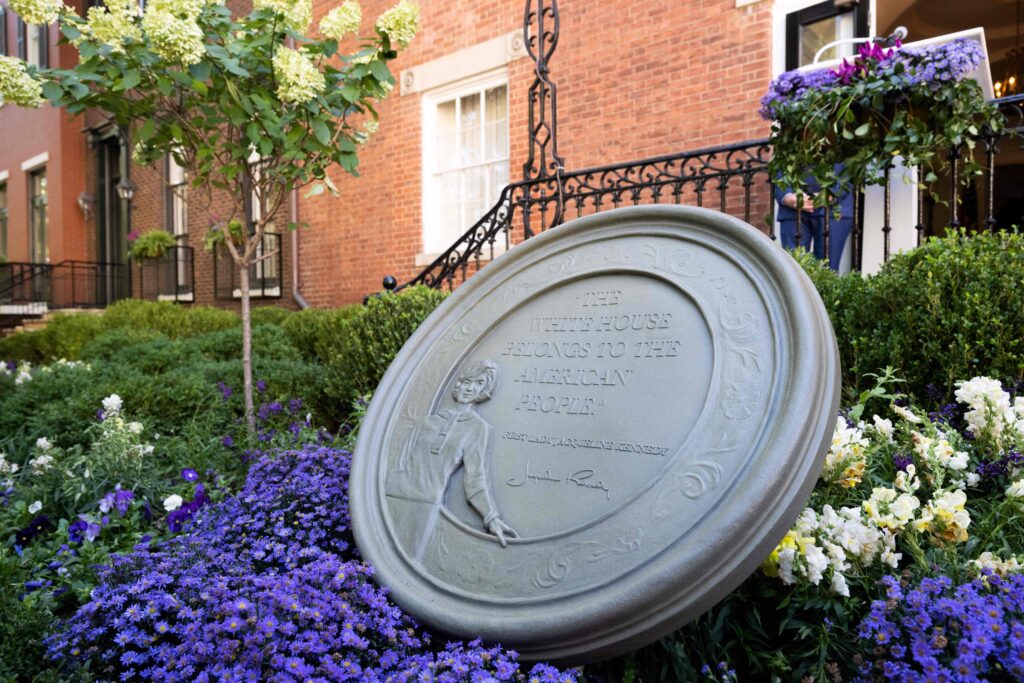
That plan made its way to the first lady, who took the president into Lafayette Square to show him what was possible. Halting those bulldozers required the leadership of the Committee of 100 and the foresight of Jacqueline Kennedy. Together, they ensured the preservation of one of America’s most important cultural landscapes. The contributions of these preservationists are memorialized on plaques placed near Decatur House, which now hosts some WHHA offices.
The WHHA’s leadership might take the time to step outside and reflect on the high standards set by the association’s founder and those who worked with her. Unfortunately, the construction of fencing around Lafayette Square will deny the rest of us the opportunity to do that. Might the WHHA take up this fight? I doubt it.
Leni Preston, Washington
The dangers of incorrect AI
The Oct. 15 online Health article “Scientists are finding AI may make us remember things that never happened” discussed the impact of artificial-intelligence-generated misinformation. However, the negative effects of misinformation produced by AI can also occur without any deceptive intent. This is especially noteworthy in medicine, where AI is used to help doctors with key medical duties such as diagnosis and prognosis.
The problem is that no AI system is perfect. Mistakes are inevitable, even when the companies making AI platforms do their best to minimize errors. Misleading AI-generated information can negatively affect physicians. In one experiment, we looked at the effect of incorrect AI feedback on radiologists interpreting chest X-ray images. The results were striking. When shown incorrect AI output, radiologists missed lung cancers they had detected without AI. This problem is not limited to radiology; the negative effects of incorrect AI-generated information extend to other areas of medicine such as psychiatry and dermatology.
When you combine this with the issue of de-skilling, which the article discussed, a picture emerges that challenges the idea of AI as an unqualified positive development. In many cases, it can help make people more accurate. However, it can also decrease human accuracy when wrong and erode skills that we take for granted in highly trained professionals.
Michael H. Bernstein, Warwick, Rhode Island
Grayson L. Baird, Providence, Rhode Island
The writers are associate professors at Brown University.
Don’t roll back these protections
The Oct. 10 editorial “Democrats, don’t kill this win for U.S. energy” didn’t mention one of the most troubling provisions of the Senate permitting bill: its sweeping changes to the Endangered Species Act.
Endangered wildlife is not standing in the way of America’s energy future. Federal reviews of projects affecting endangered species are already remarkably efficient, often completed in weeks or months rather than years. These reviews help projects move forward while preventing needless harm to wildlife.
Yet the Senate bill would dismantle parts of this system, shifting certain federal wildlife reviews to states and potentially creating a patchwork of duplicative processes. Other provisions would allow certain projects to bypass wildlife reviews altogether. How does eliminating safeguards while potentially adding bureaucracy amount to progress?
America needs more energy infrastructure. It also needs healthy ecosystems and thriving wildlife. These are not competing ambitions, and Congress should reject any deal that treats them as such.
Andrew Bowman, Washington
The writer is president and CEO of the nonprofit Defenders of Wildlife.
Genetic testing is not a lifetime guarantee
The Oct. 13 news article “Doctors are urging women to redo early genetic tests” detailed a troubling weakness in how doctors communicate genetic risk. A negative test result is not a lifetime guarantee, and patients should never be led to believe otherwise.
That does not necessarily mean the original test was wrong. It means science has moved forward. Even if a patient received a reassuring result a decade ago, they should continue to undergo updated tests as genetic science advances and testing methods improve.
Companies should disclose what their tests can and cannot establish and when reinterpretation may be necessary. And when updated testing is required, doctors should be sure to notify their patients.
Peter J. Pitts, New York
The writer, a former associate commissioner of the Food and Drug Administration, is president of the Center for Medicine in the Public Interest.
Letter submissions
Send letters to [email protected].
Submissions must be exclusive to The Post and should include the writer’s address and day and evening telephone numbers. Letters are subject to editing and abridgment. Please do not send letters as attachments. Because of the volume of material we receive, we are unable to acknowledge submissions; writers whose letters are under consideration for publication will be contacted.
The post Jacqueline Kennedy helped preserve D.C. buildings. Who will speak up now? appeared first on Washington Post.