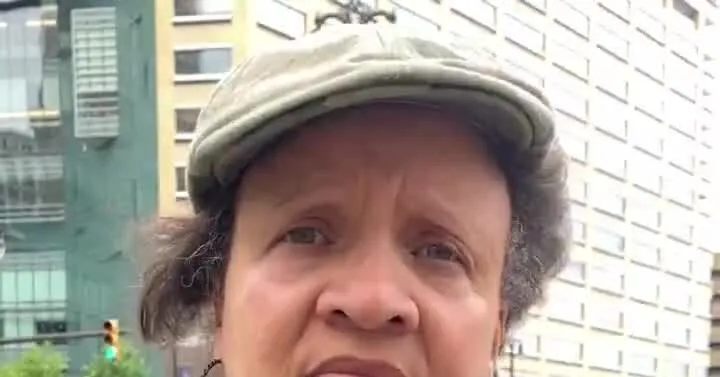
The videos appeared across social media in August before the closely contested Democratic primary for the U.S. Senate in Michigan. They showed people on the street expressing support for one of the candidates, Representative Haley Stevens, and discussing the issues that mattered most to them.
“Definitely affordability,” a woman who identified herself as Darlene from Detroit said in one video. “You’ve got to make sure people can make a living.”
At least three dozen videos in all appeared on X, Facebook, Threads and Instagram, where they were viewed millions of times. While they projected grass roots authenticity, there was little authentic about how they reached voters.
The accounts that spread them were based not in Michigan but mostly in India, according to two research organizations that track disinformation. Posters were paid $1 to $5 for each thousand views to sway an election on the other side of the world, misleading viewers to think the content was organic to their feeds on social media.
These types of videos have become a prominent new feature of American political campaigns, spreading inorganic content on social media to attract voters without disclosing the ties to candidates or their proxies.
They resemble tactics — and even use some of the same for-hire bot networks — that Russia and China have employed to try to influence American voters.
Similar efforts to create and spread inauthentic content have cropped up in other elections, including the mayoral primary in Los Angeles last summer, the race for governor in California and a get-out-the-vote campaign targeting Black voters in Ohio.
“The whole information ecosystem right now is based in some sense on blurring the lines between who are legitimate sources, if you want to call them that, and shadier, more nefarious sources,” said Daniel Weiner, a senior director at the Brennan Center for Justice, a voting rights organization. “The idea that the ordinary voter or consumer of information can always tell the difference — I think we’ve seen, time and time again, that’s not really the case.”
The videos reflect a shift in campaign tactics as prospective voters tune out traditional political outreach in an increasingly fractured, algorithmically driven media environment online.
In response, candidates across the political spectrum are seeking to reach voters in new ways beyond paid ads.
Some have honed their own accounts on video-first platforms online, especially TikTok and Instagram. Others have also recruited influencers — the famous and the not famous at all — to spread the word online at a small fraction of the cost of ads on Facebook or YouTube.
The source of the interviews in Michigan — and the money behind them — remains a mystery. So does the identity of the people who appear in the videos, who after brief interviews give only first names and hometowns.
A video of a woman who said she was from Detroit circulated through a bot campaign based largely overseas.
One of the Instagram accounts involved in spreading the videos, Energetic Humor, is operated by a man in Mumbai, India, who in an interview identified himself as Ayush Jain. He said he had made about $15 on each of 40 posts he published on different accounts he controlled.
While the creators of the videos are unknown, the campaign appears likely to have been tied to one of a number of political action committees or other groups that sought to help Ms. Stevens defeat her top rival in the race, Dr. Abdul El-Sayed. He prevailed in the primary on Aug. 4, which was closer than polls had predicted, and will face the Republican nominee, Mike Rogers, in November.
The videos do not appear to be deepfakes, realistic images fabricated with artificial intelligence tools. Some showed recognizable streetscapes in Detroit. In others, though, services that detect A.I. flagged possible indications of manipulation or fabrication.
The videos were not attack ads. The comments mostly focused on political issues and praise for Ms. Stevens, though at least one singled out criticism of Dr. El-Sayed from a right-leaning online news organization over tax return disclosures.
Ms. Stevens, who will remain in her House seat until January, did not respond to requests for comment. Caitlin Legacki, a strategist and campaign consultant for the Stevens campaign until stepping down in July, said she had seen the videos but was certain the campaign had nothing to do with them.
The campaign’s filings with the Federal Election Commission disclose payments to three companies for media services. Two did not respond to requests for comment; the other declined to comment.
The Stevens campaign also received about $60 million in backing from half a dozen outside groups, according to data from AdImpact, a media tracking firm.
“You don’t have to be a superconspiratorial person to think of various interests that would not want somebody with his politics in the United States Senate,” Ms. Legacki said, referring to Dr. El-Sayed and his political positions.
Dr. El-Sayed’s campaign declined to comment on the videos.
The Michigan primary video campaign was first identified by Antibot4navalny, a prominent group of anonymous volunteers who have exposed Russian trolling efforts online, including new attempts to undercut Democrats this election cycle. The group tracked 28 accounts on X that shared the videos as part of a coordinated, for-hire campaign that generated more than seven million views on the platform.
Researchers at Clemson University’s Media Forensics Hub identified additional accounts that spread the content on X and the other platforms, including Facebook, Instagram and Threads, all owned by Meta.
Those included accounts that the center’s researchers had detected before in influence campaigns involving Chinese bot networks.
One of the Instagram accounts that spread the Michigan videos has a user bio in Mandarin.
Some of the accounts also reposted content by Michael Carbonara, a Republican in Florida who in August lost a primary race for a House seat, according to Darren Linvill, a co-founder of Clemson’s research lab. (Mr. Carbonara did not respond to a request for comment.)
The accounts used for the Michigan videos typically promoted content intended to induce mindless clicks, then suddenly shifted to specific political content. Mr. Jain in Mumbai said his contract had required him to post the videos for a minimum of 30 days. They have since been deleted.
Since the primary, Mr. Jain’s Energetic Humor account has posted dozens of clips from cartoons like “The Simpsons” and “Family Guy.” Those are interspersed with other political posts, including more recent ones supporting the Republican candidate for governor in California, Steve Hilton.
Another mocks soaring gasoline prices with a meme from “The Sopranos” — a theme being pushed by Democratic candidates. The post featuring Mr. Hilton includes a note in the comments saying his campaign had paid for it.
The company that paid Mr. Jain was Lumina Clippers. It is one of a plethora in the United States and abroad that offer to boost attention online using bot accounts. The clientele in this marketplace can include political candidates as easily as consumer products, health and beauty aids, or cryptocurrencies.
Lumina Clippers is registered in Bethlehem, Pa.; has a telephone number in the United Arab Emirates; and is run by an Irishman living in Portugal, Rhys McKay.
In an interview, Mr. McKay acknowledged his company’s role in spreading the videos, including hiring Mr. Jain and dozens of others like him. Mr. McKay declined to identify who had hired him to do so, as well as the cost of the contract, citing client confidentiality.
The impact of the videos in Michigan is difficult to measure with certainty, but Mr. McKay said internet users had grown tired of political ads and simply swiped past them.
The interviews of voters was the kind of content that people online found more engaging.
People, he said, “resent being force-fed content.”
The post U.S. Political Money Funnels to Indian Bots to Lure Voters appeared first on New York Times.