Creating a pocket museum is about more than just obsessive collecting. There’s no official definition, but the hallmarks of these galleries or displays are a small footprint, a single subject and self-funding, according to Rawaan Alkhatib, author of ”Hello, Museum,“ an illustrated pocket guide to the museum experience.
Still, a pocket museum is more than merely “a bunch of objects on display,” says Alkhatib, lead content developer at Ralph Appelbaum Associates, which plans and designs museums. “To make a museum, you have to add a story.” In sharing their knowledge and enthusiasm, pocket museum creators envelop visitors in environments centered on their obsessions. Here are four examples for inspiration.
Record collection that became an institution
During the late 1970s, B. George produced records, wrote a book on punk rock and New Wave music, and appeared as a guest presenter on “The John Peel Show” on BBC Radio 1. It wasn’t long before musicians began giving him their records.
“A lot of people wanted me to put them on a record or produce a record for them or wanted me to play a record on the BBC with John Peel, who was the most famous DJ then, or be in my next book,” George says. “They had three reasons to give me a record. After doing the shows with the BBC and the book, I became well-known.”
One of George’s friends suggested he make it his mission to amass and store the records. “There was no library or university or anywhere except maybe Bowling Green State University that was collecting new and emerging music,” recalls George, 76. He formed the nonprofit Archive of Contemporary Music and began asking record companies to send him recordings of popular music. By 1985, he had about 47,000 records.
At first, George stored them in his and his friends’ apartments in Manhattan. But in 1989, after the archive had begun generating consistent income from services for the entertainment industry (research, cover-art scanning, licensing, data and cataloguing, and music supervision), George moved it to rental spaces in Manhattan and Staatsburg, New York.
He recently purchased an 18,000-square-foot building in Ridgefield, Connecticut, to store the archive, which includes music starting with microgroove recordings (45s and LPs) from 1945, equipment to play the music and thousands of books. In about two years, it will open to the public.
George is working with an architect to design the space. “We are trying to do something that’s very hard to find anywhere else,” he says. Under consideration are events hosted with local venues, like the Ridgefield Playhouse, and gallery shows with quirky concepts such as record covers featuring people wearing space helmets. “We make it up as we go along,” he says.
Arcade/community center/museum
In 2022, Wesley Michalski and Kevin Murray met through the Brooklyn music scene and discovered a mutual interest in vintage pinball machines. They bought a circa-1930 model for $250 and restored it, which involved online tutorials and lots of trial and error, Murray says.
A friend let them store the machine in the back of her Brooklyn bar. Then Michalski and Murray bought and restored four more machines, adding them to the space and opening it to the public as the Red Hook Pinball Museum. “The museum was well attended from the beginning,” Murray says. “We started out only doing an event once a month, and I’d estimate 100 to 300 people came over the course of each second Sunday we opened up. We put up tons of paper fliers around Brooklyn for each event.”
Seven months later, when they needed to relocate, they hosted a two-week pop-up and fundraiser. To their surprise, it generated enough income to rent a 1,400-square-foot space nearby.
Murray, 26, a musician and music teacher, partly attributes the popularity of the free museum to its “unique angle, even for a pinball museum.” As he explains, 1930s pinball machines are rare and generally not playable. At the museum, visitors can play 25 machines from the 1930s through the 1970s. They can also learn about them because each machine is accompanied by a detailed write-up. Non-pinball fans can play board games or explore two other pocket museums in the space: a rotating art gallery (run by Ricardo Razuri) and a vintage puzzle corner (run by Molly Blieden).
Along with functioning as an arcade and museum, the space has become a community center, Murray says. “A lot of people come in and don’t even care about pinball. They read a book or hang out and talk to their friends.
“We were shocked,” he says. “We never thought it would work.” Yet donations and event-hosting fees keep their spot working like a well-oiled machine (pun intended).
Research project turned museum
Joanna Ebenstein, 54, formerly a freelance designer, decided in 2007 to photograph medical museums in Europe. When a curator invited her to exhibit her work, she started a companion blog. Readers began writing to ask whether they could borrow the books she mentioned.
“People interested in these sorts of things don’t have many places to go and not feel like a freak,” she says. “I was like, ‘Wow, you could come to my house if you want.’ And my boyfriend was like, ‘No.’ I needed another solution.”
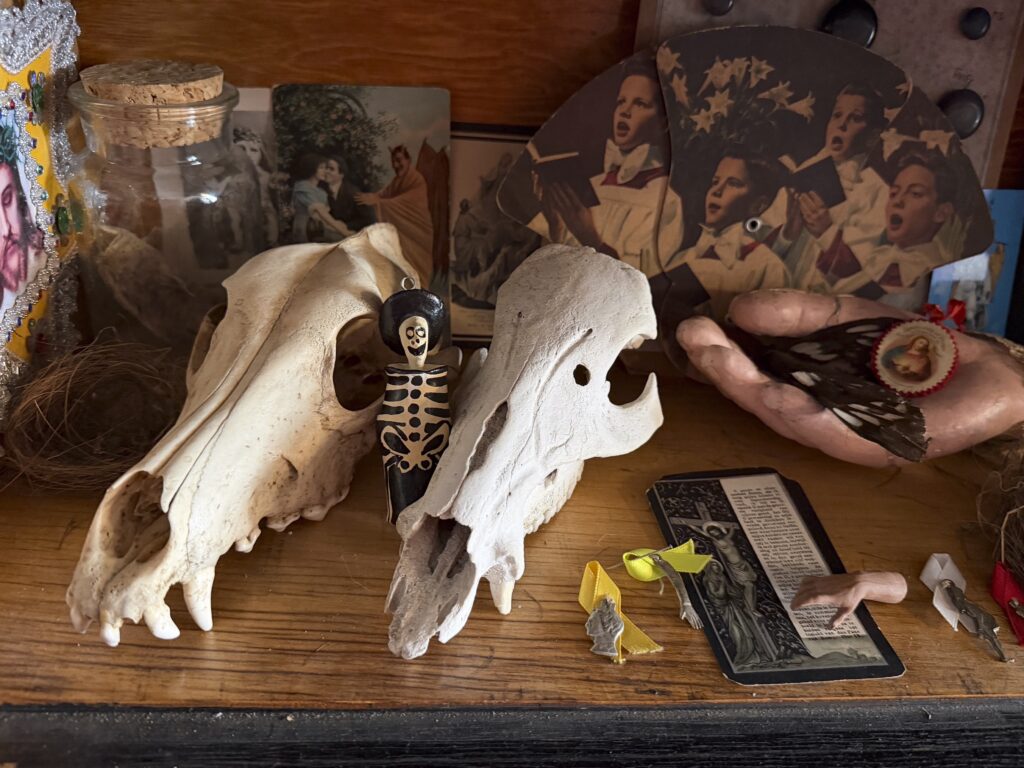
So in 2009, Ebenstein, author of “The Art of Fairy Tales” and “Memento Mori,” began renting space in a Brooklyn gallery for $300 a month. There, she launched Morbid Anatomy, a museum exploring mortality and the human condition. Not wanting a didactic feel, Ebenstein eschewed labels for the art, artifacts, masks, toys, skeletal and wet specimens, wax scientific models, devotional objects, vintage taxidermy and books.
In 2012, the museum moved to a much larger space but had to close four years later because of high expenses. Recently, however, the museum gained official nonprofit status and reopened in a smaller location. Ebenstein pays a staff, but “no one is getting rich or being paid what they’re worth,” she says. “It’s a labor of love for everybody.”
Morbid Anatomy, which is free and open on weekends, earns money through its gift shop, classes, events and online journal. “This started as a blog and should never have been anything else,” Ebenstein says. “If you had told me when I started this it would still be around, I would never have believed you.”
Then again, the appeal of micro-museums like hers is undeniable. “That sense of play and joy is something that gets lost a lot in larger museums where everything is decided by committee,” she says.
Travel mementos in a private home
A pocket museum doesn’t have to be open to the public. For the past 40 years, retired surgeon Hashem Alkhatib, 72, who is Rawaan Alkhatib’s father, has been traveling the world, buying a souvenir in each country he visits. Before long, the items began piling up in his Dubai home. “I liked to collect,” he says. “When it got out of hand, I thought of making a showcase.”
Alkhatib commissioned a wooden bookcase with illuminated glass shelves for his office to display his collection, which grew to about 150 objects representing 66 countries. Instead of using labels, Alkhatib talks his guests through the treasures, which include a marble model of the Taj Mahal, a geode from Morocco and a silver elephant sculpture from Sri Lanka.
Surrounding the “global showcase,” as he calls it, Alkhatib curates additional “exhibits,” like a glass-topped coffee table with stone prayer beads in a rainbow of hues and a wall of his own paintings.
Even though Alkhatib’s storage cabinets are crammed with “overflow” items, he doesn’t plan to stop contributing to his pocket museum. He recently returned from Bali, where he bought a seven-inch-high miniature of a split gate, common in Balinese Hindu architecture. “I am planning to make another showcase,” he says.
The post Have a passion for collecting? You, too, can create a ‘pocket museum.’ appeared first on Washington Post.