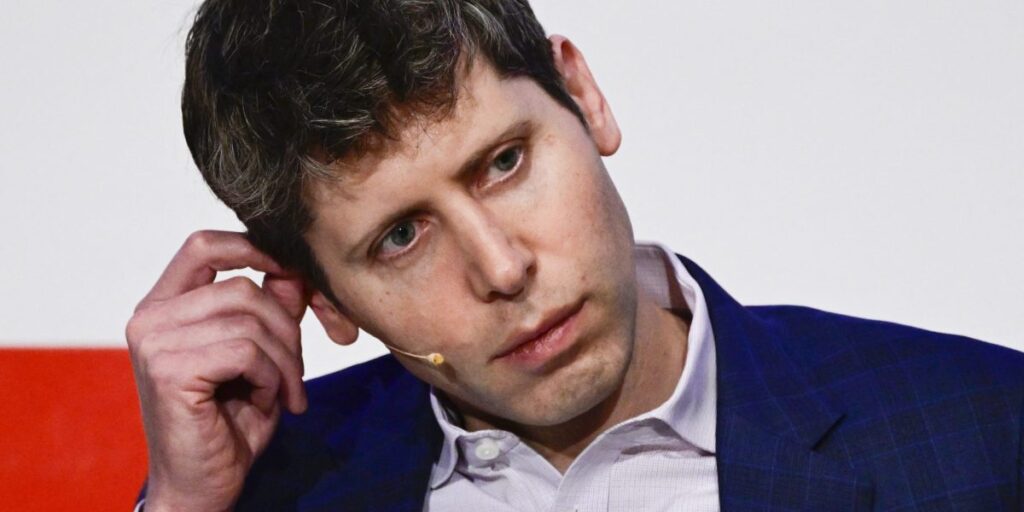
Disney’s expansive $1 billion licensing agreement with OpenAI is a sign Hollywood is serious about adapting entertainment to the age of artificial intelligence (AI), marking the start of what one Ark Invest analyst describes as a “pre‑ and post‑AI” era for entertainment content. The deal, which allows OpenAI’s Sora video model to use Disney characters and franchises, instantly turns a century of carefully guarded intellectual property (IP) into raw material for a new kind of crowd‑sourced, AI‑assisted creativity.
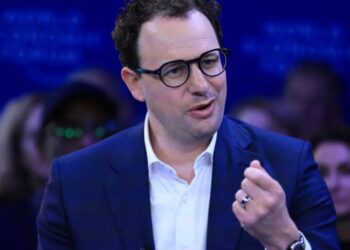
Nicholas Grous, director of research for consumer internet and fintech at Ark Invest, told Fortune tools like Sora effectively recreate the “YouTube moment” for video production, handing professional‑grade creation capabilities to anyone with a prompt instead of a studio budget. In his view, that shift will flood the market with AI‑generated clips and series, making it far harder for any single new creator or franchise to break out than it was in the early social‑video era. His remarks echoed the analysis from Melissa Otto, head of research at S&P Global Visible Alpha, who recently told Fortune Netflix’s big move for Warner Bros.’ reveals the streaming giant is motivated by a need to deepen its war chest as it sees Google’s AI-video capabilities exploding with the onset of TPU chips.
As low‑cost synthetic video proliferates, Grous said he believes audiences will begin to mentally divide entertainment into “pre‑AI” and “post‑AI” categories, attaching a premium to work made largely by humans before generative tools became ubiquitous. “I think you’re going to have basically a split between pre-AI content and post-AI content,” adding that viewers will consider pre-AI content closer to “true art, that was made with just human ingenuity and creativity, not this AI slop, for lack of a better word.”
Disney’s IP as AI fuel
Within that framework, Grous argued Disney’s real advantage is not just Sora access, but the depth of its pre‑AI catalog across animation, live‑action films, and television. Iconic franchises like Star Wars, classic princess films and legacy animated characters become building blocks for a global experiment in AI‑assisted storytelling, with fans effectively test‑marketing new scenarios at scale.
“I actually think, and this might be counterintuitive, that the pre-AI content that existed, the Harry Potter, the Star Wars, all of the content that we’ve grown up with … that actually becomes incrementally more valuable to the entertainment landscape,” Grous said. On the one hand, he said, there are deals like Disney and OpenAI’s where IP can become user-generated content, but on the other, IP represents a robust content pipeline for future shows, movies, and the like.
Grous sketched a feedback loop in which Disney can watch what AI‑generated character combinations or story setups resonate online, then selectively “pull up” the most promising concepts into professionally produced, higher‑budget projects for Disney+ or theatrical release. From Disney’s perspective, he added, “we didn’t know Cinderella walking down Broadway and interacting with these types of characters, whatever it may be, was something that our audience would be interested in.” The OpenAI deal is exciting because Disney can bring that content onto its streaming arm Disney+ and make it more premium. “We’re going to use our studio chops to build this into something that’s a bit more luxury than what just an individual can create.”
Grous agreed the emerging market for pre‑AI film and TV libraries is similar to what’s happened in the music business, where legacy catalogs from artists like Bruce Springsteen and Bob Dylan have fetched huge sums from buyers betting on long‑term streaming and licensing value.
The big Netflix-Warner deal
For streaming rivals, the Disney-OpenAI pact is a strategic warning shot. Grous argued the soaring price tags in the bidding war for Warner Bros. between Netflix and Paramount shows the importance of IP for the next phase of entertainment. “I think the reason this bidding [for Warner Bros.] is approaching $100 billion-plus is the content library and the potential to do a Disney-OpenAI type of deal.” In other words, whoever controls Batman and the like will control the inevitable AI-generated versions of those characters, although “they could take a franchise like Harry Potter and then just create slop around it.”
Netflix has a great track record on monetizing libraries, Grous said, listing the example of how the defunct USA dramedy Suits surged in popularity once it landed on Netflix, proving extensive back catalogs can be revived and re‑monetized when matched with modern distribution.
Grous cited Nintendo and Pokémon as examples of under‑monetized franchises that could see similar upside if their owners strike Sora‑style deals to bring characters more deeply into mobile and social environments. “That’s another company where you go, ‘Oh my god, the franchises they have, if they’re able to bring it into this new age that we’re all experiencing, this is a home-run opportunity.’”
In that environment, the Ark analyst suggests Disney’s OpenAI deal is less of a one‑off licensing win than an early template for how legacy media owners might survive and thrive in an AI‑saturated market. The companies with rich pre‑AI catalogs and a willingness to experiment with new tools, he argued, will be best positioned to stand out amid the “AI slop” and turn nostalgia‑laden IP into enduring, flexible assets for the post‑AI age.
Underlying all of this is a broader battle for attention that spans far beyond traditional studios and shows how sectors between tech and entertainment are getting even blurrier than when the gatecrashers from Silicon Valley first piled into streaming. Grous notes Netflix itself has long framed its competition as everything from TikTok and Instagram to Fortnite and “sleep,” a mindset that fits naturally with the coming wave of AI‑generated video and interactive experiences. (In 2017, Netflix co-founder Reed Hastings famously said “sleep” was one of the company’s biggest competitors, as it was busy pioneering the binge-watch.)
Grous also sounded a warning for the age of post-AI content: The binge-watch won’t feel as good anymore, and there will be some kind of backlash. As critics such as The New York Times‘ James Poniewozik increasingly note, streaming shows don’t seem to be as re-watchable as even recent hits from the golden age of cable TV, such as Mad Men. Grous said he sees a future where the endangered movie theater makes a comeback. “People are going to want to go outside and meet or go to the theater. Like, we’re not just going to want to be fed AI slop for 16 hours a day.”
Editor’s note: the author worked for Netflix from June 2024 through July 2025.
The post ‘We’re not just going to want to be fed AI slop for 16 hours a day’: Analyst sees Disney/OpenAI deal as a dividing line in entertainment history appeared first on Fortune.