You’re reading The Checkup With Dr. Wen, a newsletter on how to navigate medical and public health challenges. Click here to get the full newsletter in your inbox, including answers to reader questions and a summary of new scientific research.
“Kids with uncontrolled bleeding because their livers could no longer produce clotting factors. Children with swollen bellies from liver failure, who deteriorated so quickly that there was little we could do other than supportive care.”
That’s how one reader, a Florida-based hepatologist named Joe, described his patients with hepatitis B. “Their parents would have given anything for to prevent what was happening to their child,” he wrote.
Joe was reacting to my column from last week regarding the decision of the Centers for Disease Control and Prevention’s vaccine advisory committee to remove its recommendation for all newborns to receive the hepatitis B shot. Many other readers expressed disbelief and anger that anyone could vote to roll back a preventive tool that has been shown over many decades to prevent severe disease.
Judith from Maryland wrote that when her parents were growing up, families dreaded summers because it meant peak season for polio. “In my own childhood, I remember a neighbor kid who went deaf from mumps and a classmate who nearly died from measles. Everyone in my generation has stories like this. Do the people making decisions truly not understand how serious these diseases are?”
This is a good question, and it’s worth examining the mindset of vaccine skeptics, who are now well-represented on the CDC’s vaccine panel. Most readers will disagree with their views, and some may bristle at the idea of giving them a hearing. But understanding what motivates this group is essential to grasping how a policy this consequential came to pass and why reversing course will be so difficult.
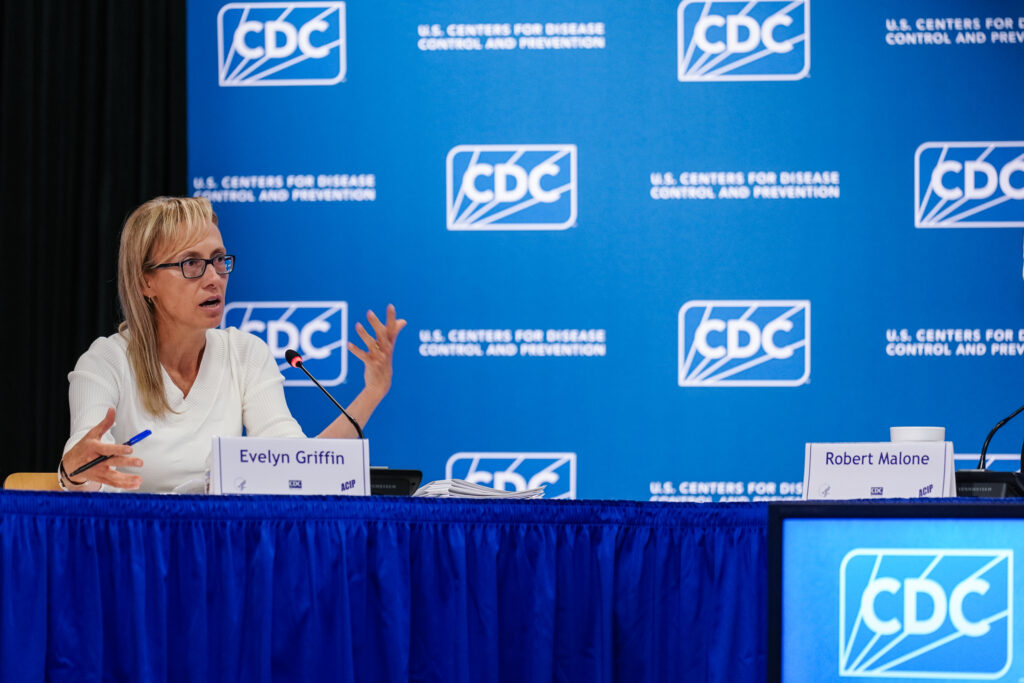
I watched both days of the CDC meeting, and it was as if those present were discussing entirely different topics. On one side were representatives from every major medical society, along with CDC career staff and a few members of the advisory panel. They repeatedly emphasized how dangerous hepatitis B can be and presented large, well-validated studies demonstrating vaccine safety and effectiveness. On the other side were advisers and invited “experts” — including a prominent anti-vaccine advocate who built a career suing vaccine manufacturers — trying to discount the overwhelming evidence in favor of this vaccine.
To summarize that research: Three doses of the vaccine is highly effective against acute hepatitis B, and protection lasts for a lifetime. It is nothing short of a miracle that the universal birth dose recommendation drove childhood infections in the United States from about 18,000 cases a year down to about 20.
The vaccine opponents questioned how common the disease really is and suggested that safety data were somehow insufficient despite more than 30 years of widespread use. They often supported their conclusions with obscure “studies” that were methodologically weak.
This group successfully advocated two changes that make no scientific sense but reveal their worldview. The first is delaying vaccination for children whose mothers are not positive for hepatitis B to at least two months of age. No evidence suggests that waiting is safer or more effective. The first weeks of life are when infants are most vulnerable to infection, and delaying protection only increases the risk of exposure to hepatitis B when a safe, effective preventive option exists.
The second change seeks to reduce additional vaccine doses with blood antibody tests. Again, no studies support the idea that a positive antibody result reliably predicts protection from infection. Plus, drawing blood from an infant is difficult and the testing is costly, leading most reasonable people to ask: Why not just give the vaccine?
The new recommendations only make sense when viewed through the lens of skeptics, who believe the perceived risk of vaccination outweighs the risk of hepatitis B. I have encountered this viewpoint before, including when I interviewed so-called MAHA moms, the women who support Kennedy and his “Make America Healthy Again” movement. Some of his most ardent fans were women who had children with chronic conditions. In many cases, it was autism, but it also included illnesses such as asthma, lupus and rheumatoid arthritis. These women were convinced that what befell their children was vaccination.
The more the medical establishment tried to explain that this was not the case, the more these families turned to outside validators, such as the anti-vaccine organization founded by Health and Human Services Secretary Robert F. Kennedy Jr., to reinforce their beliefs. No amount of scientific evidence could shake their certainty. Many became evangelists urging others to avoid the harm they believe was inflicted on their own families.
Now, those once-fringe positions have become the dominant view on the CDC advisory panel. You could hear it repeatedly in the members’ comments, echoing Kennedy’s insinuations that vaccines are the cause of a chronic disease epidemic in children. Start from that assumption, and the votes make a grim kind of sense: The goal of public health is no longer to protect babies from disease, but to protect them from vaccines.
When this perspective was confined to a small, dissenting community, it was tempting to dismiss it as a matter of personal belief (though even then, infectious diseases were a public health concern). Now, it is driving federal health policy. The danger is not only the immediate policy decisions, but also the broader ripple effect that could prompt people who never questioned vaccine safety to think twice about shots.
This is why it is more important than ever for outside credible experts to speak up and issue their own recommendations. As further changes are contemplated, medical organizations and state health departments must continue to affirm the childhood immunization schedule and emphasize a core, evidence-based truth: Vaccines are safe, effective and lifesaving.
The post What RFK Jr.’s vaccine advisers revealed about their views appeared first on Washington Post.