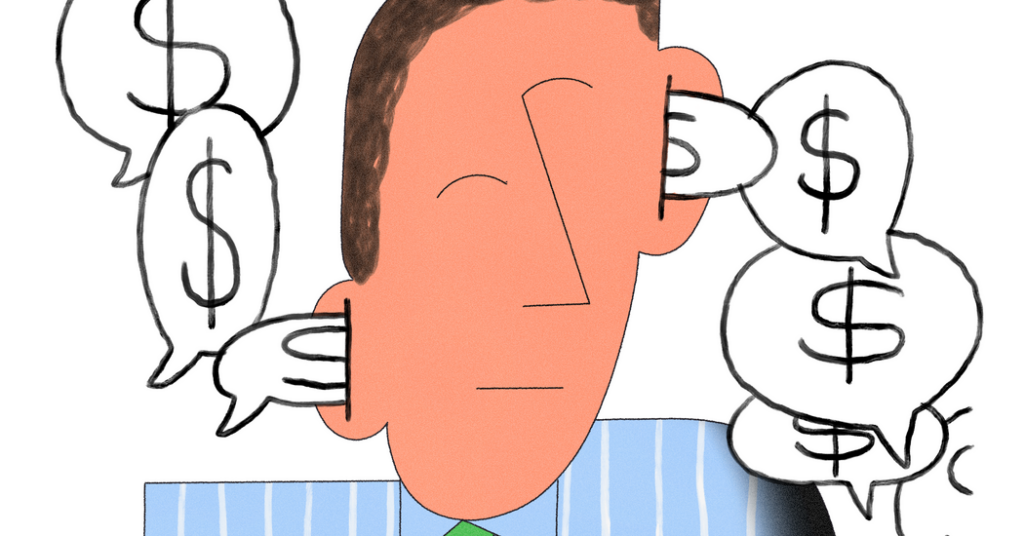
A decade or more into an era of populist upheaval in American politics, voters are angrier than ever at a system they rightly believe is ignoring their priorities.
Affordability is dominating the midterms, just as inflation dominated the 2024 presidential campaign. Yet somehow, after years of voters saying as loudly and clearly as possible that they want decisive government action on the cost of living, nobody is actually doing much about it.
President Trump is even making the cost of living higher through an agenda of tariffs, regressive tax cuts and war with Iran. And while Democratic candidates are benefiting politically from voter fury over high prices for beef, gas and diesel and mortgages, the party has not rolled out a credible national agenda to tackle the issues underlying the lack of affordability. When given the chance in the Biden administration, Democrats instead gave us an Inflation Reduction Act, which did little to reduce inflation but authorized lots of spending to combat climate change and inject money into the economy.
It is the biggest mystery in politics: How come neither party will actually address the thing voters say is their top concern?
Government policies influence consumer prices in direct and indirect ways, but one big macroeconomic reality is key: The federal government is running a budget deficit that is the equivalent of close to 6 percent of the American economy.
If we were in a recession, a deficit that large could help kick-start the economy. But with unemployment low, deficit spending fuels inflation — which the Federal Reserve in turn tries to control with higher interest rates. Those higher rates then push up the cost of mortgages, auto loans and other forms of consumer credit. With deficits this large, there is no good solution to the high cost of living.
Pulling out of this spiral is going to require tough choices, but it is achievable if politicians prioritize costs rather than ideological activist goals. In other words, it’s also going to take some technocrats.
On one level, it’s easy to understand why both parties are not more responsive to voters’ top concern. Both parties are organized around the ideological goals of their key stakeholders. Republicans push regressive tax cuts; Democrats push funding for health care, environmental, welfare state and other programs.
The solution is simple: good old-fashioned deficit reduction. According to Washington conventional wisdom, politicians don’t embrace this because it’s unpopular. But that’s not entirely true. Raising taxes on the rich, for example, polls extremely well.
In recent years, Democrats have preferred to pair that idea with spending the money on new programs rather than on addressing inflation and curbing spending in an effort to lower interest rates. Fiscal responsibility annoys political elites because it constrains their ambitions and makes it harder to pursue their pet projects. Bill Clinton’s decision to prioritize macroeconomic prudence irritated many people in his coalition, but it helped produce a very strong economy. Voters don’t care all that much about fussy budget details, but they do care a lot about good economic outcomes.
For Democrats and technocrats, there are plenty of opportunities to go after wasteful spending. The Committee for a Responsible Federal Budget calculates that preventing traditional Medicare beneficiaries from using private supplemental insurance (like Medigap coverage) to help defray out-of-pocket costs like deductibles and co-payments could save more than $250 billion over the next decade; at the moment, nearly 90 percent of them do have such coverage, which encourages them to use more medical services, driving up Medicare’s costs. The Medicare Advantage program has even bigger problems, featuring major overpayments to private providers that will cost the government an estimated $1 trillion over 10 years.
This kind of relatively low-hanging fruit is not enough to balance the budget, but paired with taxing the rich, it would make a big dent in the deficit and reduce the upward pressure on inflation and interest rates created by stimulating an economy that doesn’t need stimulus.
From there, a technocratic, affordability-focused administration would work line by line through the array of federal laws and regulations and try to strip away everything that raises the cost of living.
The Jones Act, for example, forbids the use of foreign-made or foreign-owned ships to transport goods between American ports. But it not only raises the price of everything shipped by water, it also helps pad margins for overland freight (rail and road) by ensuring there is no seaborne competition.
New American commercial jet pilots generally must have 1,500 hours of training flight time before they can qualify to co-pilot a plane — over five times as much time as required by perfectly safe European airlines. These are not rules with bona fide safety or environmental benefits. They exist primarily as job-creation or (in the case of the pilot-training requirements) job-protection measures, which contribute to higher fares.
Similarly, a 2024 study concluded that federal “Buy American” procurement rules to increase manufacturing employment cost $111,500 to $137,700 per job created (future tightening of the criteria will push those costs higher). Congress recently explored ways of bringing down regulatory barriers to home building with its ROAD to Housing Act. But a bolder federal government should go further in punishing jurisdictions that refuse to allow new homes while easing up on rules adopted in the wake of the Great Recession that have made it much harder to get a starter home mortgage.
Policy wonks across administrations have long deplored these kind of rules but have struggled to persuade presidents (and Congress) that curtailing them is worth the effort. But if affordability is truly Job 1, technocrats and politicians should spend political capital on reducing it.
It seems likely that the next administration, particularly a Democratic one, will shift from Mr. Trump’s approach on immigration. But few Democratic politicians are framing immigration reform as a way to bring economic benefits: using work visas in sectors like construction or hospitality, for instance, to improve affordability.
Neither party seems interested in new free trade deals. There are certainly national security reasons to worry about reliance on certain kinds of imports from China, but most of America’s pre-Trump trade barriers have no such rationale and often increase costs for American consumers. Whether it’s Canadian lumber, Japanese pickup trucks or Central American sugar cane, there are lots of goods from friendly countries that we could welcome in to bring down costs.
Are these the kind of solutions the voters are demanding? Probably not. But voters really care a lot about the cost of living. And that’s worth taking seriously not just as guidance for what politicians should talk about, but also for what they, and associated technocrats, should do in office.
Voters know what they want — a government that focuses on tangible progress on the cost of living — but are not technical experts in macroeconomics or regulatory cost-benefit analysis. The whole point of representative government is to elect politicians who are willing and able to empower the people who are experts to solve the problems voters want solved.
This kind of 1990s-style politics — progressive taxation, fiscal discipline, deregulation, free trade and modesty about policy — has been unfashionable for so long that it scarcely seems imaginable. But when we had it, people loved the results.
Matthew Yglesias (@mattyglesias), a contributing Opinion writer, is the author of “One Billion Americans: The Case for Thinking Bigger” and the newsletter Slow Boring.
The Times is committed to publishing a diversity of letters to the editor. We’d like to hear what you think about this or any of our articles. Here are some tips. And here’s our email: [email protected].
Follow the New York Times Opinion section on Facebook, Instagram, TikTok, Bluesky, WhatsApp and Threads.
The post Voters Say It Is Their Top Concern. Why Aren’t Politicians Acting on It? appeared first on New York Times.